
Our Lady of the Rosary
Building profile
Historic/listed monument
Practical information


 © Églises Ouvertes
 © Églises Ouvertes
 © Églises Ouvertes
 © Églises Ouvertes
 © Églises Ouvertes
 © Églises Ouvertes
 © Églises Ouvertes
 © Églises Ouvertes
 © Églises Ouvertes
 © Églises Ouvertes
About this building
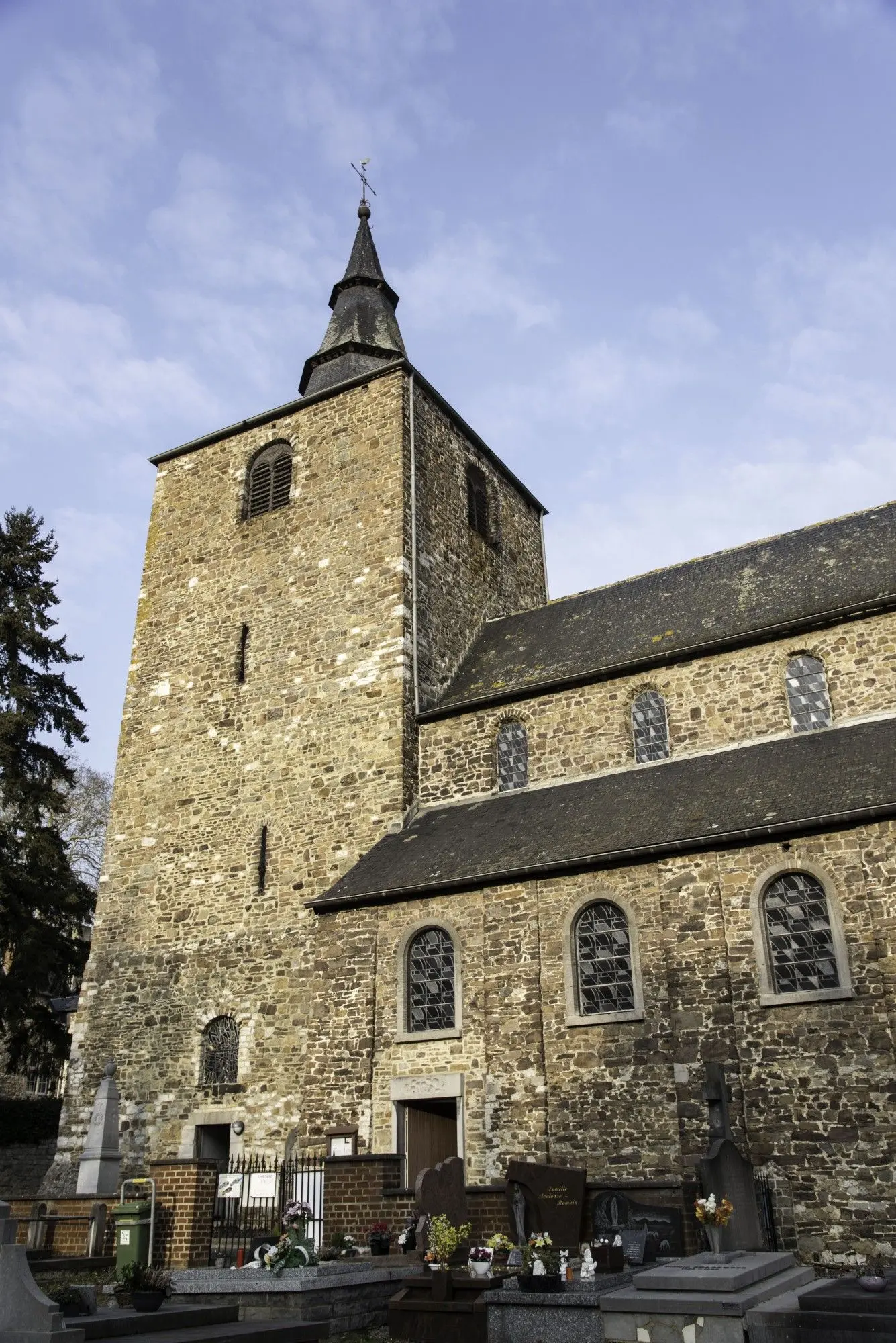
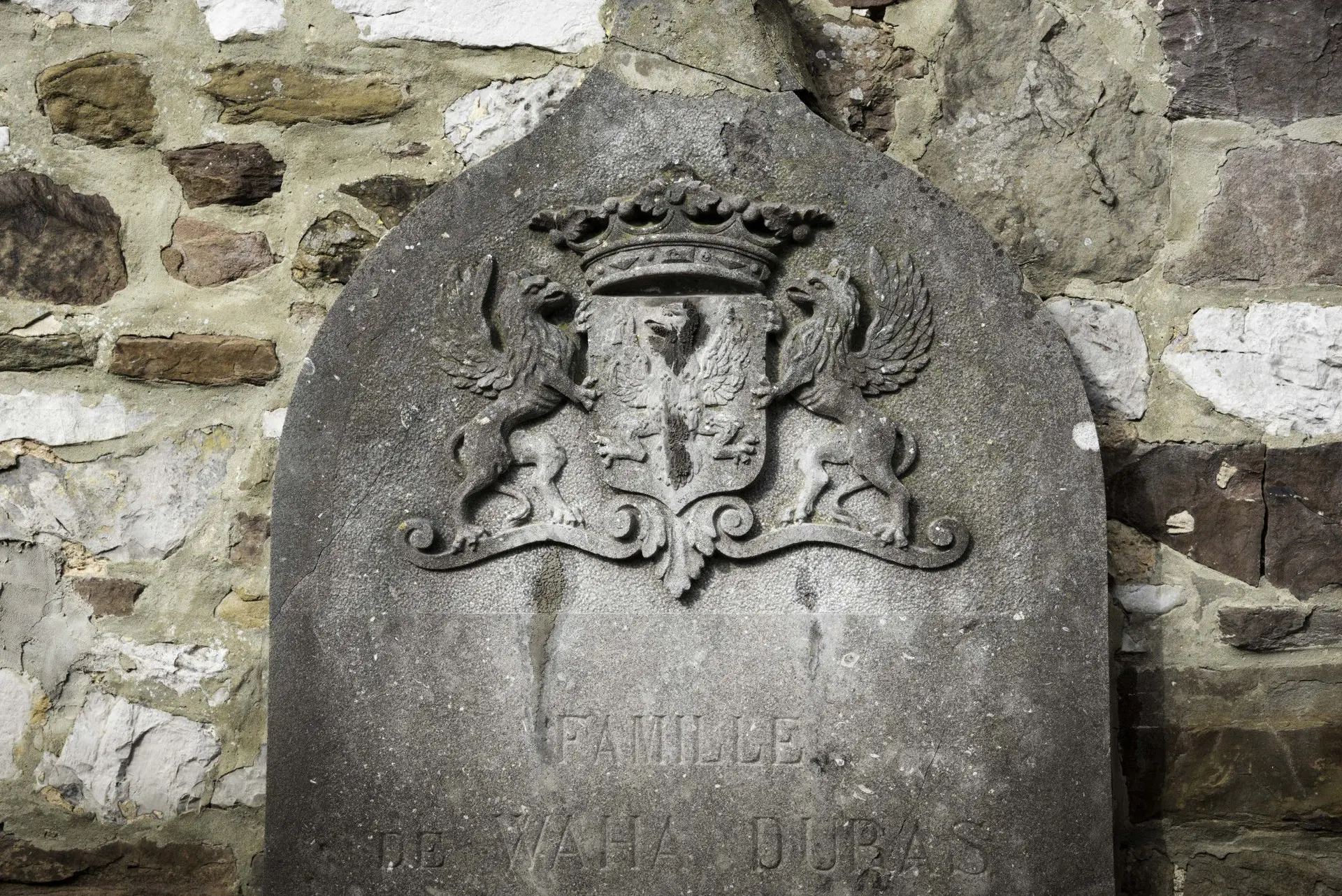
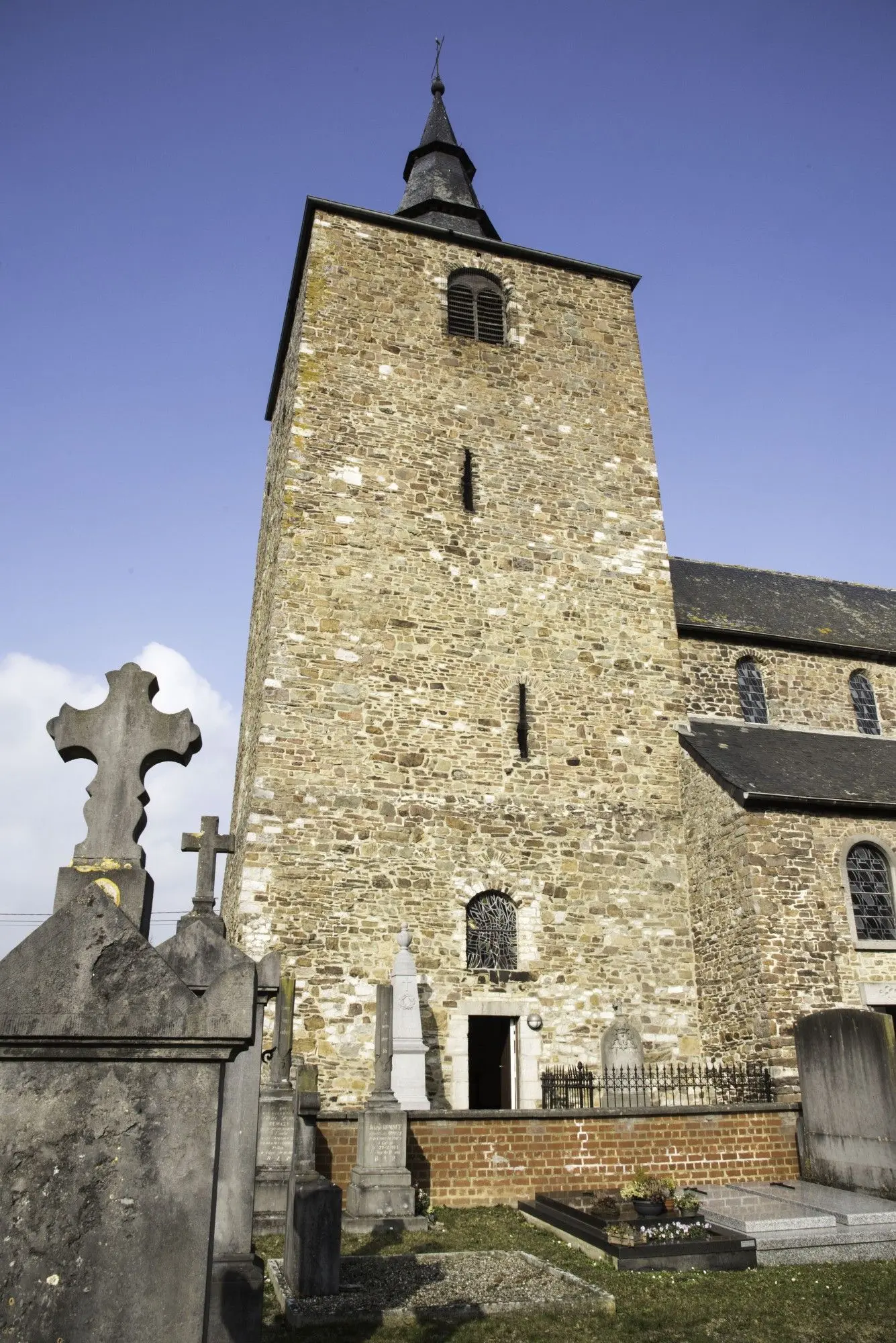
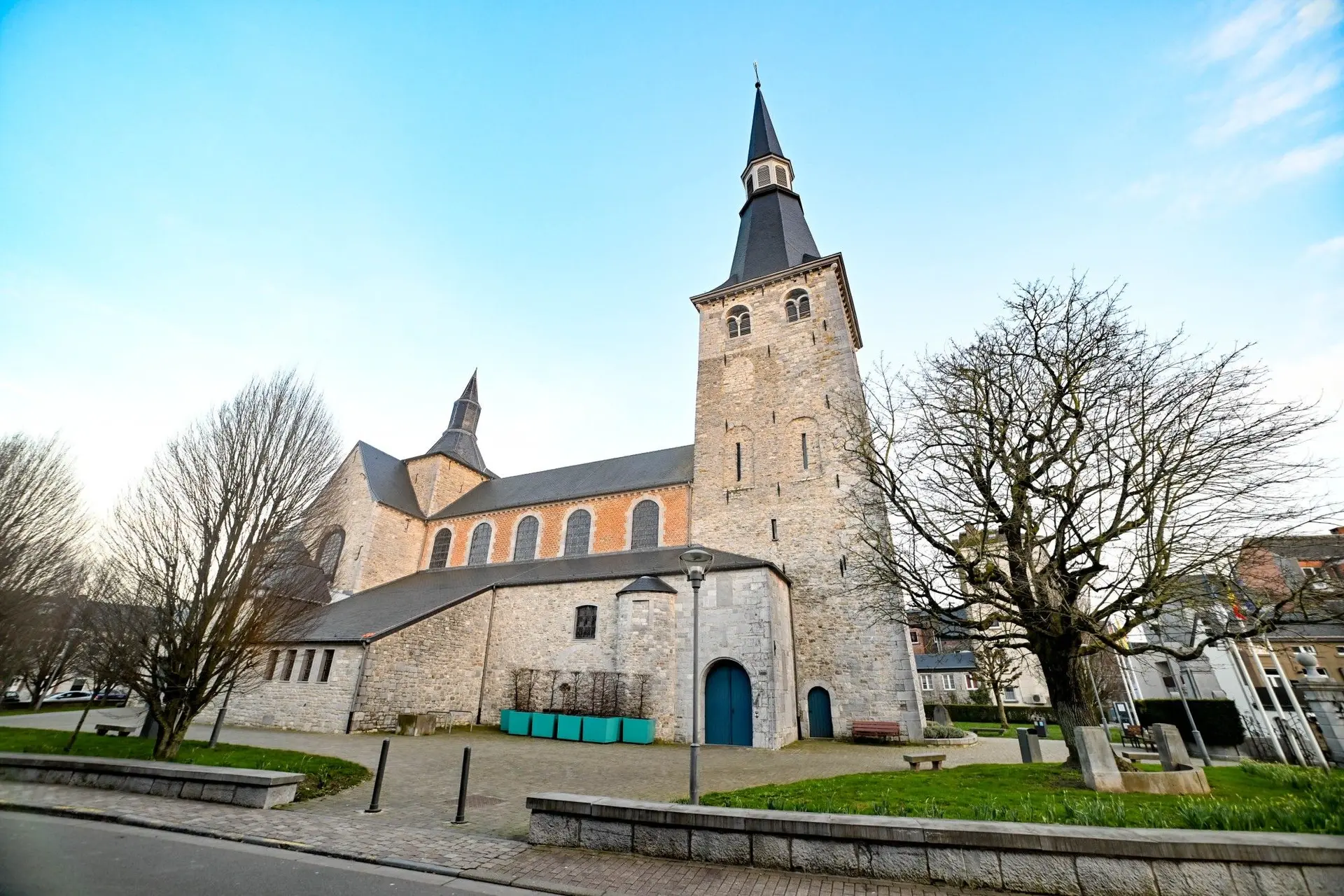
The large 11th century tower was originally used as a refuge for the noble family (the Wierde’s) and the surrounding populations in case of danger. Access was through a…
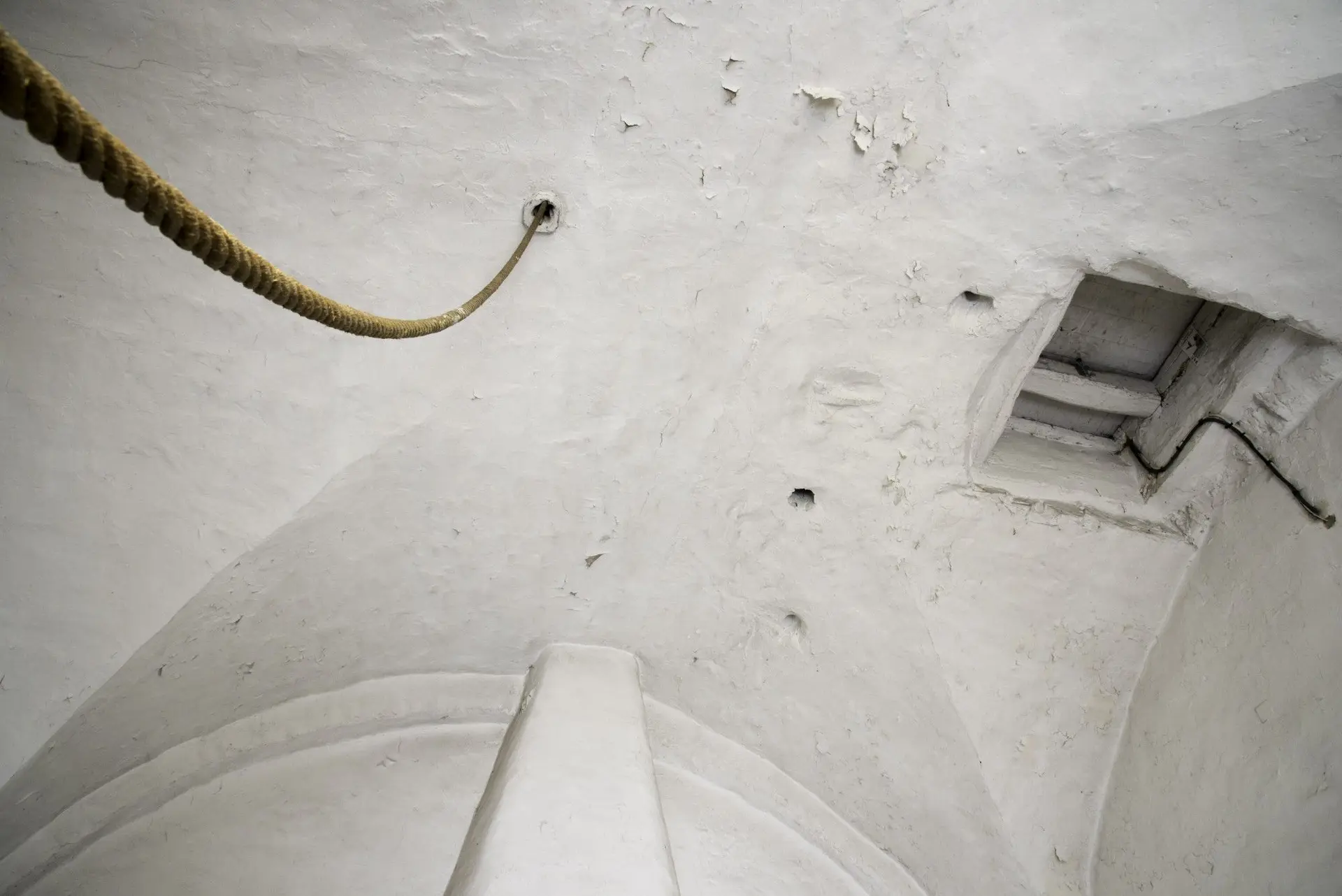
The large 11th century tower was originally used as a refuge for the noble family (the Wierde’s) and the surrounding populations in case of danger. Access was through a high opening on the south side (now blocked). It is estimated that in ancient times the tower was covered with a “hourd”, a kind of wooden covered platform overlooking the walls, from which various projectiles could be thrown at the attackers. Currently, several loopholes can still be seen on its various sides.
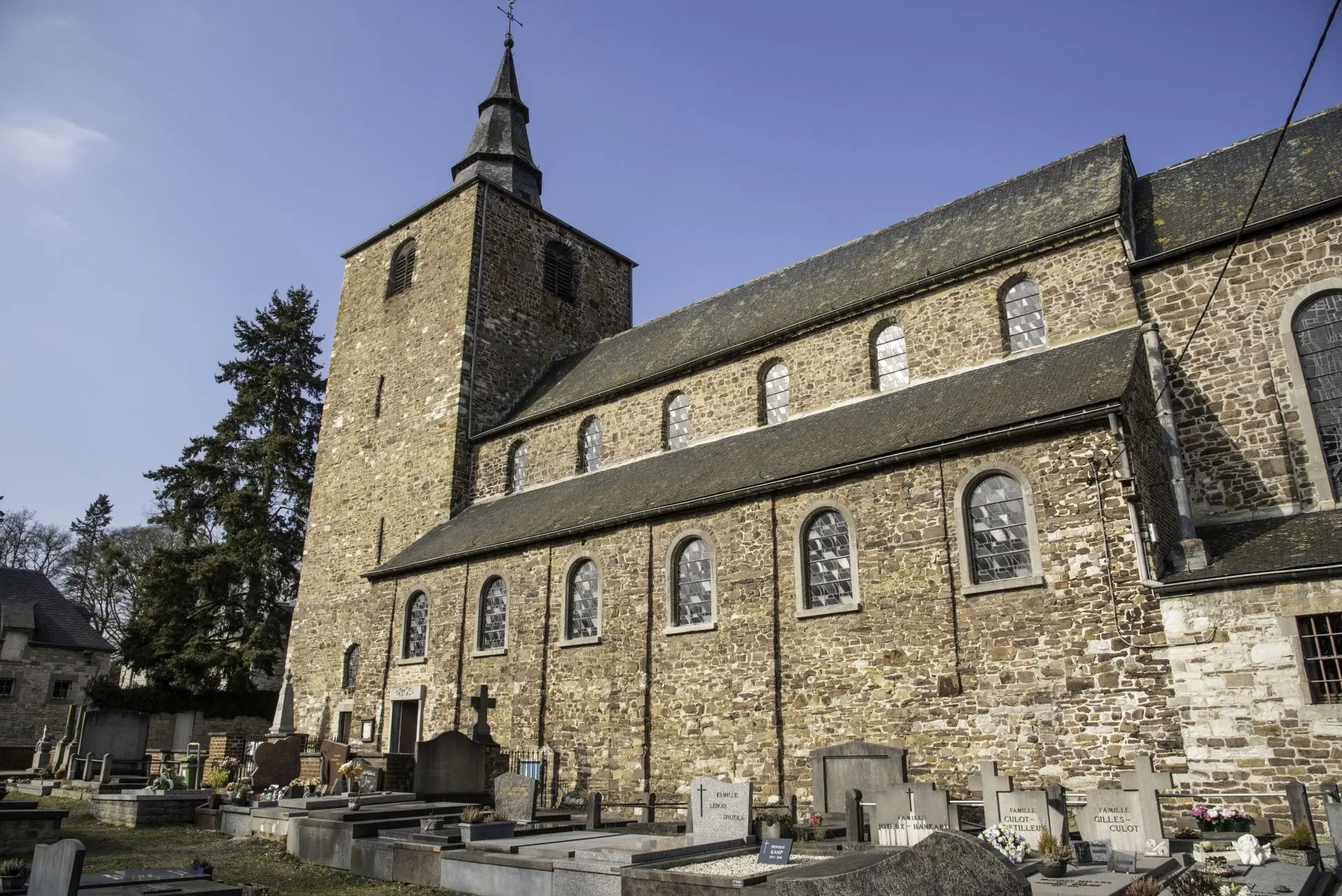
The original church, built at the expense of the local lord and villagers, was made of wood and was probably reduced to a single nave. Due to the increase in the population, the church had to be enlarged but the lord did not wish to contribute to the costs, so it was transferred to the abbey of Géronsart, located on the borders of Namur. It was replaced by a stone building with three naves, six bays and a flat-headed choir, once framed by two apsyoles.
A serious fire destroyed roofs and ceilings in 1706. The tower was restored ten years later, topped by an octagonal three-level slate spire and equipped with 3 new bells. The lower square room was then used as a school, which probably explains the presence of a large open fire. There is a great Christ in polychrome wood decorated with the symbol of the 4 evangelists.
Later, sacrificing to the taste of the time, the interior furniture was redesigned in baroque style.
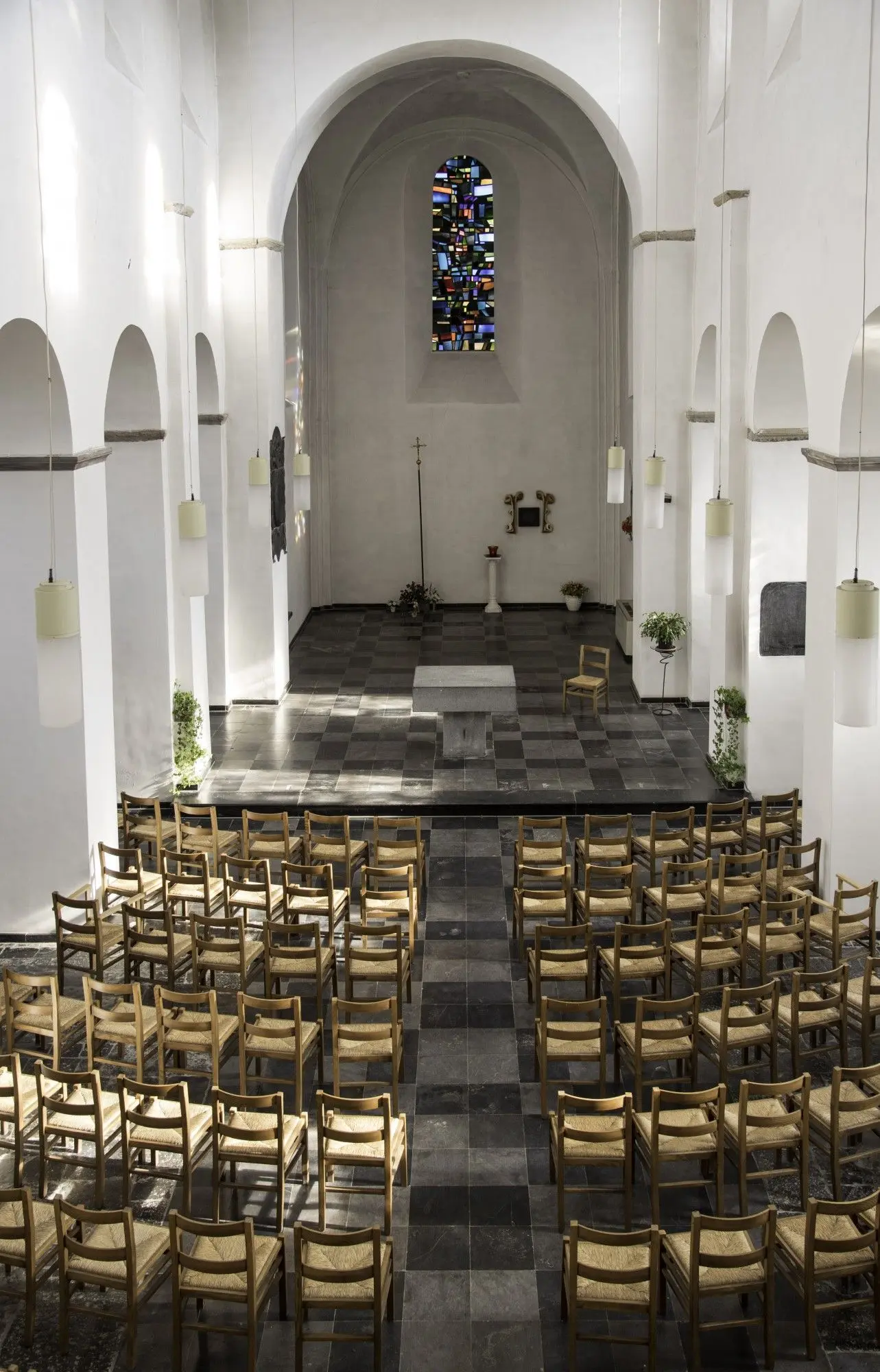
Major restoration work was undertaken in the late 1970s by architects Roger Bastin and M. Genot, assisted by sculptor Jean Williame and master glassmaker Louis-Marie Londot. They favoured a return to Romanesque semi-circular arches and a deliberately bare decoration.
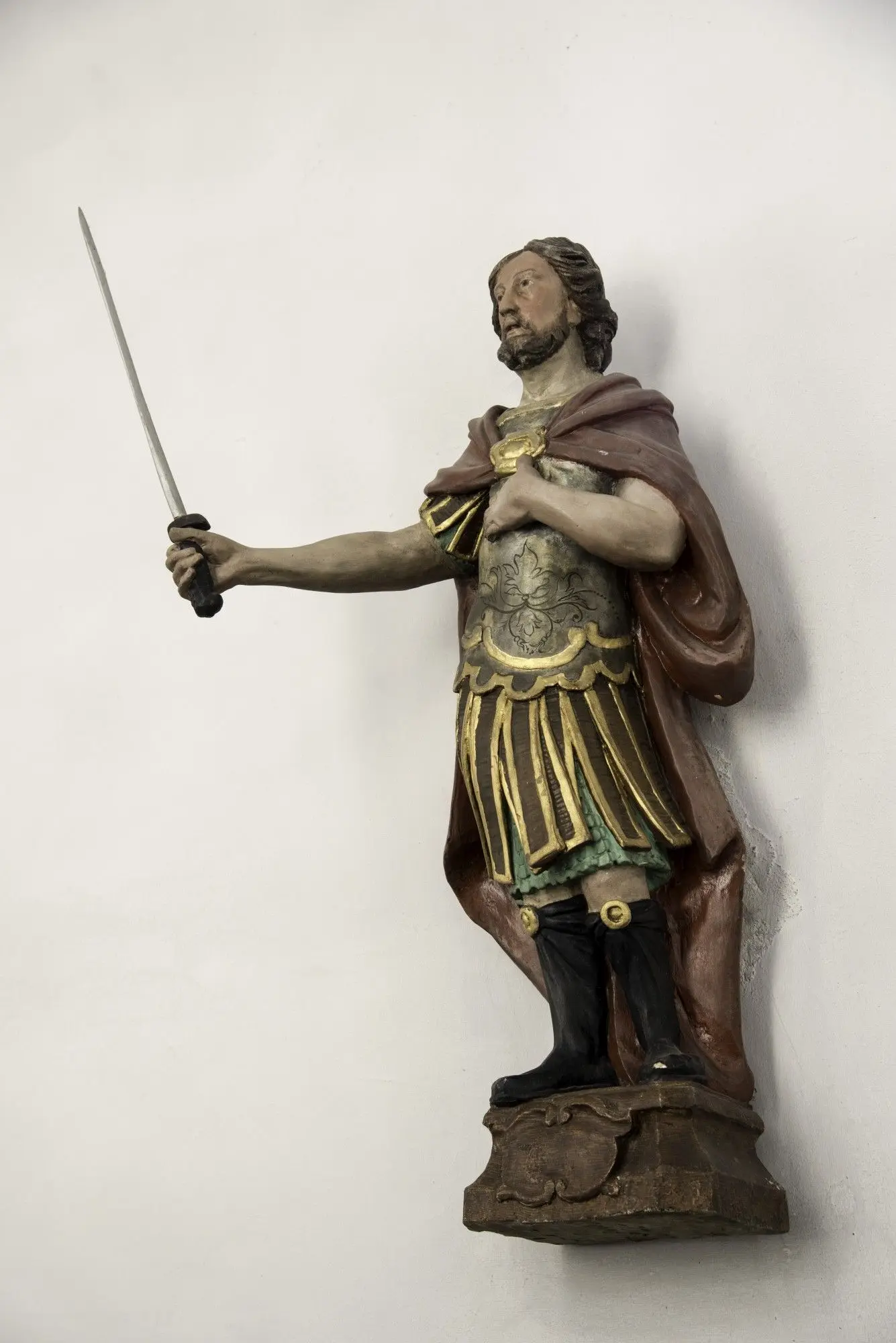
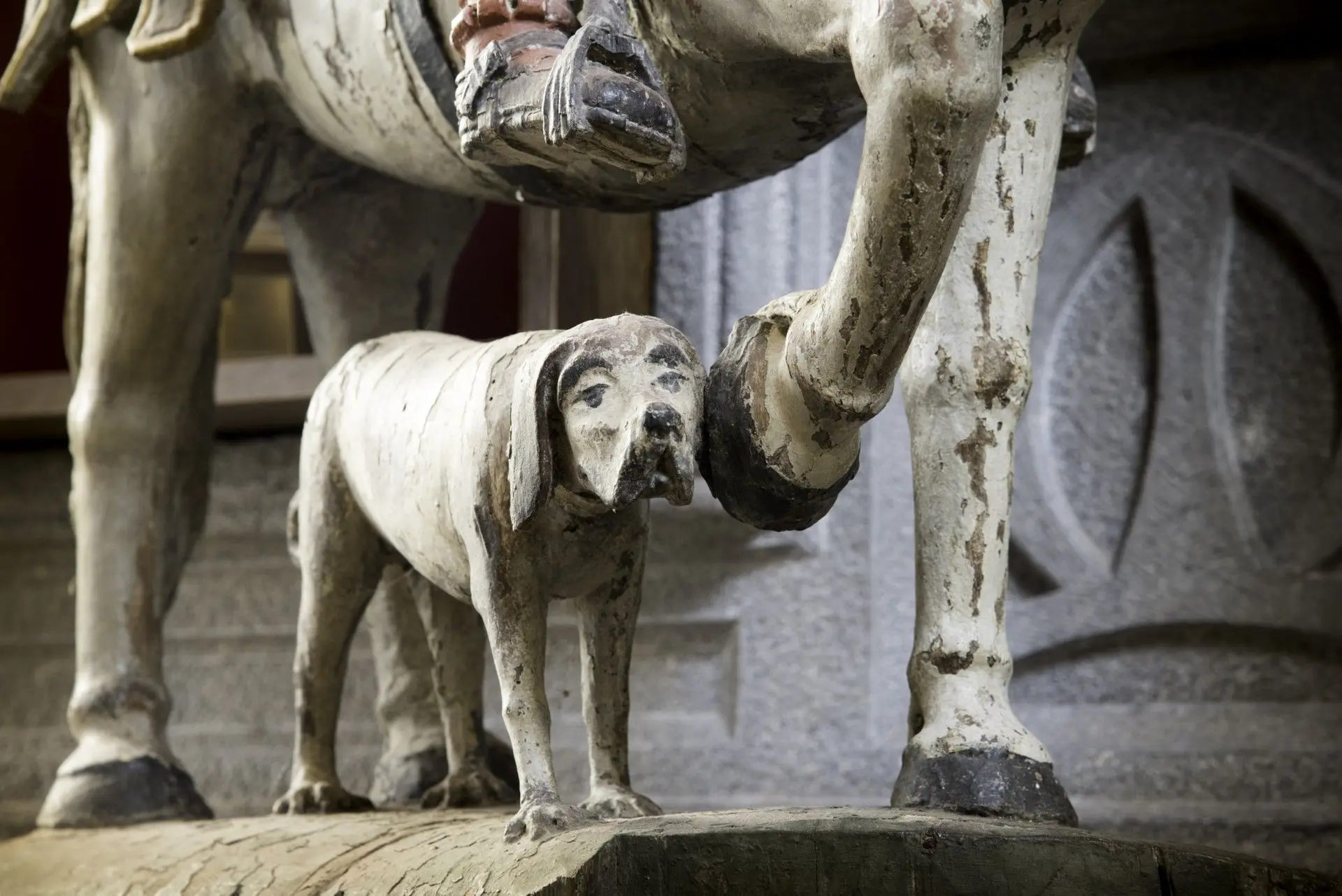
In addition to pretty confessionals, there are four polychrome wooden statues of saints from the 17th and 18th centuries (Saint Donat, Saint Roch, Saint Fiacre and Saint Hubert) in the aisles.
KIKIRPA : Photo-library online
Remarkable elements

Medival tower from the 11th century
Older than the church, the tower was first a defensive refuge for the noble family and nearby…
Older than the church, the tower was first a defensive refuge for the noble family and nearby people. Isolated, it served only for protection and was likely topped with a removable wooden “hourd.” Some loopholes from that era remain. Its only entrance, on the south side near the cemetery, was a high door reached by ladder; once removed, access was impossible. This opening, still visible, was arched in the Middle Ages.

Organ
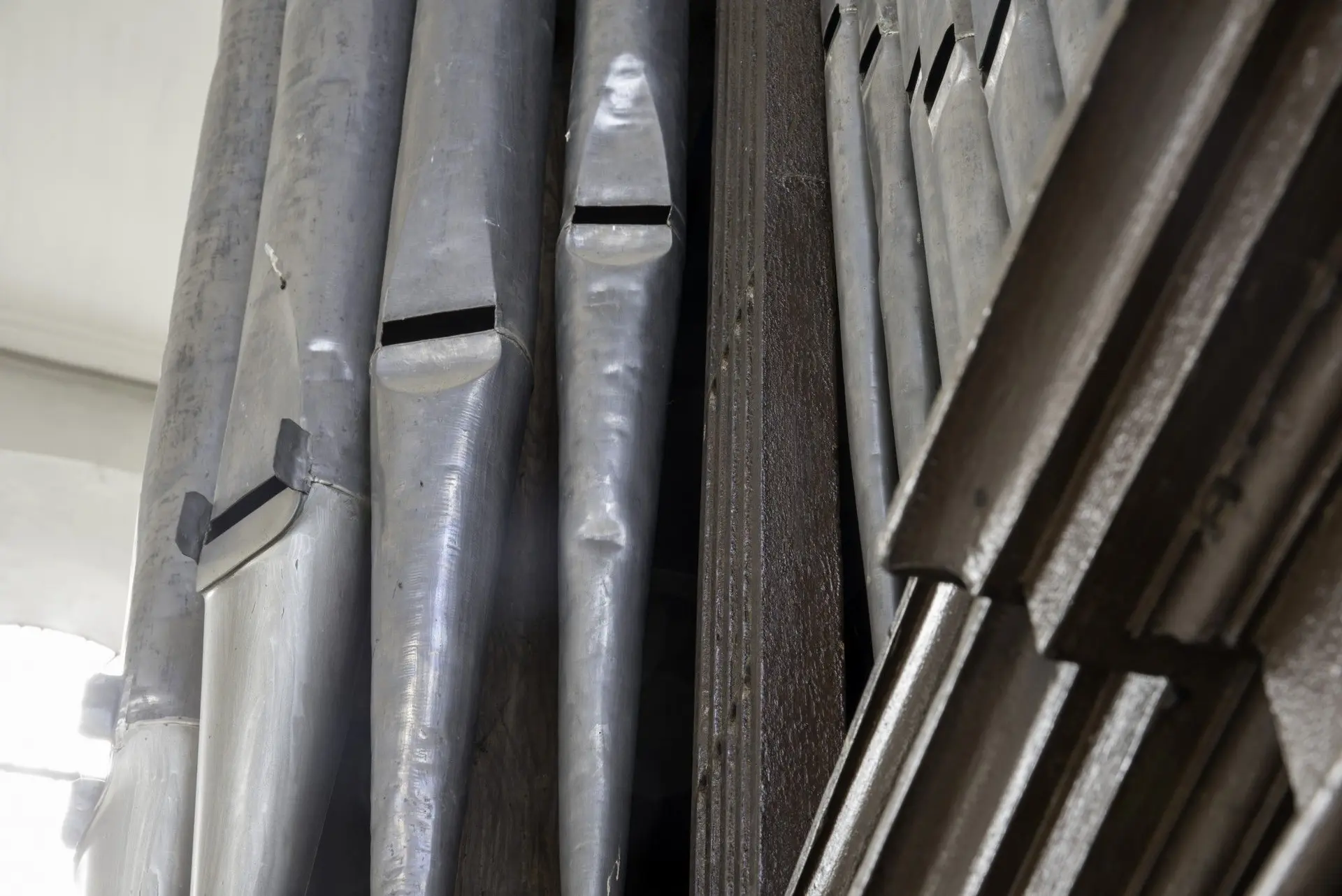
The magnificent 17th century baroque buffet is the oldest in Namur. According to some sources it…
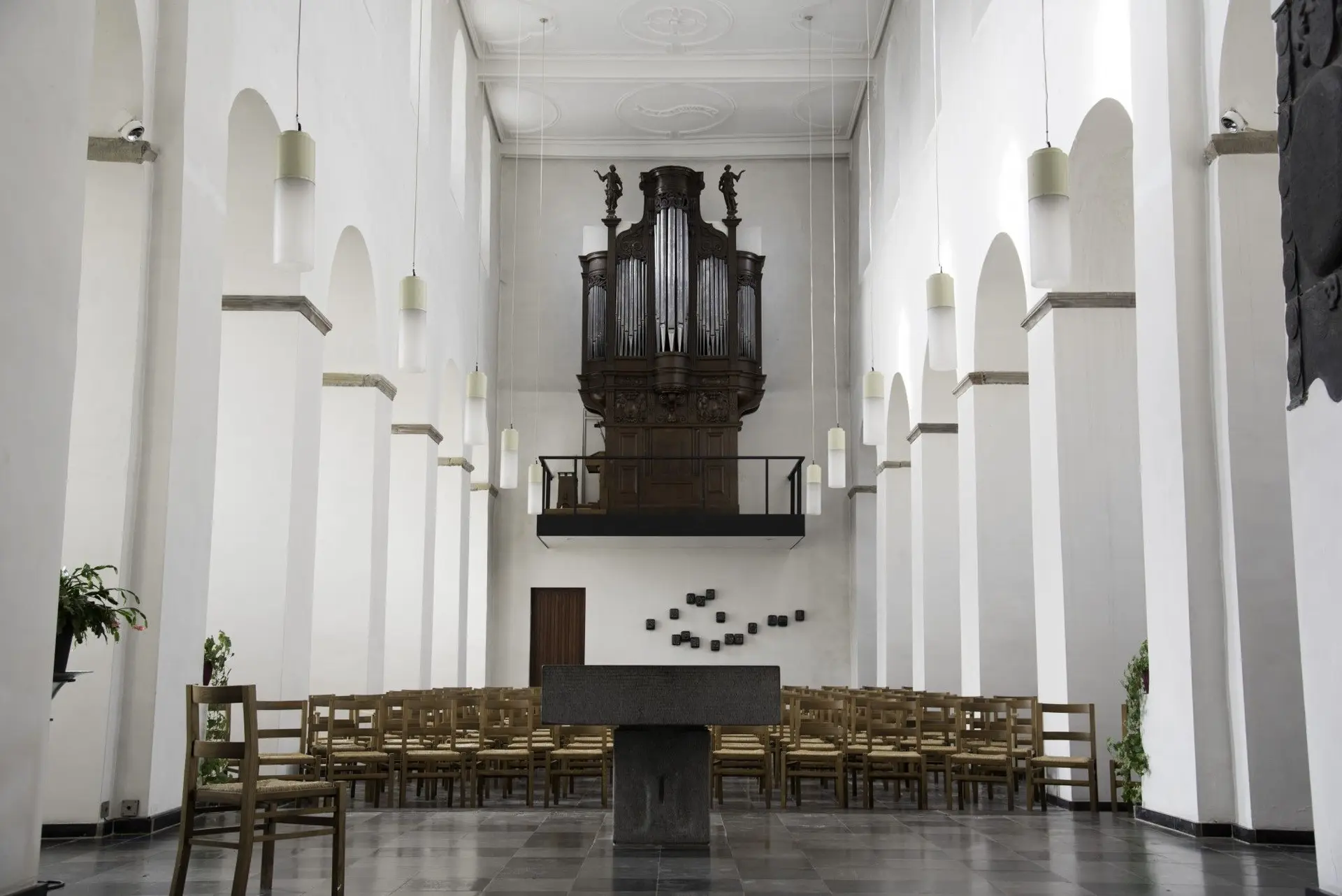
The magnificent 17th century baroque buffet is the oldest in Namur. According to some sources it comes from the nearby abbey of Géronsart (Jambes). The archives of this abbey mention the intervention, in 1763, of the Barnabé factor, then in 1780 of Ditgen. Given the rarity of 17th century Walloon organs, the path of restoration is essential.

Way o f the cross
Under the rood pole, sculptor Jean Willame created small polished granite blocks tracing a…
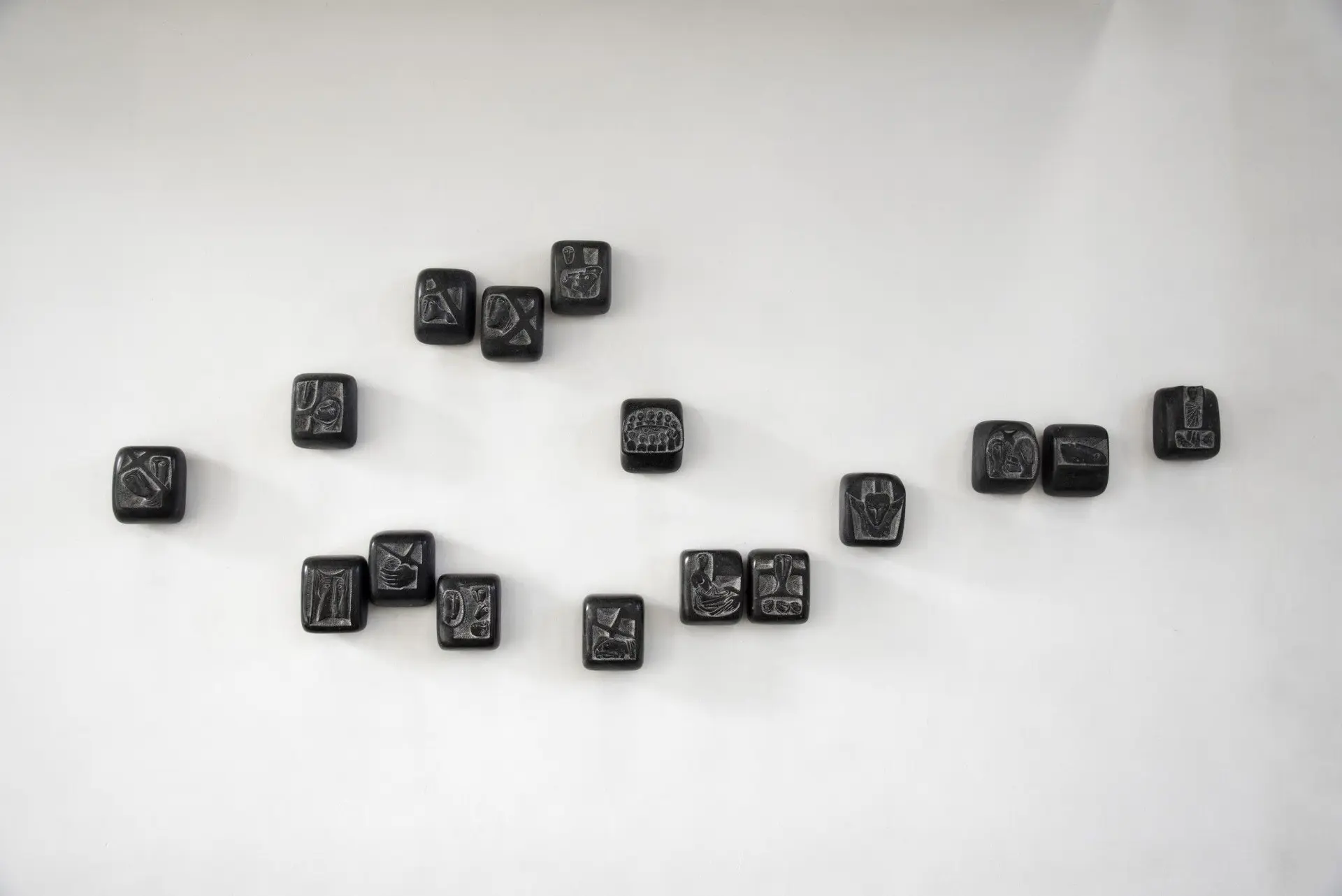
Under the rood pole, sculptor Jean Willame created small polished granite blocks tracing a hesitant yet precise path from the Last Supper at the center to the Resurrection on the right, with an unusual total of 16 stations. The altar, the credence near the sacristy door, the front door lintel showing rural scenes, and the simple baptismal font are also his work.

Polychrome stained glass windows
The stained glass windows are the work of Louis-Marie Londot: a small one above the entrance…
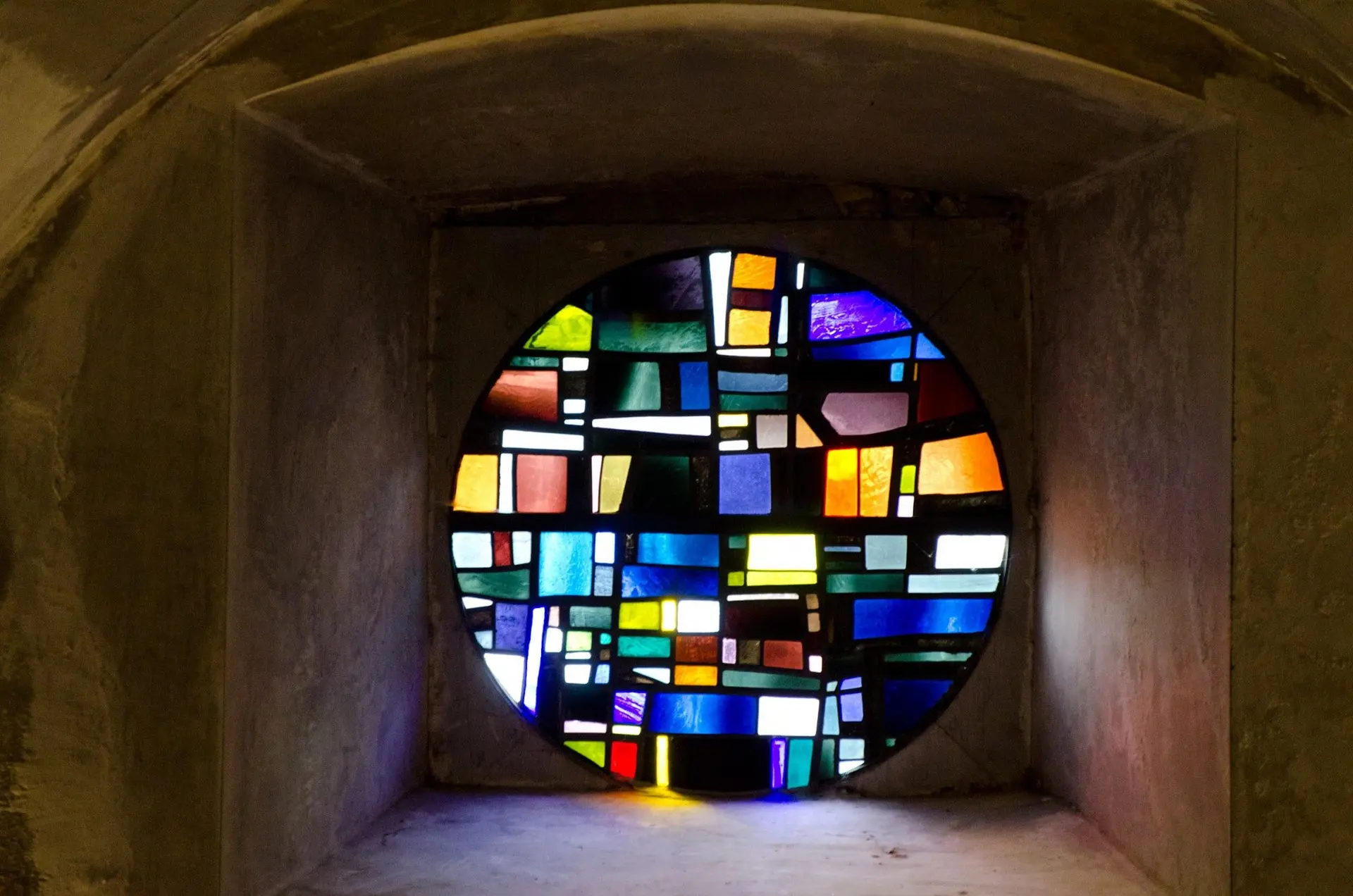
The stained glass windows are the work of Louis-Marie Londot: a small one above the entrance door of the tower, 3 large ones in the choir and a small one above the baptismal font (in the absidiole of the left side nave). In fine weather, the lateral stained glass windows of the choir project a wonderful palette of colors on the opposite wall, like a kaleidoscope, in the morning through the right stained glass window, and at the end of the day through the left stained glass window.

Pavement
Admirable of life with its old slabs with patinas reflecting the weight of the years. Although…
Admirable of life with its old slabs with patinas reflecting the weight of the years. Although black, it makes a particularly bright reflection.

Small baroque altar
In the right side nave, it is dedicated to Our Lady of the Rosary and polychromed by Louis…
In the right side nave, it is dedicated to Our Lady of the Rosary and polychromed by Louis Londot during the restoration of the church in 1975 by the architect Roger Bastin.
Labels

To find out more
Hours
Closed
Religious services
Saturday 6.30 pm
See the updated timetable on the website of our partner EgliseInfo
Events
Musicawierde a le grand plaisir de vous inviter au concert donné par l'ensemble vocal…
Nearby buildings

Comments (0)