Saint Christopher
Building profile
Historic/listed monument
Practical information


 © Églises Ouvertes
 © Églises Ouvertes
 © Églises Ouvertes
 © Églises Ouvertes
 © Églises Ouvertes
 © Églises Ouvertes
 © Églises Ouvertes
 © Églises Ouvertes
 © Églises Ouvertes
 © Églises Ouvertes
 © Églises Ouvertes
 © Églises Ouvertes
 © Églises Ouvertes
 © Églises Ouvertes
About this building
The current Saint Christopher church was built between 1785 and 1791 after the old church completely burned to the ground in 1783. It became a brick hall church with tower by the design of architect François Drieghe in the style and views of the classicism with extra attention to use of space incidence of light.
Both world wars created a lot of damage to the church building. For example, the front of the building had to be completely restored after a dynamite explosion. Behind the church stands a war memorial for the victims of both…
The current Saint Christopher church was built between 1785 and 1791 after the old church completely burned to the ground in 1783. It became a brick hall church with tower by the design of architect François Drieghe in the style and views of the classicism with extra attention to use of space incidence of light.
Both world wars created a lot of damage to the church building. For example, the front of the building had to be completely restored after a dynamite explosion. Behind the church stands a war memorial for the victims of both world wars, with a Sacred Heart statue (1928).
The church is upholstered with 18th century and primarily 19th century quality furniture, paintings and sculptures amongst which there is an oak paneling decorating the entire church. The main altar was crowned with a painting “The road to Emmaus” (1812) by Joseph Paelinck. The side altars of Our Lady and the Holy Cross are crowned by groups of statues by J. Nimmegeeers made in 1852, The organ from 1929 is by the brothers Reygaert with piping from the old organ of J.J. Delhaye from 1832.
The Saint Christopher church is the oldest place of pilgrimage of Saint Christopher. Every year there is a Christopher fair on which the road users are being blessed (pedestrians, cyclists, drivers) at the Christopher pit on the pleasant village square on which a 17th century pillory adorns.
KIKIRPA : Photo-library online
More information about the church (NL)
Remarkable elements
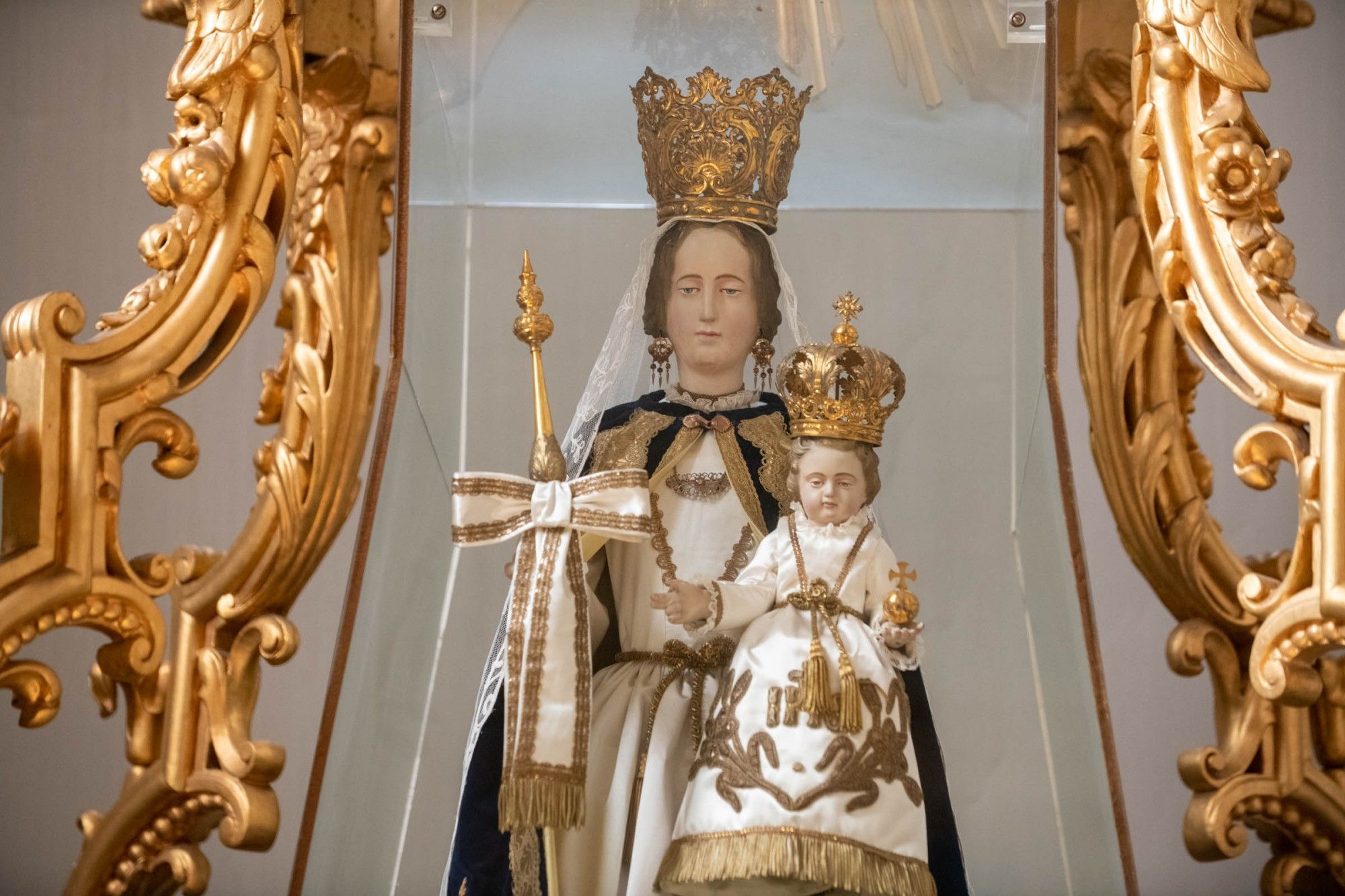
Throne scene with statue of the Holy Mary
The showpiece of this church is without doubt this throne scene in three parts: the 19th century…
The showpiece of this church is without doubt this throne scene in three parts: the 19th century statue of the Holy Mary in polychrome wood, the canopy with monogram of the Holy Mary and the oak table supporting the whole. This valuable work of art was almost lost after the church was blown up during WWI. It lay forgotten in an artist’s studio for 40 years but was restored to its former glory in 1960.
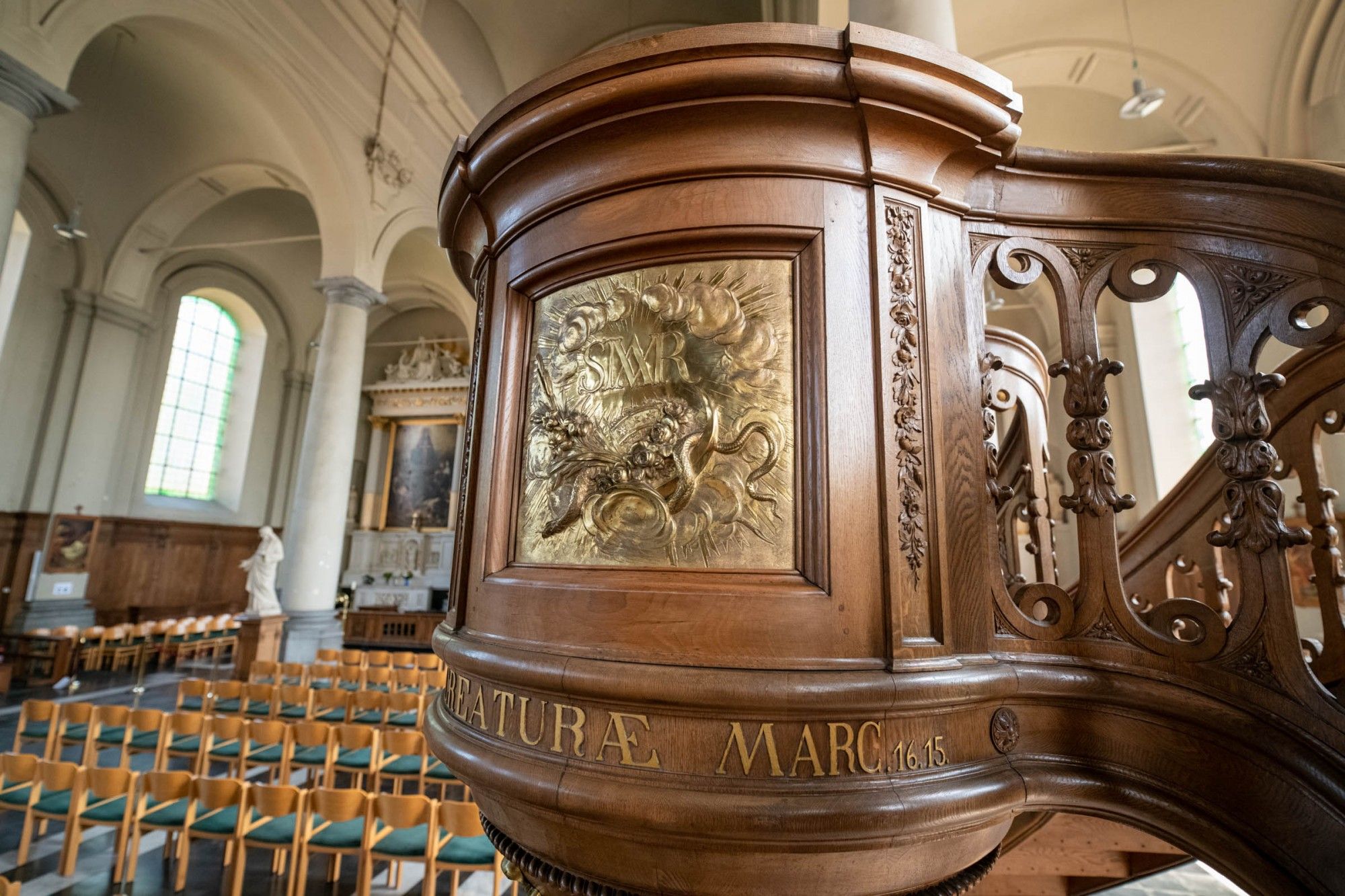
Pulpit with copper cladding
After the bombardments in 1918 the old pulpit was almost entirely restored. The renewed body…
After the bombardments in 1918 the old pulpit was almost entirely restored. The renewed body bears the copper plates made by the 19th century artist Tiberghien. The plates are said to be donated in 1829 by the Brotherhoods of the Holy Cross and the Holy Rosary.
The middle plate is dedicated to the name of God, here written in Hebrew. The second plate depicts the Passion of Christ and the third plate is dedicated to the Holy Mary.
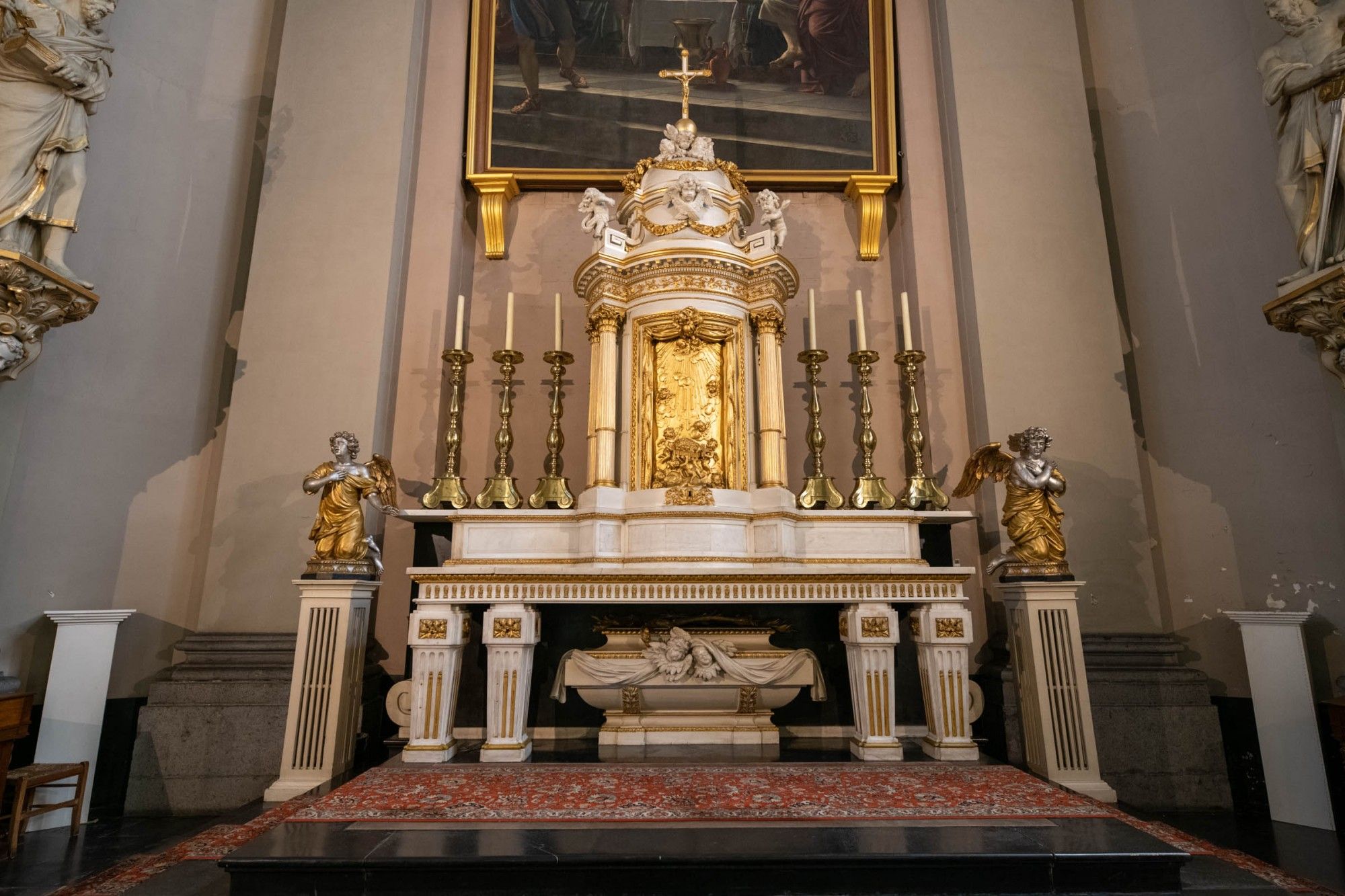
New altar with a view of the chancel
The sober, harmonious interior steers our attention towards the altar and the chancel.
The…
The sober, harmonious interior steers our attention towards the altar and the chancel.
The main altar is dominated by a white marble tabernacle, partly gilded. It was made by the Ghent artist Tiberghien, shortly after the restoration of the church.
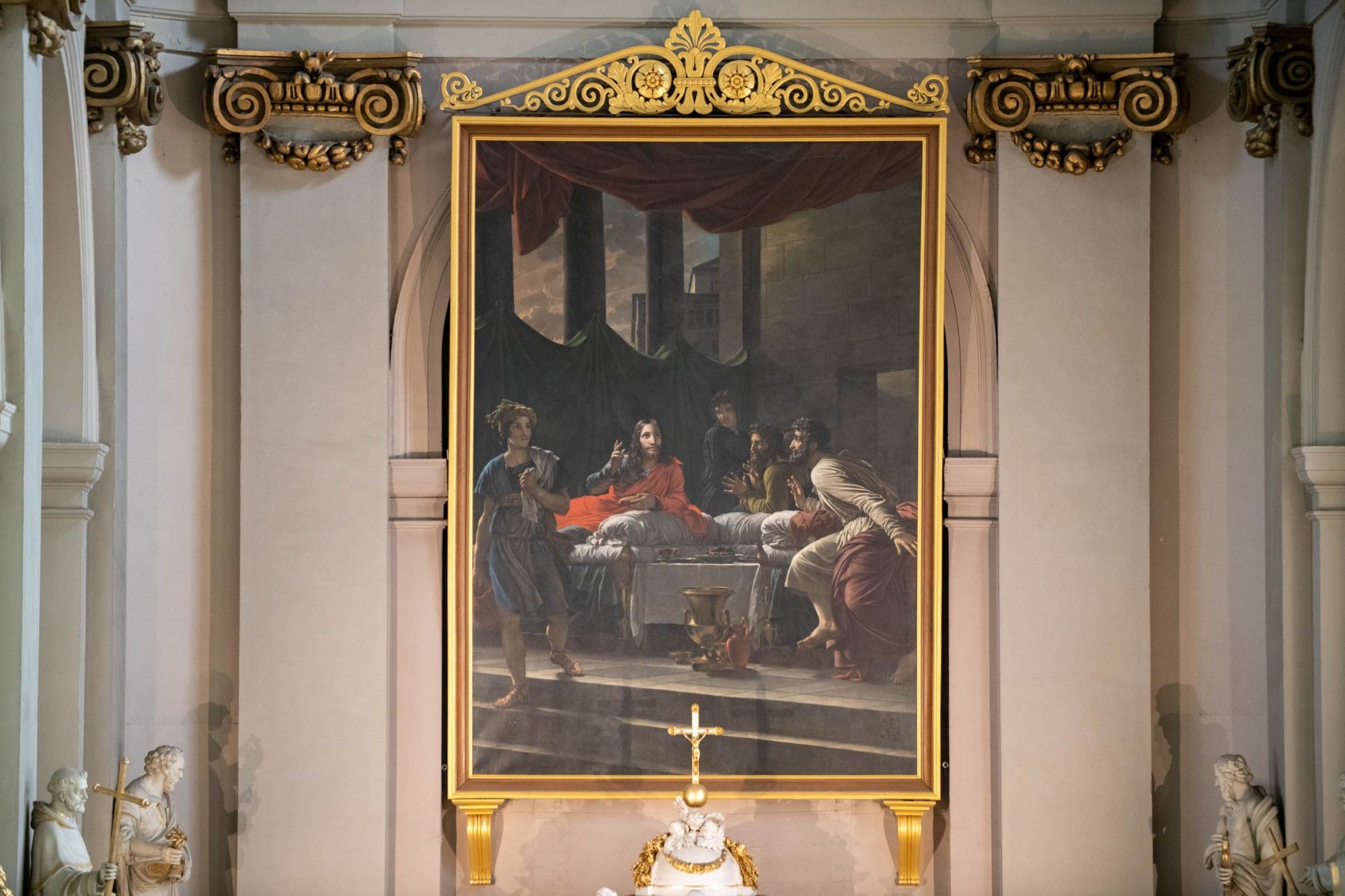
'The Trip to Emmaus' by Jozef Paelinck
Since 1819 this painting by Jozef Paelinck hangs over the main altar. It was recently restored.…
Since 1819 this painting by Jozef Paelinck hangs over the main altar. It was recently restored. Jozef Paelinck was painter at the court of the queen of the Low Countries. This neo-classicist painting is one the best works in his oeuvre. It depicts a scene from the Gospel when Jesus Resurrected appears to the disciples on their way to Emmaus and breaks the bread with them as token of identification.
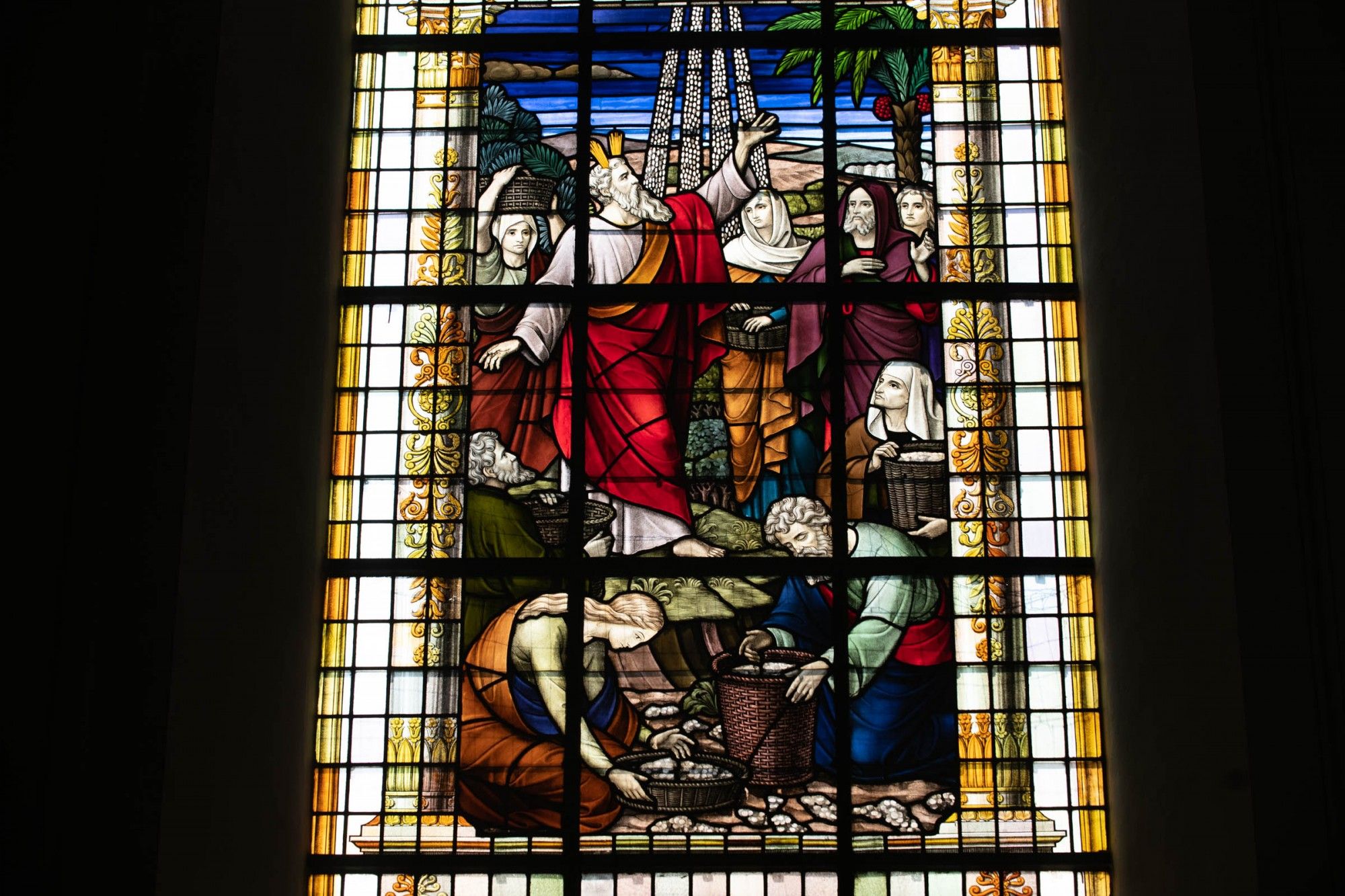
Stained glass windows
The five windows (1928 1930) replace those lost in WWI. Designed by Hendrik Coppejans and funded…
The five windows (1928 1930) replace those lost in WWI. Designed by Hendrik Coppejans and funded by the congregation, they show biblical scenes in deep, light catching colors. One depicts the Holy Trinity with the symbols of the four evangelists. The others show the miracle at Cana, the multiplication of the loaves, manna in the desert and water flowing from the rock.
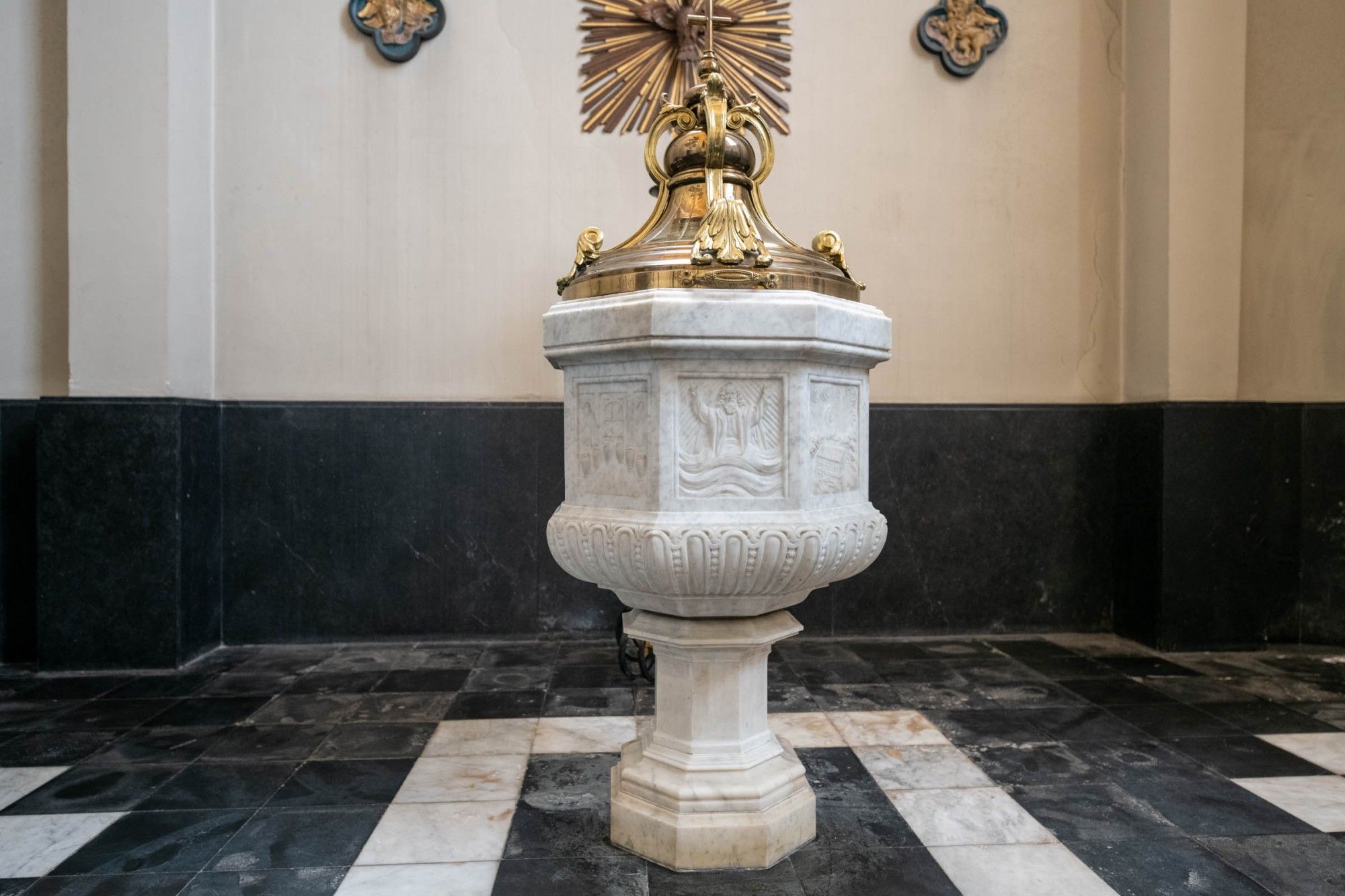
Font
The baptistery in the northern aisle houses the font made by Jules De Visscher in 1927. The base…
The baptistery in the northern aisle houses the font made by Jules De Visscher in 1927. The base and body are sculpted from polished marble and depict scenes such as the baptism of Jesus. The shape is octagonal, the number 8 symbolizing eternal life. The font is covered in finely beaten copper.
Labels

Medias
To find out more
Hours
Closed
Religious services
Kerknet
Nearby buildings



Comments (0)