
Saint Peter
Building profile
Practical information


 © Églises Ouvertes
 © Églises Ouvertes
 © Églises Ouvertes
 © Églises Ouvertes
 © Églises Ouvertes
 © Églises Ouvertes
 © Églises Ouvertes
 © Églises Ouvertes
 © Églises Ouvertes
About this building
The first, already dedicated to saint Peter, was built in 650 on the tomb of Saint Ragenufle, by his parents, Ajus and Aja, great Merovingian lords of the region and close relatives of Blessed Pépin de Landen. Born around 635, Saint Ragenufle refused the beautiful marriage desired by her parents, lived a life of penance in solitude and died of exhaustion on July 14, 650, at the place where today stands her famous fountain, a place of…
The first, already dedicated to saint Peter, was built in 650 on the tomb of Saint Ragenufle, by his parents, Ajus and Aja, great Merovingian lords of the region and close relatives of Blessed Pépin de Landen. Born around 635, Saint Ragenufle refused the beautiful marriage desired by her parents, lived a life of penance in solitude and died of exhaustion on July 14, 650, at the place where today stands her famous fountain, a place of pilgrimage frequented by the faithful.
In 1036, the Lords of Incourt founded a chapter of 12 canons; this institution was established in 1112. Transferred in 1454 to the Saint-Jacques church in Louvain, the Sainte-Ragenufle Chapter was abolished under French rule at the end of the 18th century.
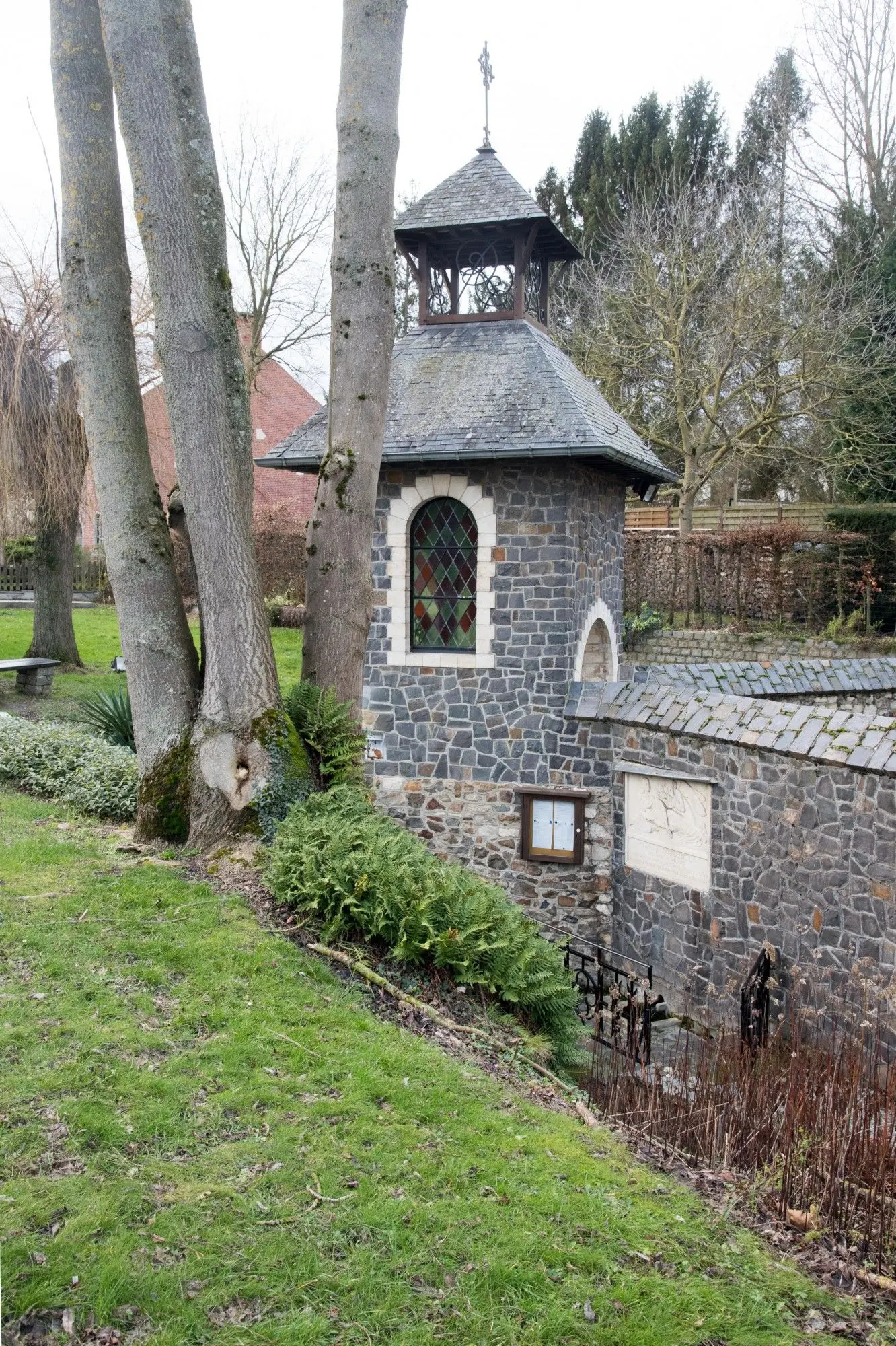
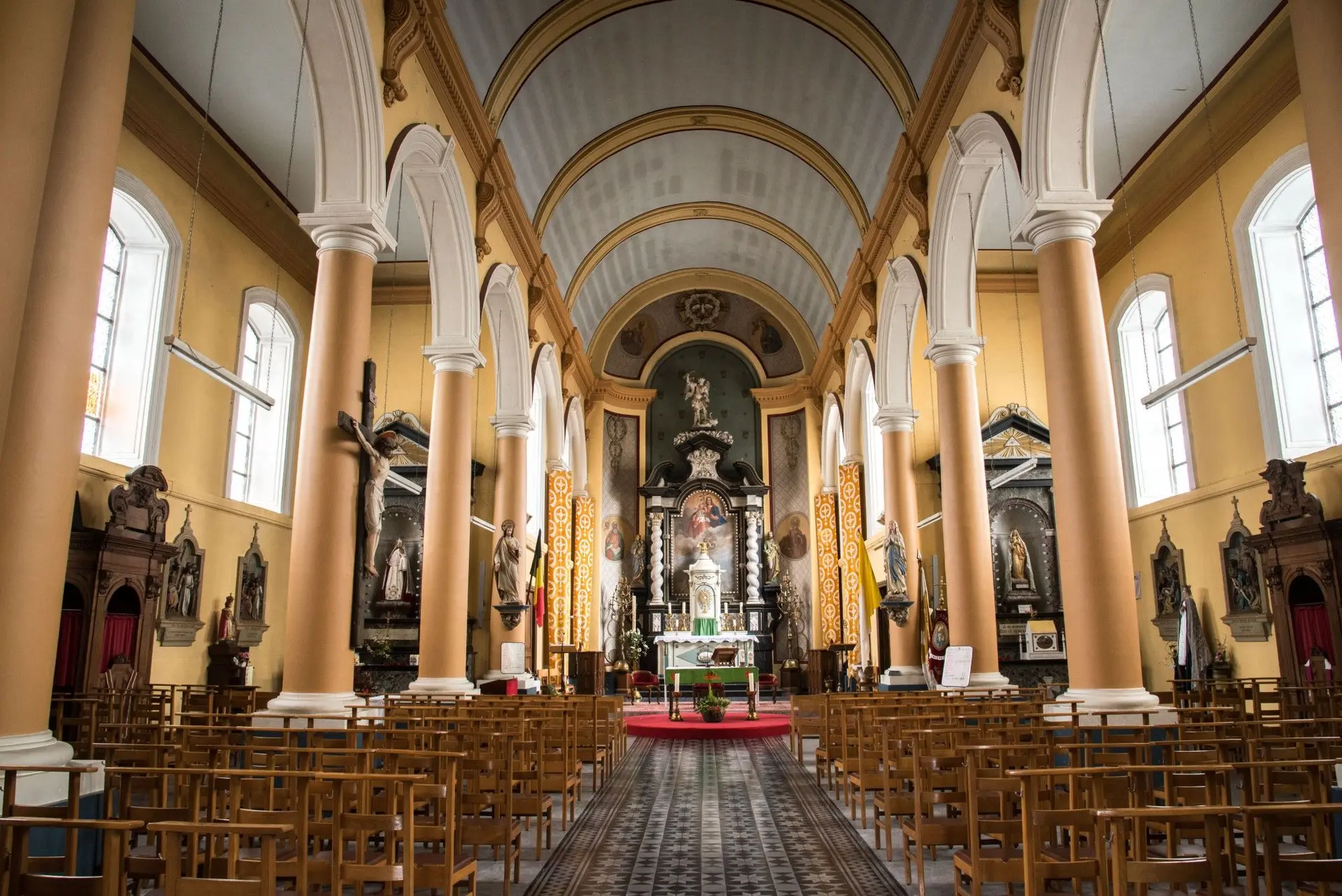
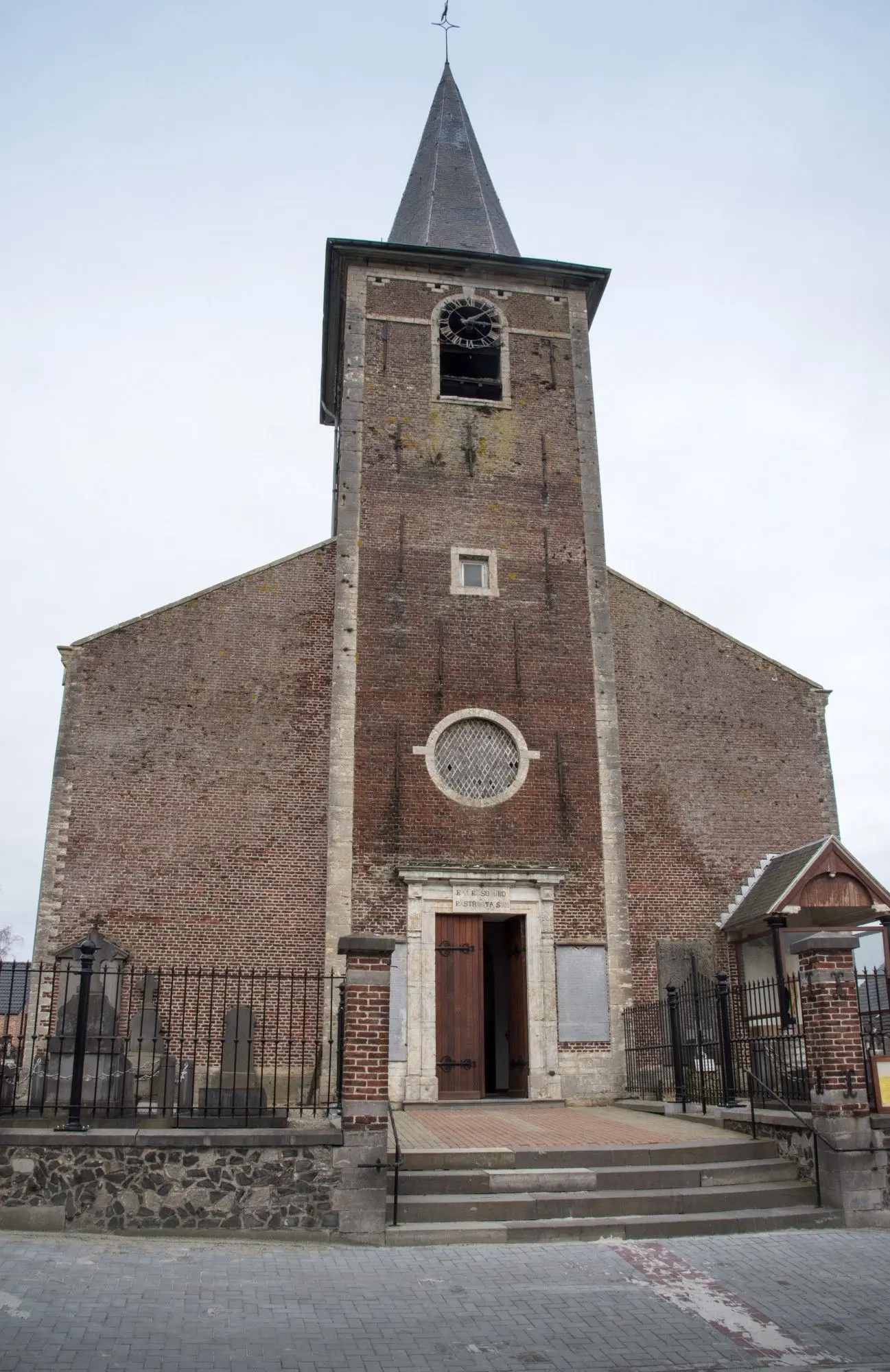
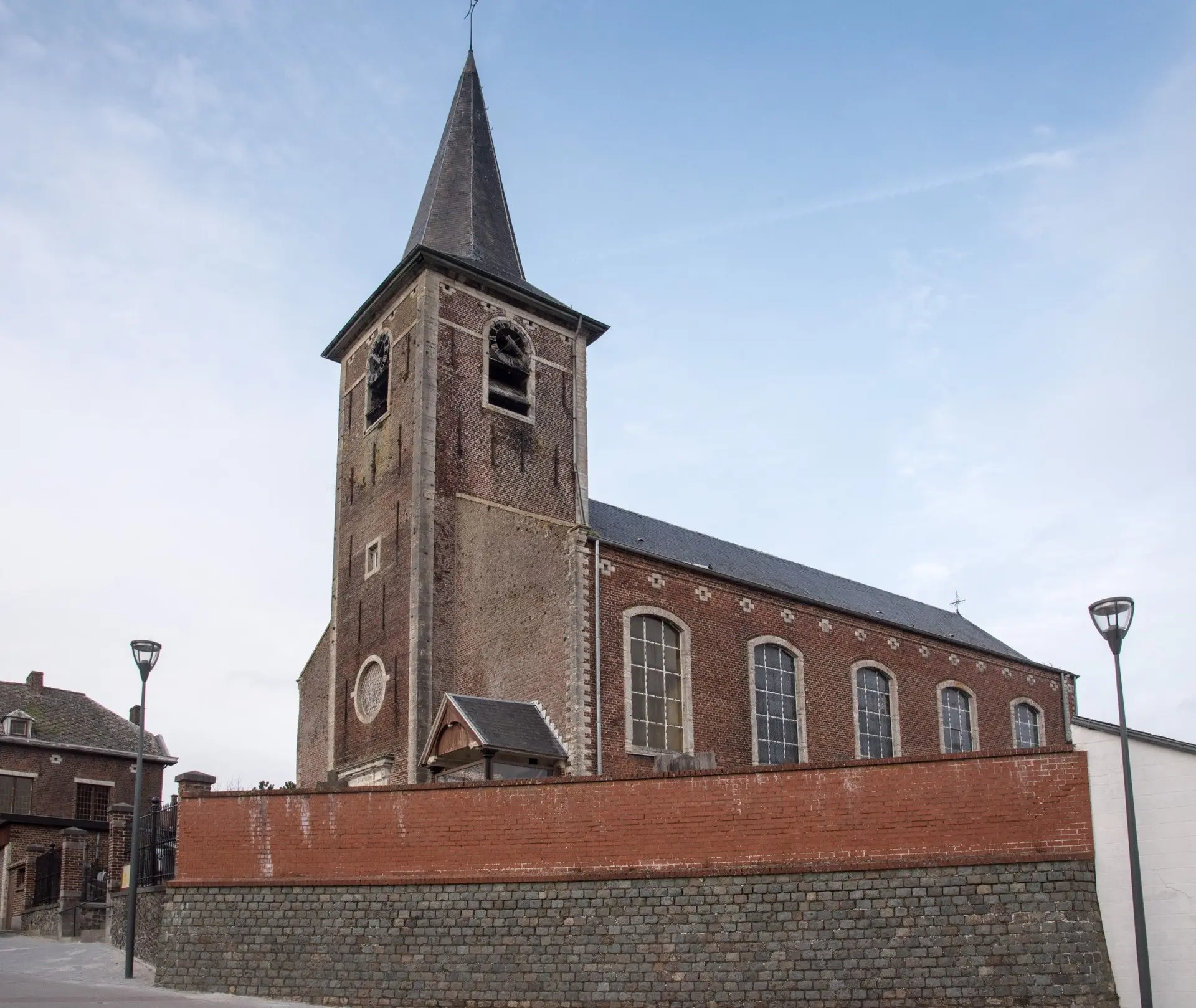
Classical-style church, combining brick and Gobertange stone. The portal is in the Louis XVI style. A two-coloured chronogram is engraved in the lintel of the portal. The church houses a beautiful Baroque-style wooden Christ under the canopy of its façade. The bluestone baptismal font dates from the early 18th century.
KIKIRPA : photo-library online
Remarkable elements
High altar
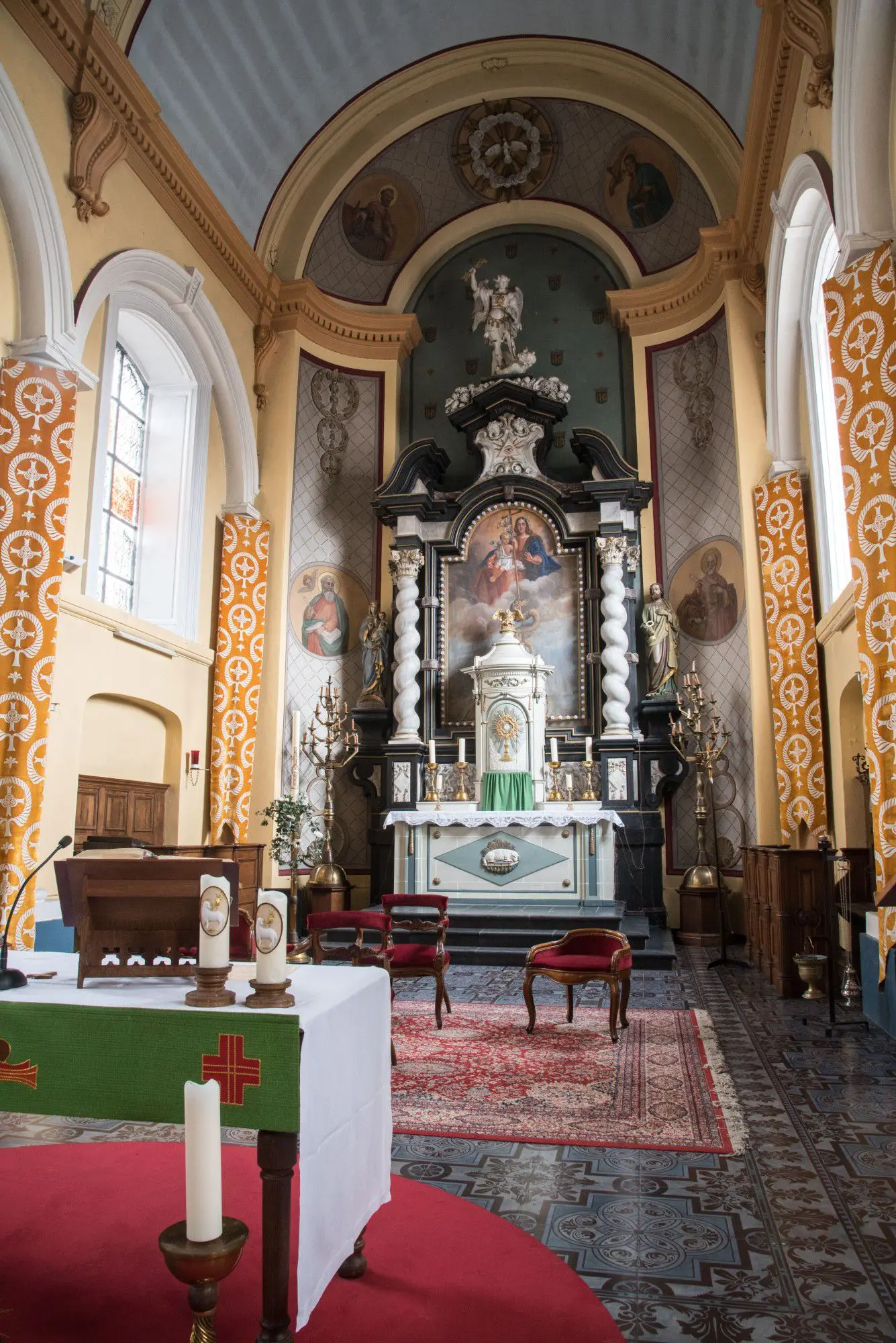
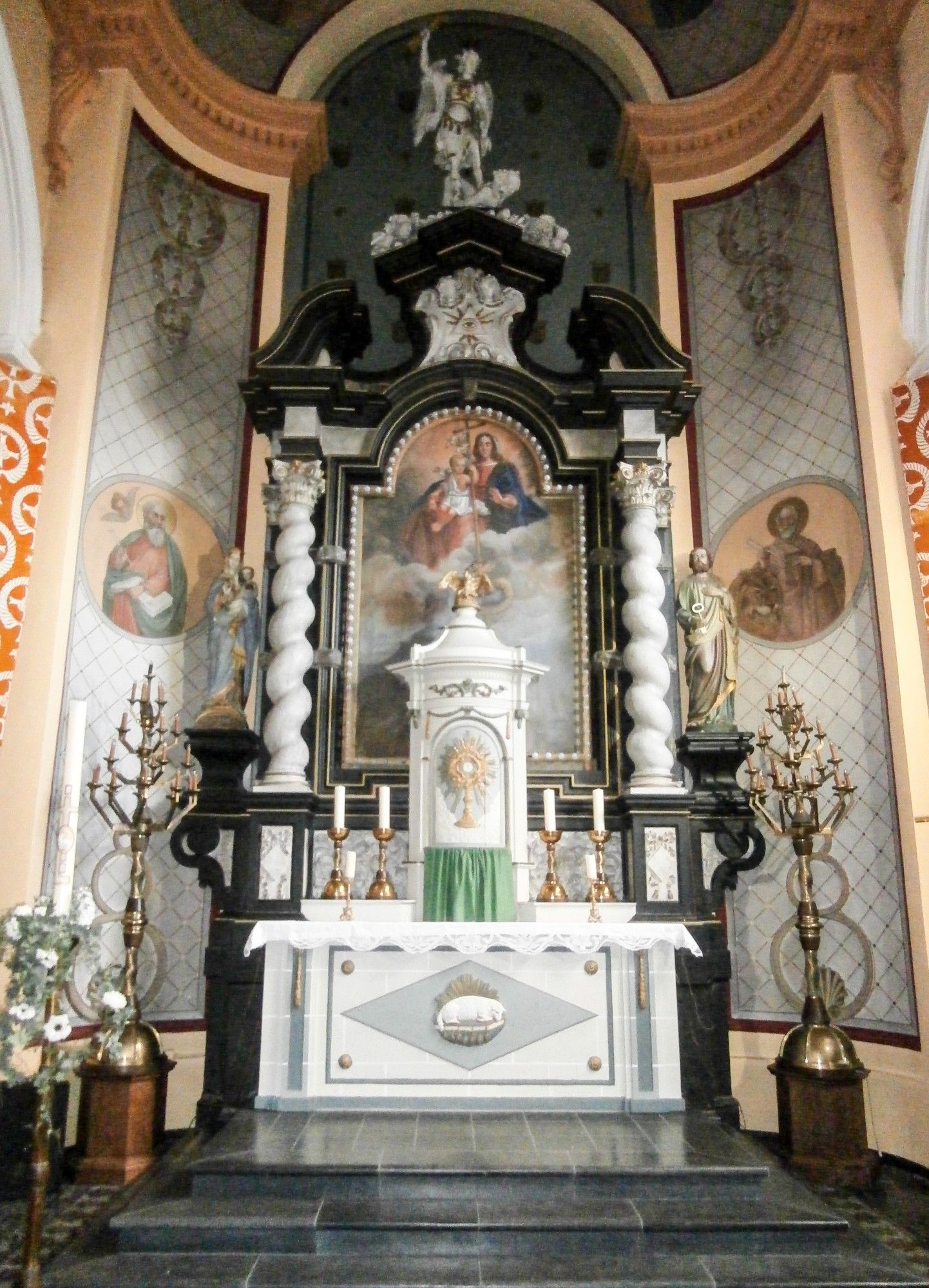
The 17th century baroque high altar, in black marble with white torsos, features a broken…
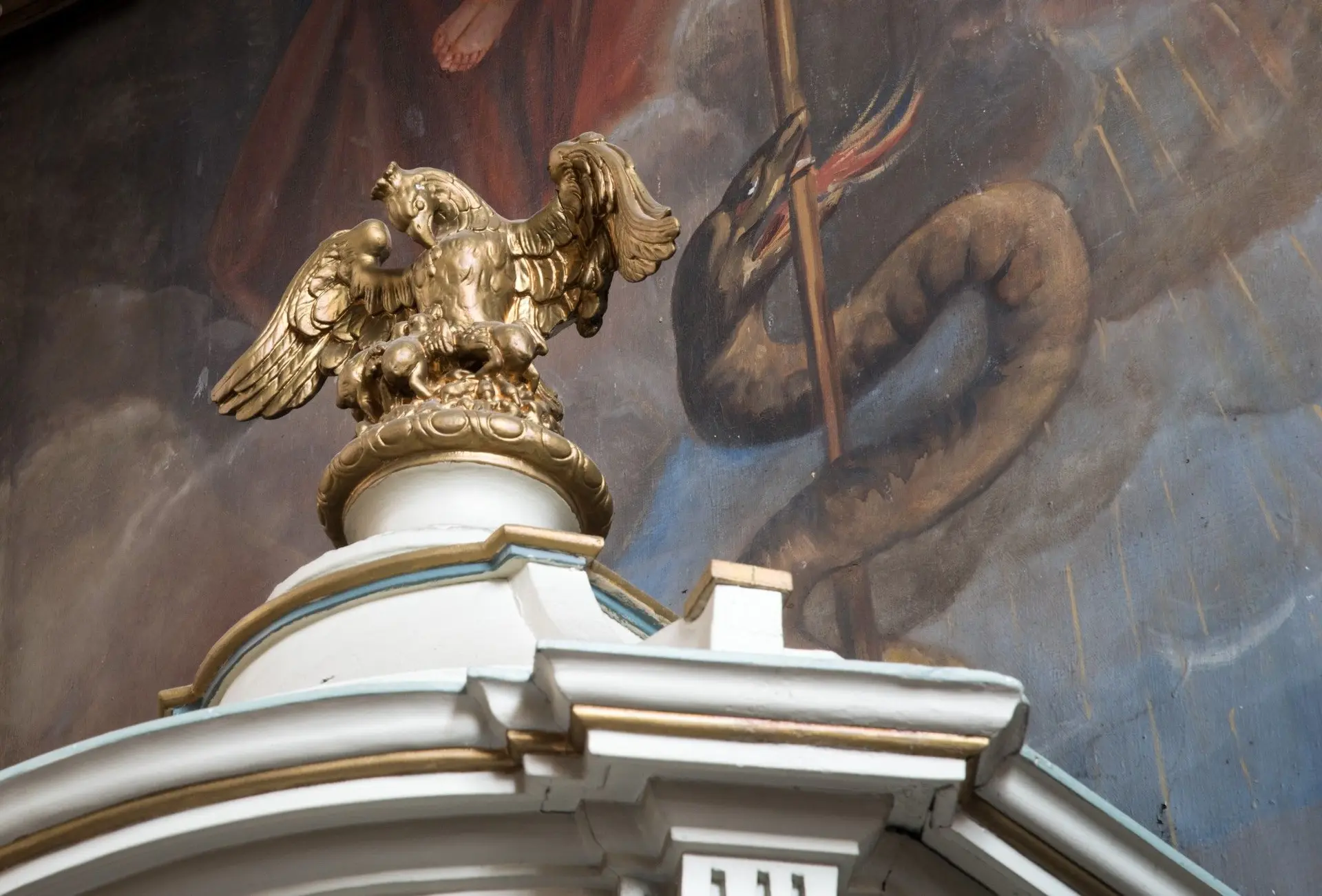
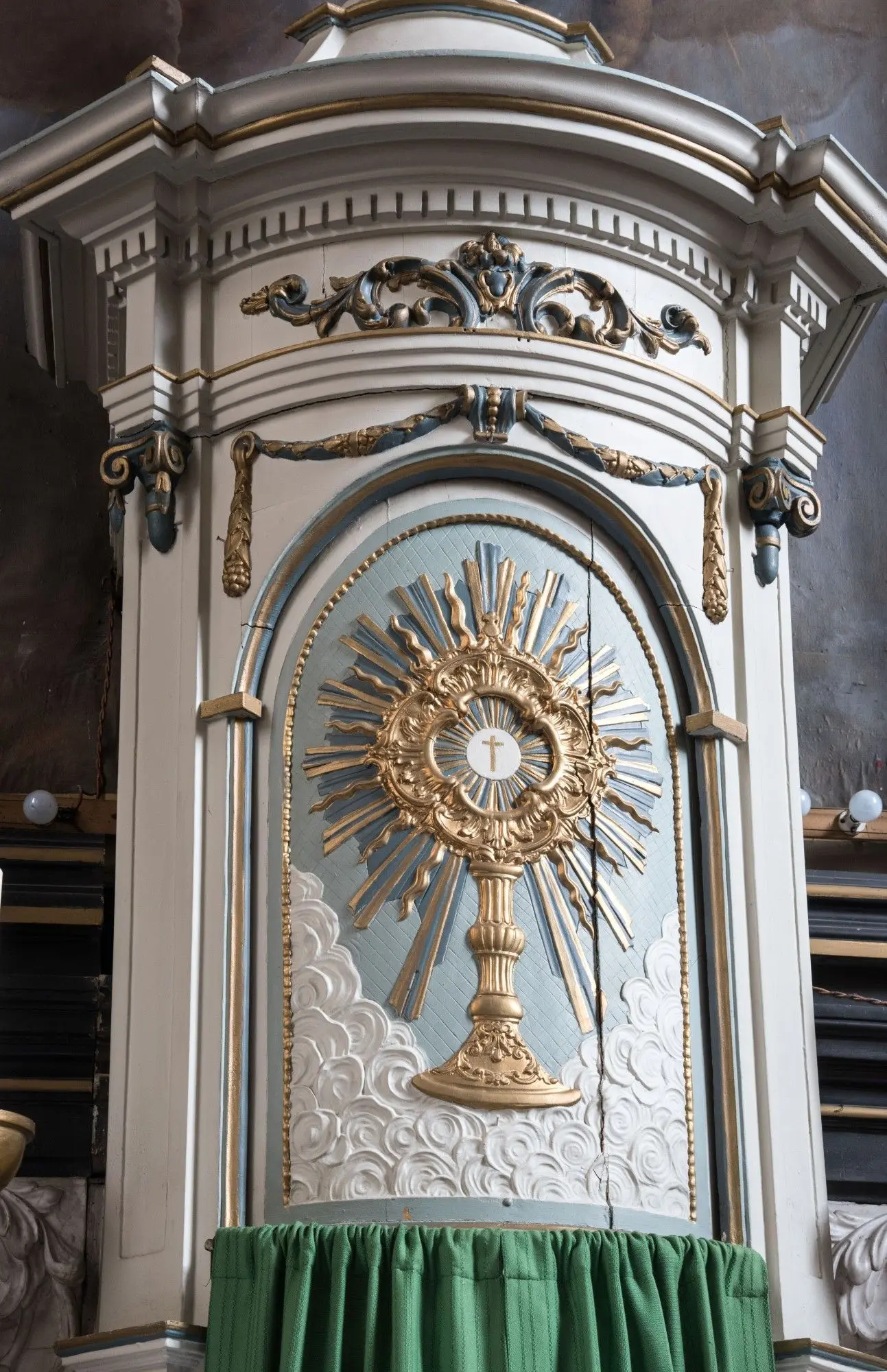
The 17th century baroque high altar, in black marble with white torsos, features a broken pediment topped by Saint Michael defeating the devil, a wooden sculpture gifted in 1763. A painting of the Virgin and Child depicts the Redeemer’s promise and the devil’s fate. The tabernacle bears a carved throne for the Blessed Sacrament, flanked by polychrome terracotta statues of the Virgin with Child and St. Peter.
Side altar
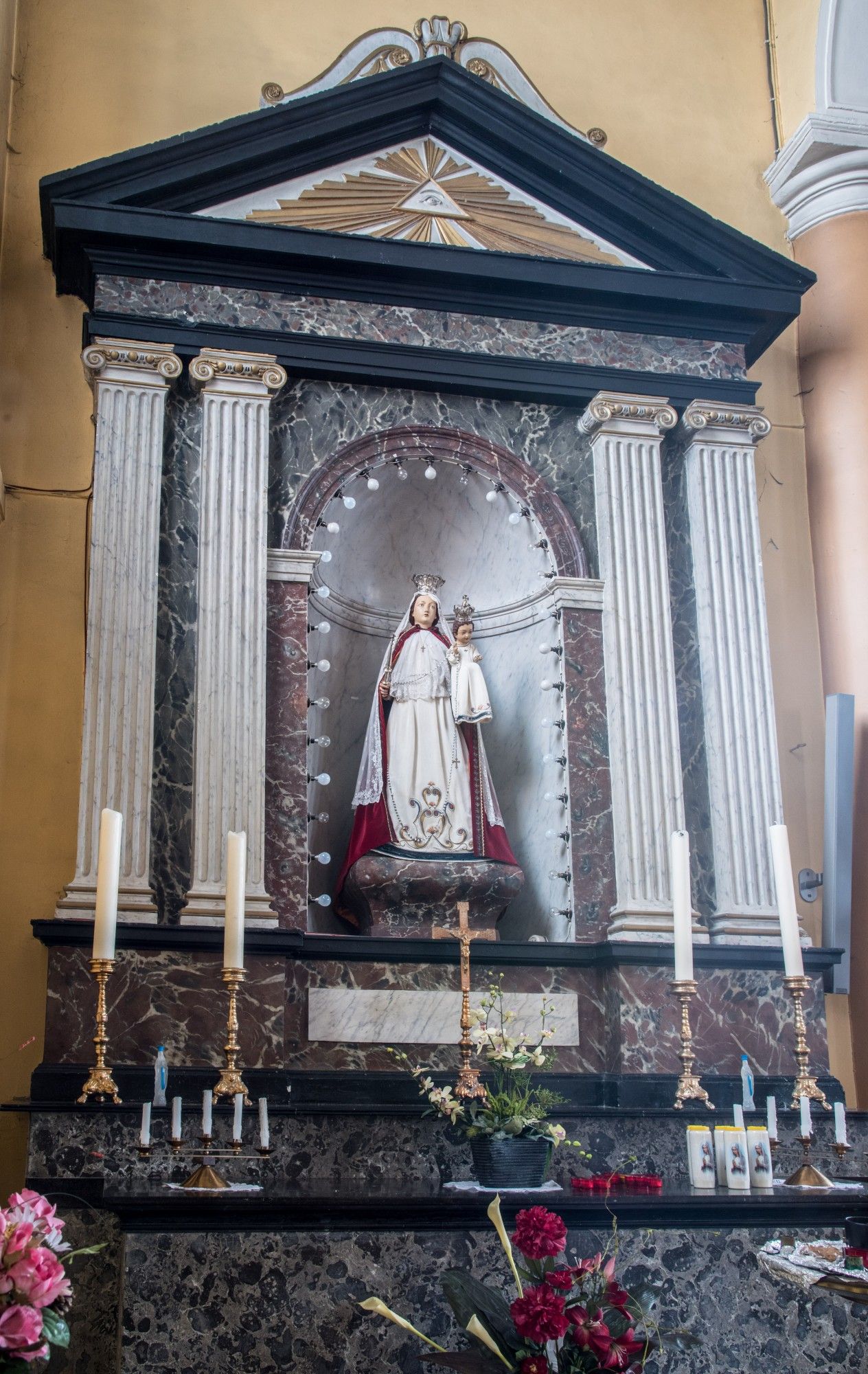
The left side altar, in neo-classical style, with a portico-shaped altarpiece, dates from 1840…
The left side altar, in neo-classical style, with a portico-shaped altarpiece, dates from 1840 or 1843. It is dedicated to Our Lady of the Rosary, whose statue, richly dressed and decorated, occupies the central niche. It dates from the 19th century and participates in processions. Next to it, we can see a frame with a reproduction of Our Lady of Grace, a miraculous Virgin venerated in the church of Berzée.
Translated with www.DeepL.com/Translator
Right side altar
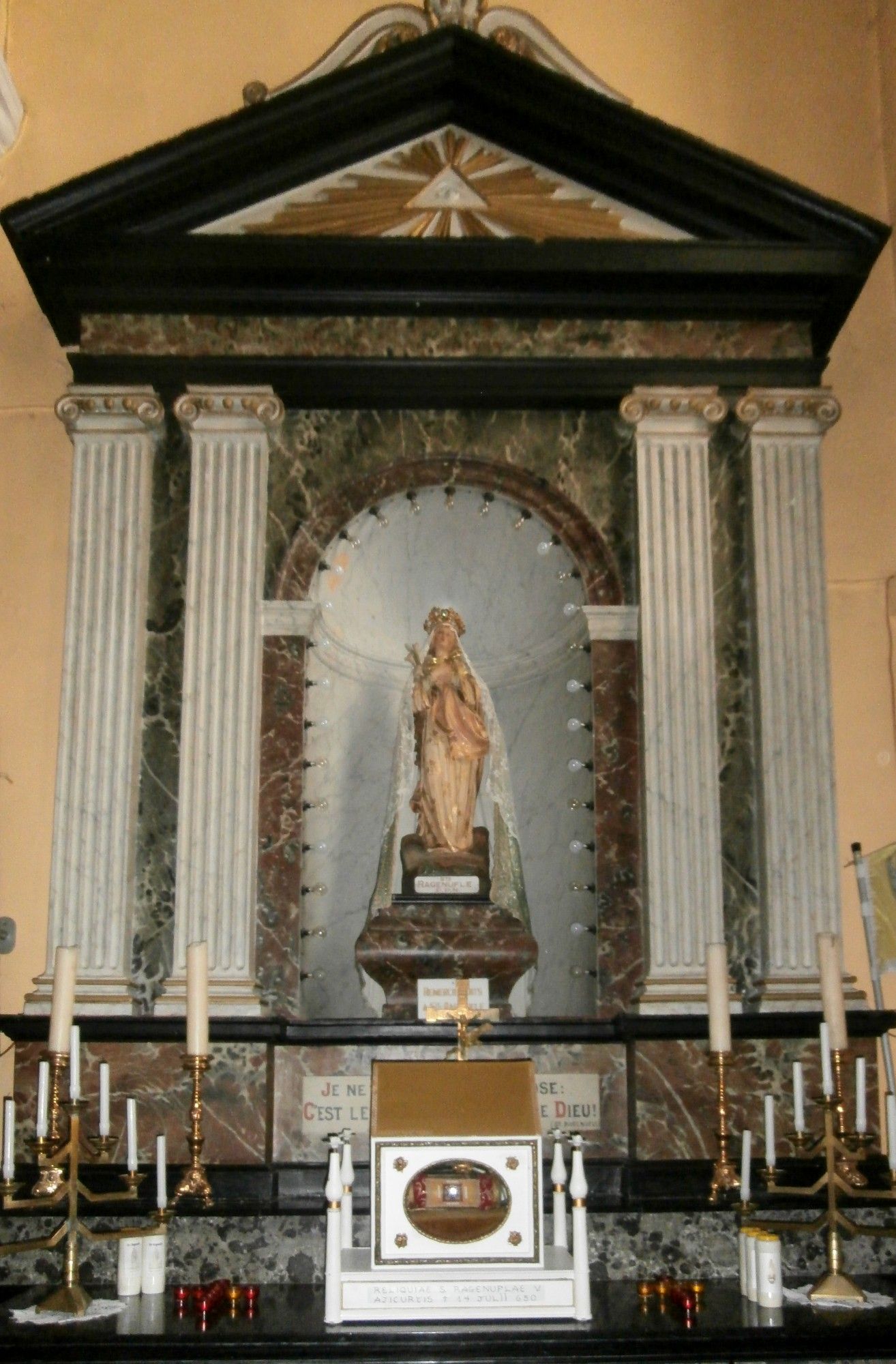
The right side altar honors Incourt’s protector. It features a polychrome plaster statue from…
The right side altar honors Incourt’s protector. It features a polychrome plaster statue from 1919 by Maison Billaux-Grossé, with a shrine added in 2009. On the right stands the miraculous 18th century statue in Spanish dress, used in Pentecostal processions. On the left, a red velvet banner with Saint Ragenufle’s effigy (late 19th c.) and a 13th centenary flag from 1950. Saint Ragenufle cures fever and dropsy.
Statue of Saint Rita
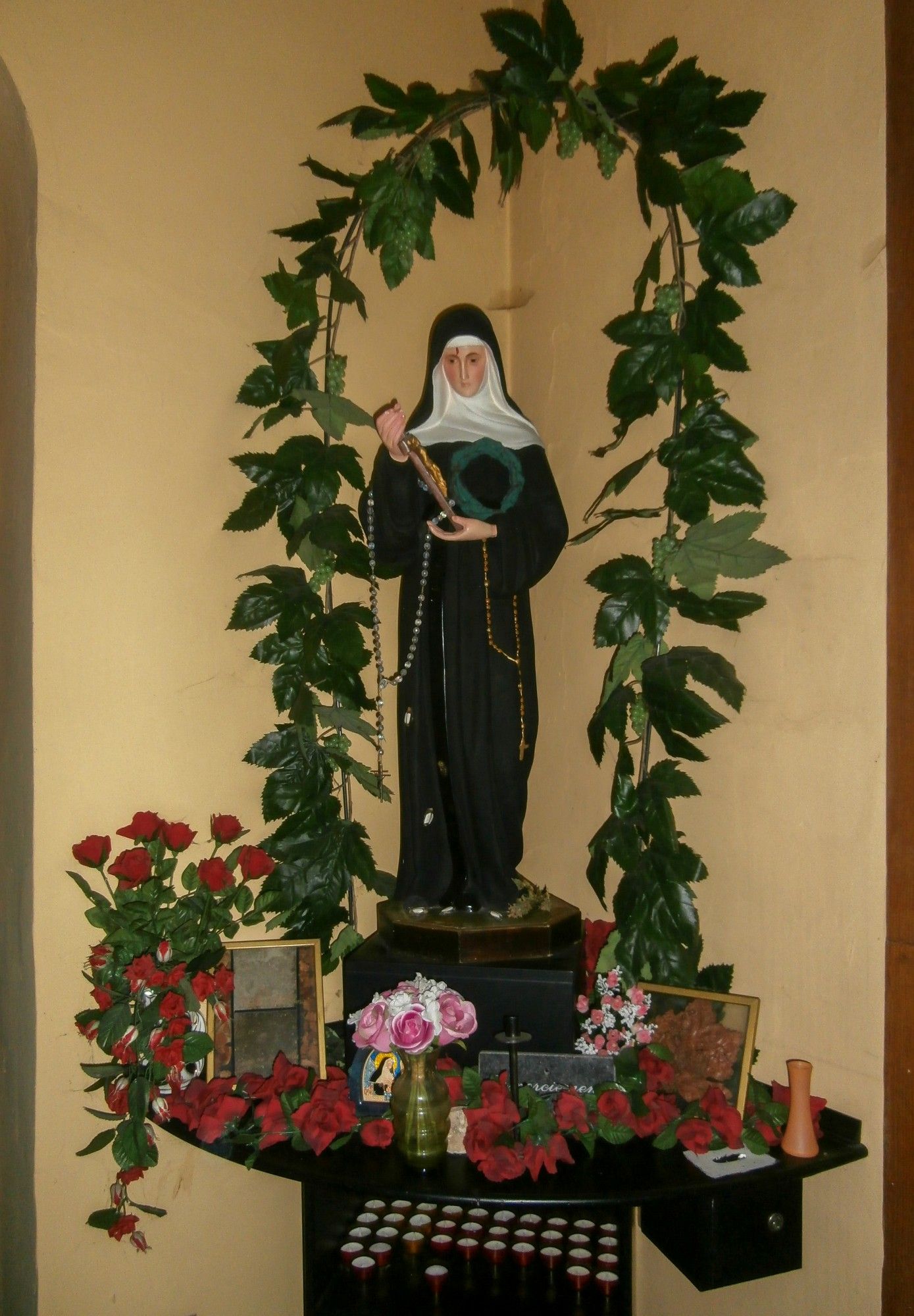
At the back of the right aisle is the statue of Saint Rita of Cascia, surrounded by flowers and…
At the back of the right aisle is the statue of Saint Rita of Cascia, surrounded by flowers and candles, an object of veneration by the faithful, especially for desperate causes. The representation of the so-called saint of the impossible was brought directly from Cascia, the place where the saint died in Italy, for the collegiate church of Incourt.
Statue of Sint Peter
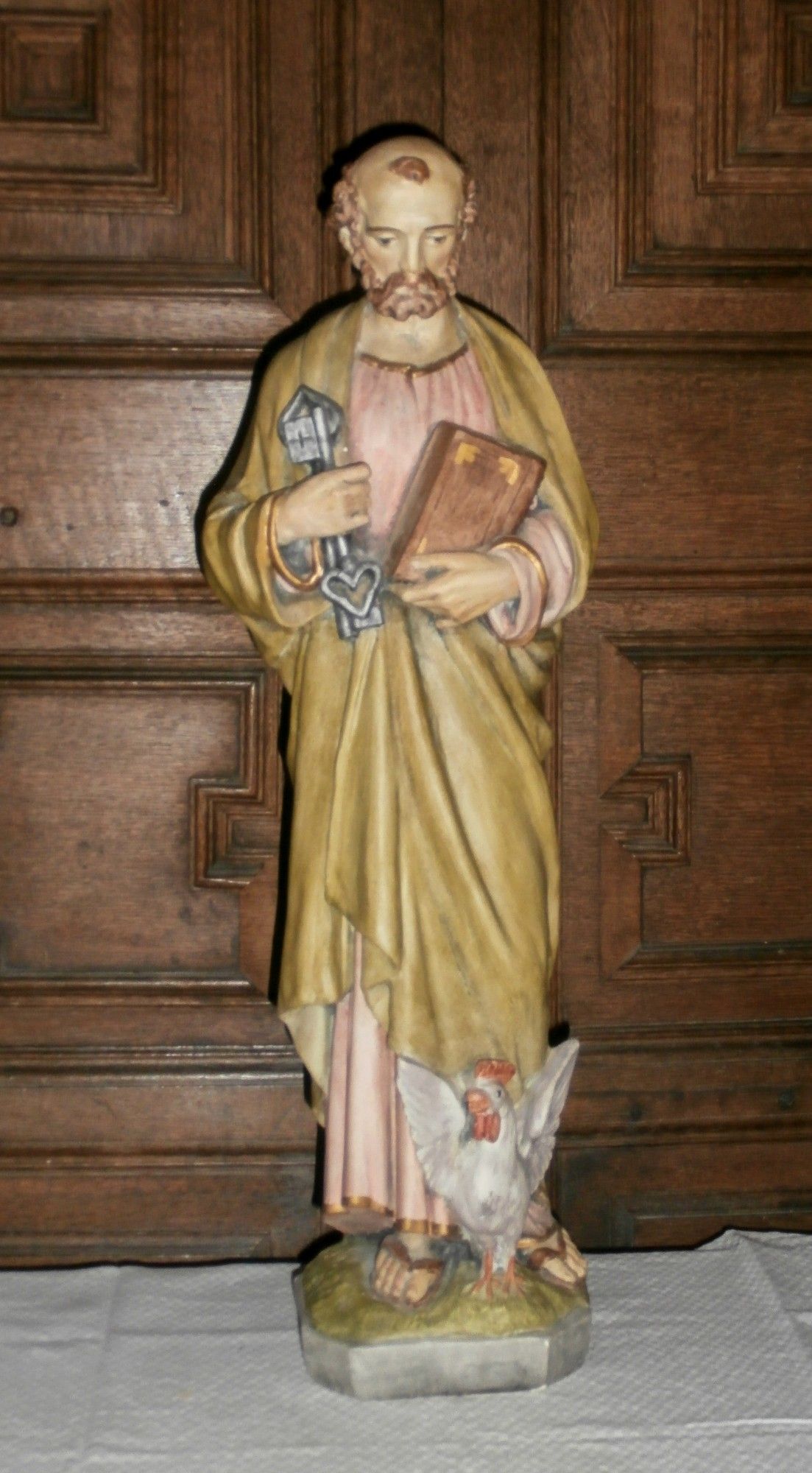
At the back of the left nave, a small altar is dedicated to Saint Peter, chief of the apostles…
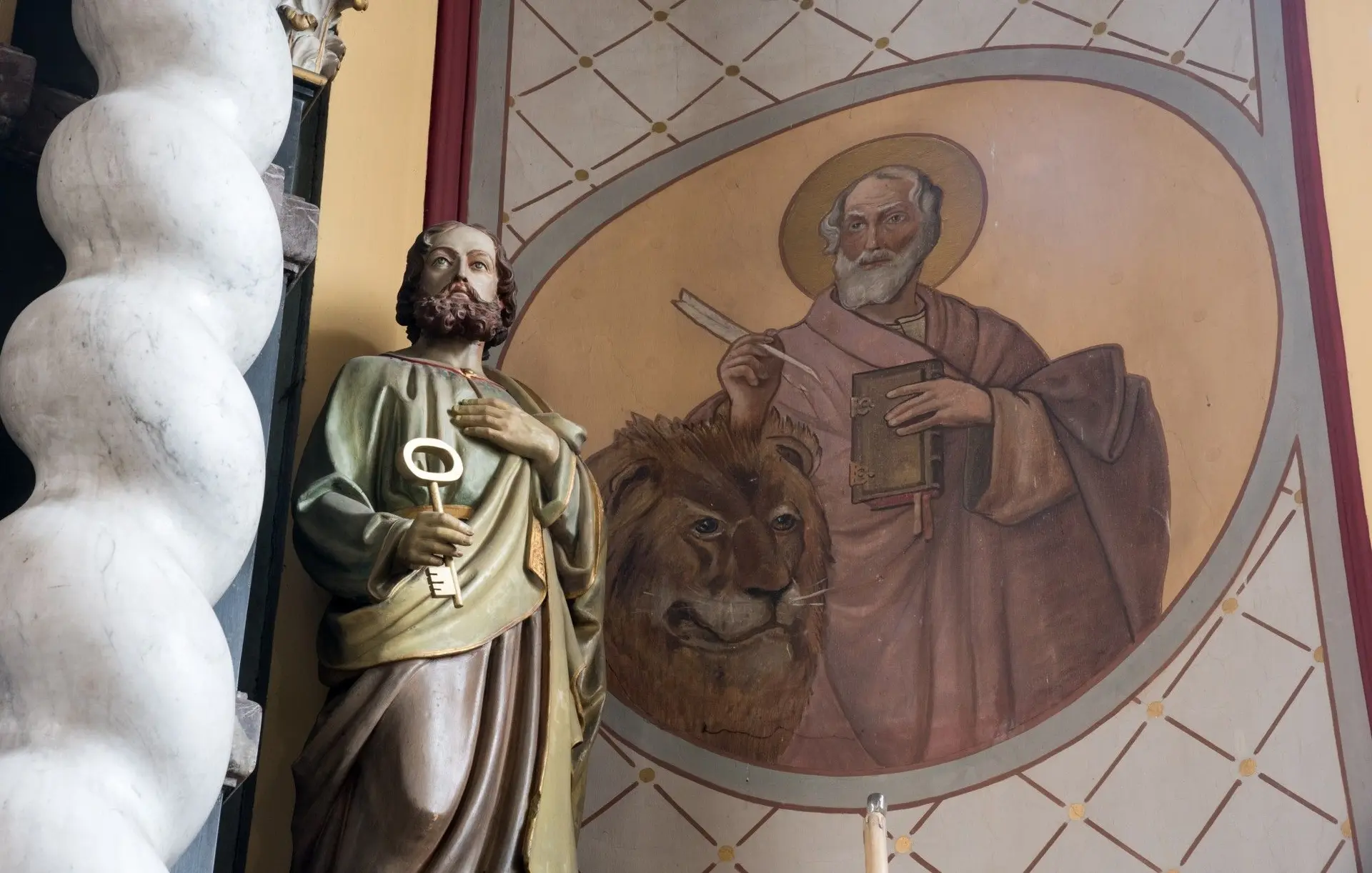
At the back of the left nave, a small altar is dedicated to Saint Peter, chief of the apostles and first pope, patron saint of the village of Incourt since 650 AD. We can see his polychrome stone statue; he is recognizable by his keys and his rooster. Next to it, a painting by Vandervorst, dating from 1862, also presents the patron saint of our collegiate church.
Carved Baroque Panels
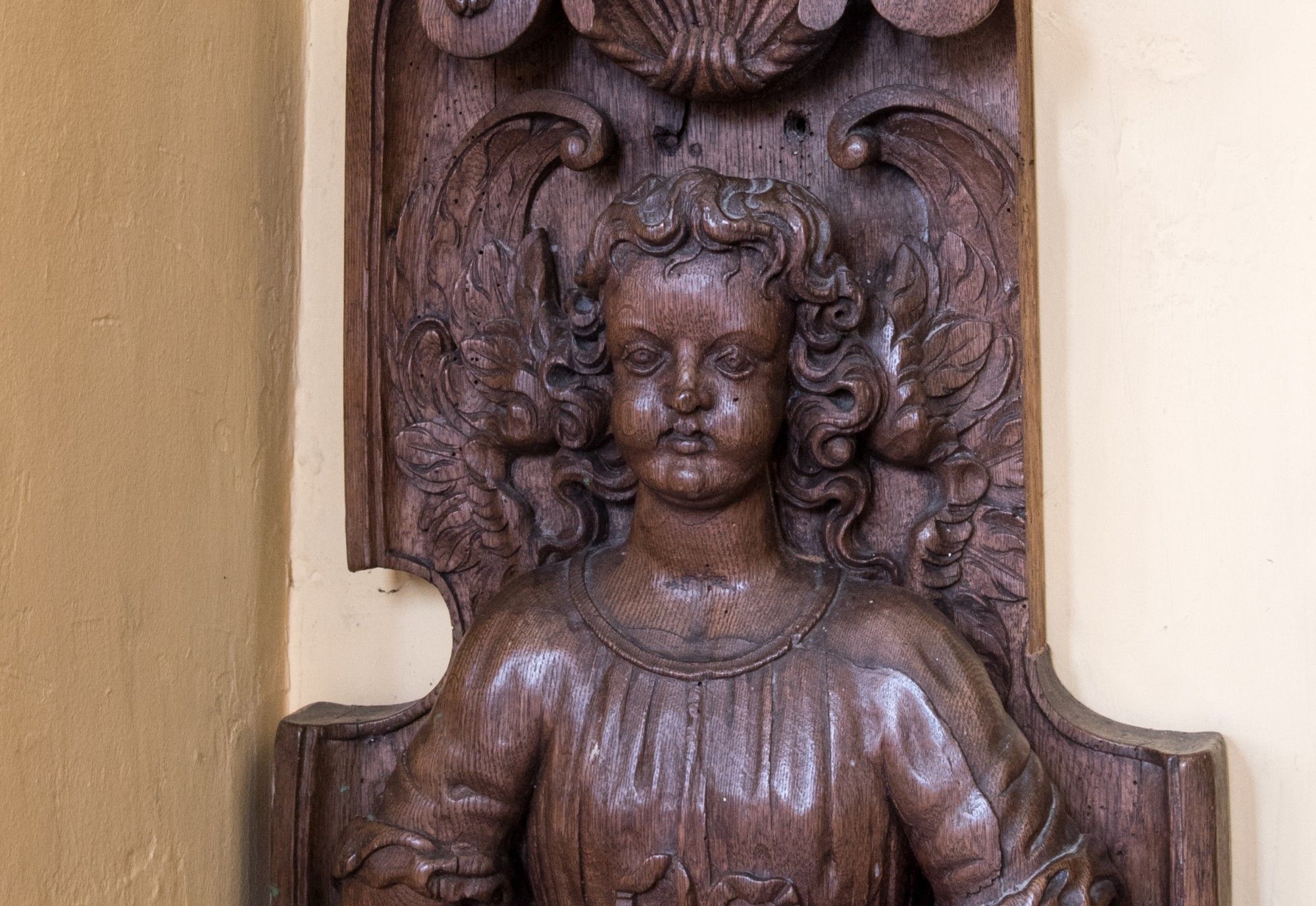
At the bottom of the two side naves, you can admire magnificent carved Baroque panels, remains…
At the bottom of the two side naves, you can admire magnificent carved Baroque panels, remains of the two confessionals from the former Cistercian abbey of La Ramée, in Jauchelette. A former priest of Incourt had the unfortunate idea of dismantling this quality furniture. We see angel heads, fruit decorations and angel-cariatides, one of which carries Veronica's linen with the image of the Holy Face of Christ
Pilgrimage paths
This building sits on the following pilgrimage routes

To find out more
Hours
Closed
Additional information
+32 496 54 96 92
Religious services
Wednesday : 6 pm
Sunday : 6 pm
Nearby buildings


Tours associates


Comments (0)