

Saint Peter
Building profile
Historic/listed monument
Practical information


 © Yves Carton
 © Yves Carton
 © Yves Carton
 © Yves Carton
 © Yves Carton
 © Yves Carton
 © Yves Carton
 © Yves Carton
About this building
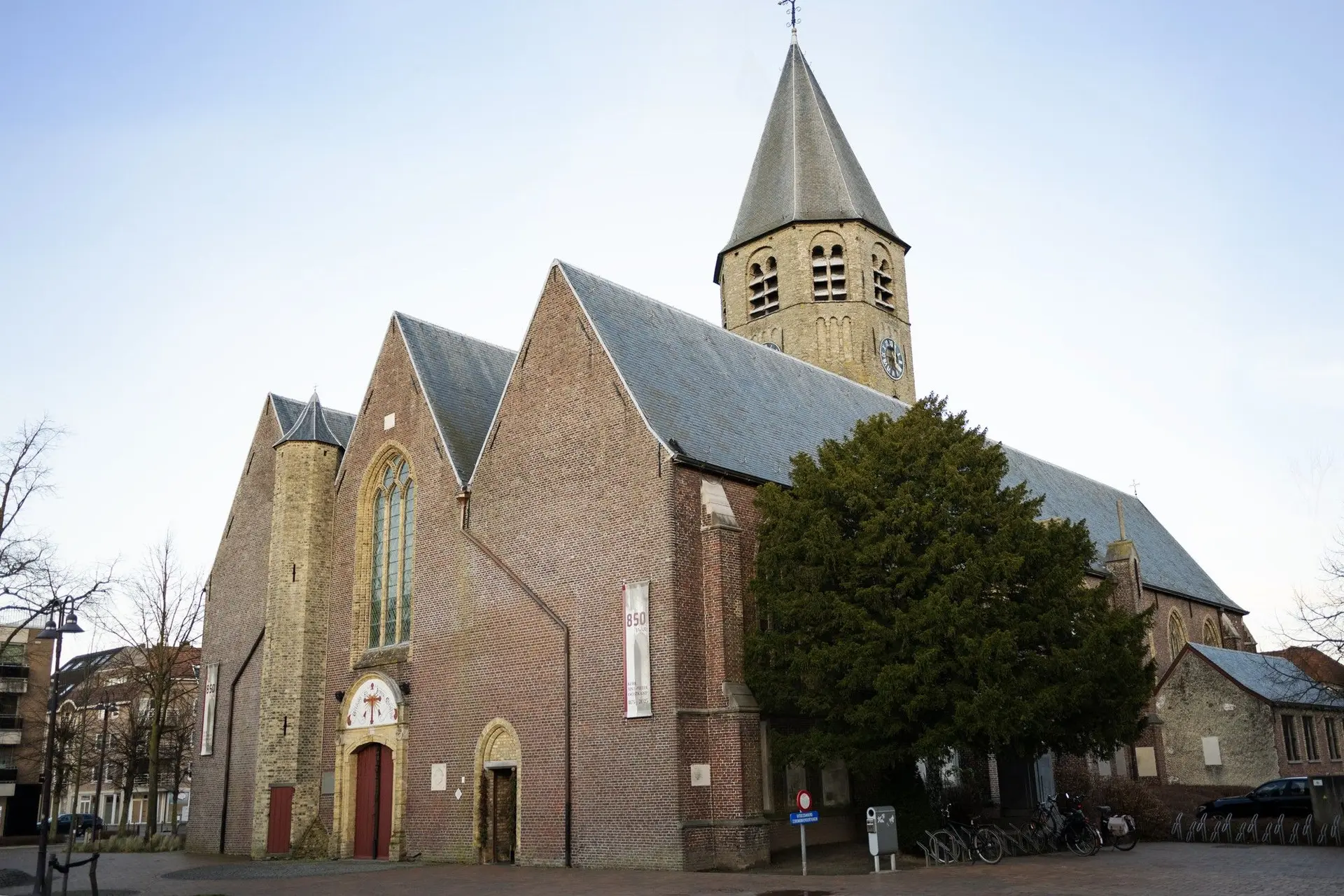
During the religious wars of the late 16th century, the church suffered severe damage and temporarily served as shelter for the parish priest and local residents.
Restoration work began in the 17th century, returning the building to its original religious function. Over the…
During the religious wars of the late 16th century, the church suffered severe damage and temporarily served as shelter for the parish priest and local residents.
Restoration work began in the 17th century, returning the building to its original religious function. Over the centuries, the church underwent numerous renovations and extensions.
The most recent project involved relocating the altar beneath the tower, leading to the discovery of historic graves and inscriptions.
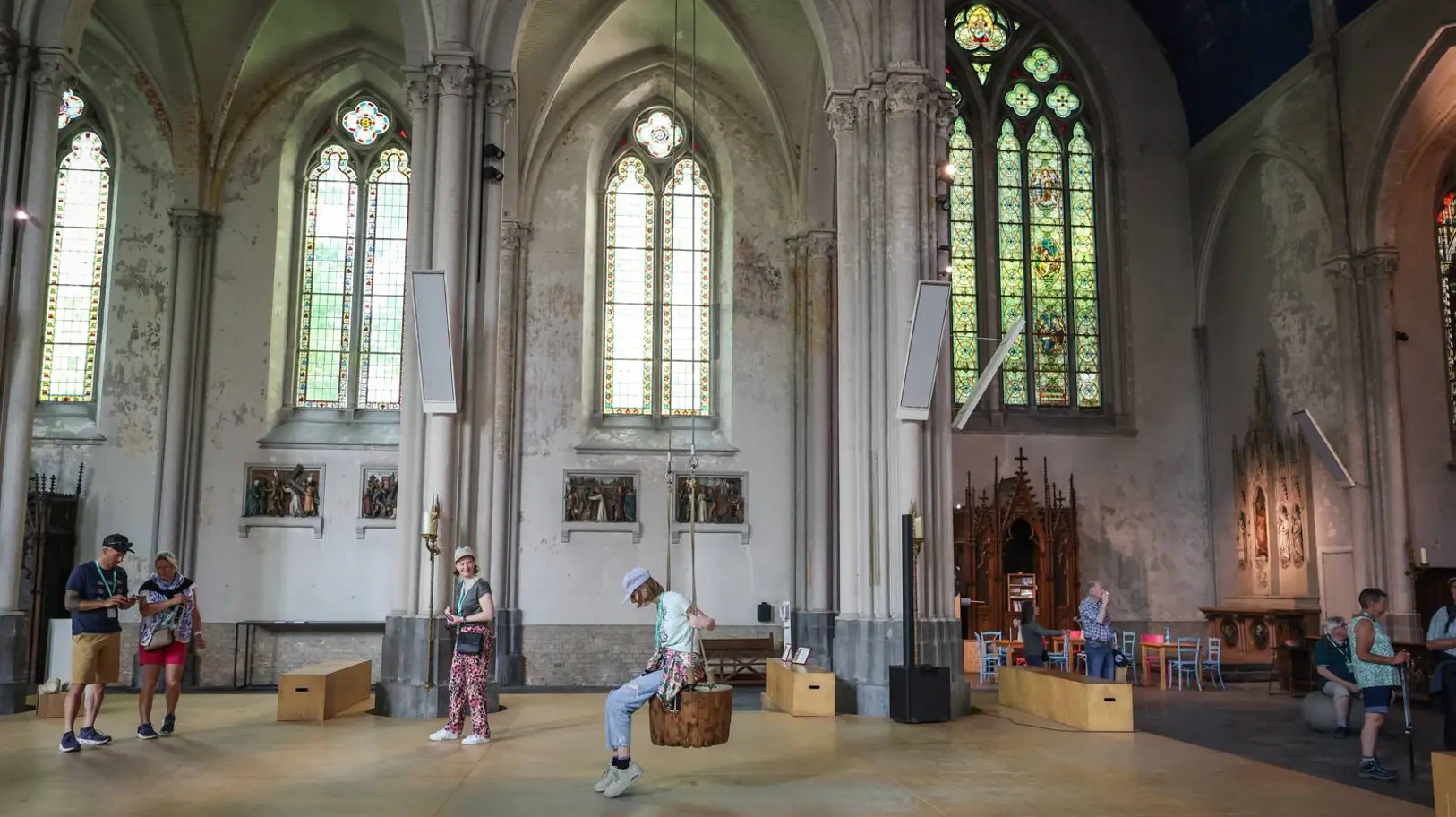
The church houses an important artistic heritage, including 32 stained-glass windows depicting saints, two large stained-glass windows dedicated to the victims of World War I and Our Lady of Lourdes, a 15th-century statue of the Virgin Mary, a wooden communion rail dating from 1718, historic confessionals, and paintings by Jan Maes and Jan Garemijn.
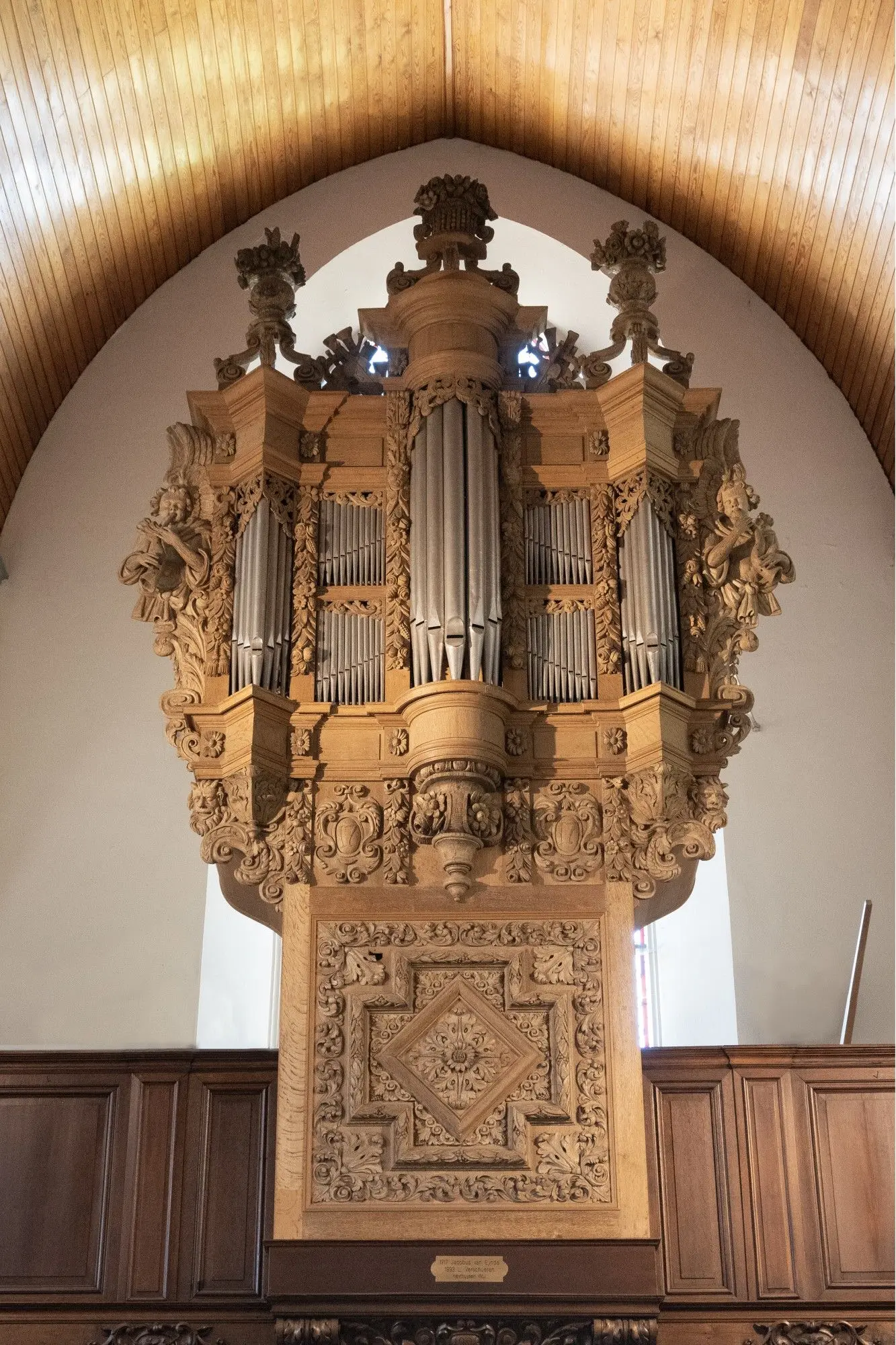
The church is also home to two remarkable pipe organs: the restored and protected Van Eynde organ of 1717 and the modern Pels organ installed in 2018. Annual organ concerts held in August attract visitors from far and wide.
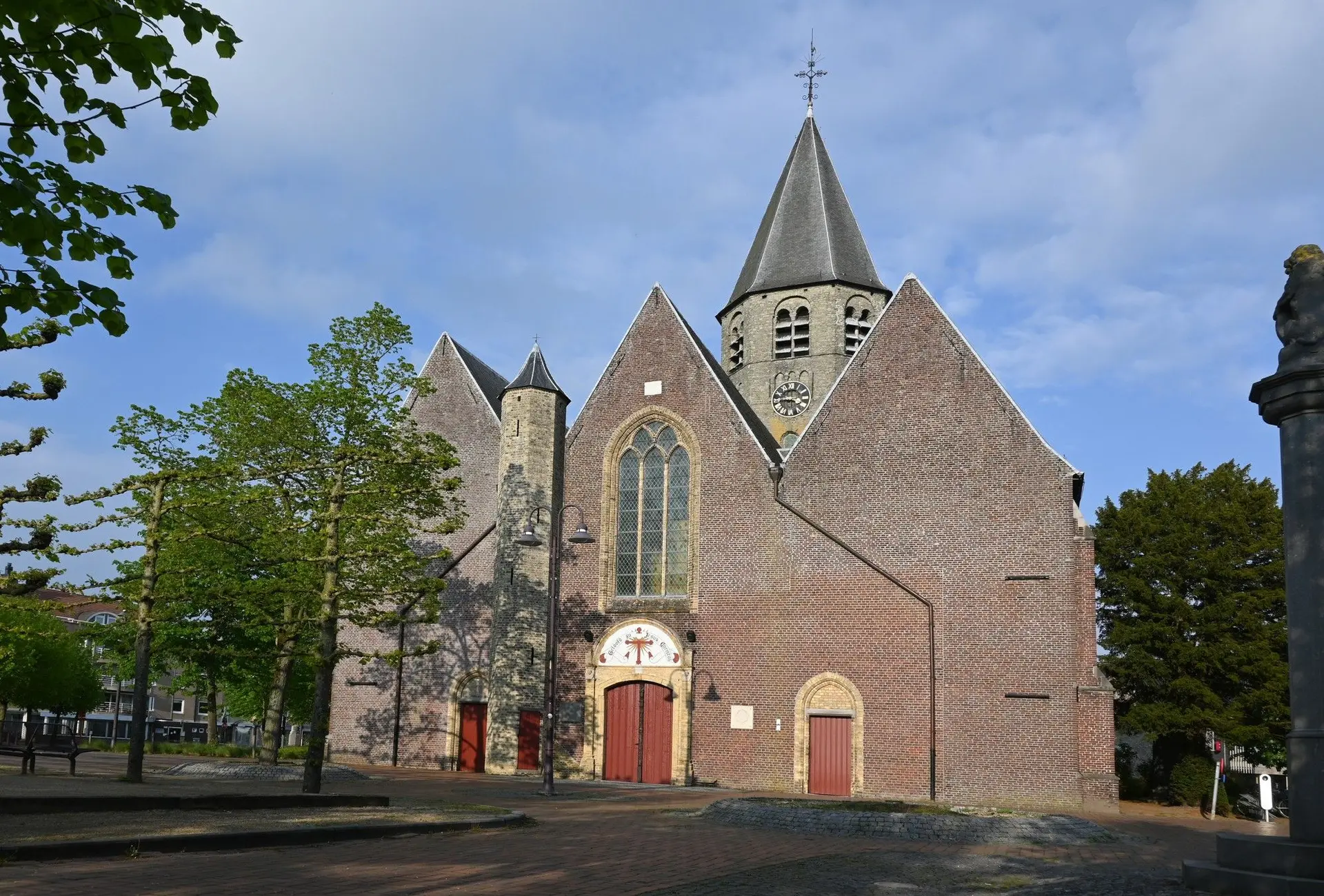
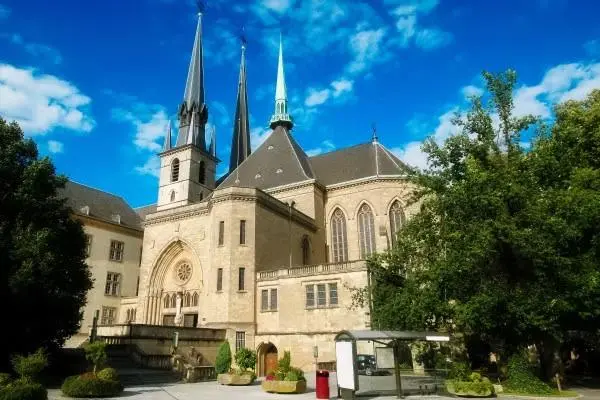
Outside, several built-in gravestones and a lapidarium recall the former cemetery. The outlines of the medieval cruciform church remain visible in the western façade, offering a fascinating insight into the architectural evolution of the building.
Remarkable elements
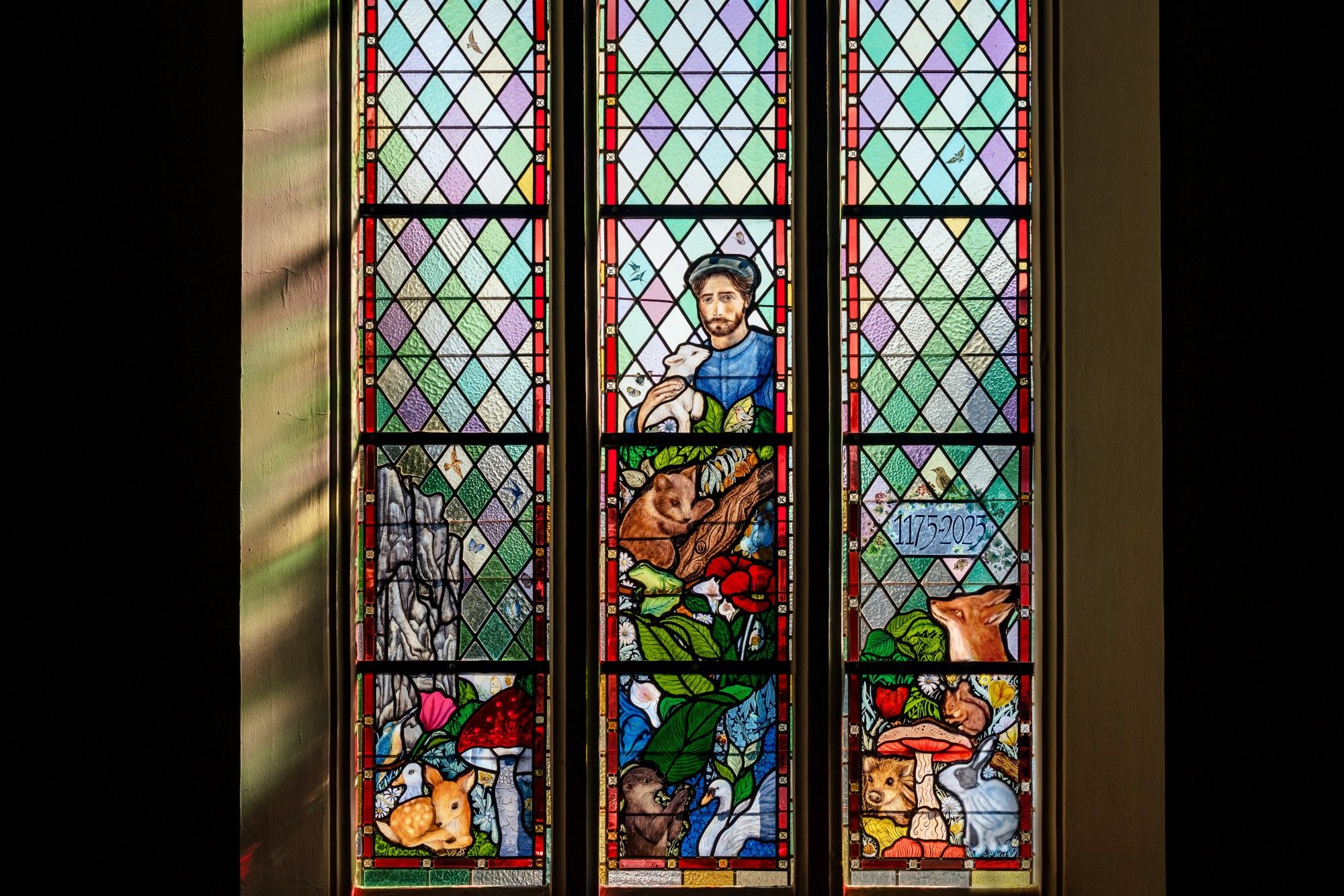
Stained glass window Laudato Si
This window, dedicated to Francis of Assisi, enriches the church interior and invites us to look…
This window, dedicated to Francis of Assisi, enriches the church interior and invites us to look at creation with renewed attention. Laudato Si reminds us of our responsibility for the earth and emphasises care for people, nature and our common home. The new stained-glass window is a contemporary addition to the 15 existing stained-glass windows from the 19th and 20th centuries that adorn our church.
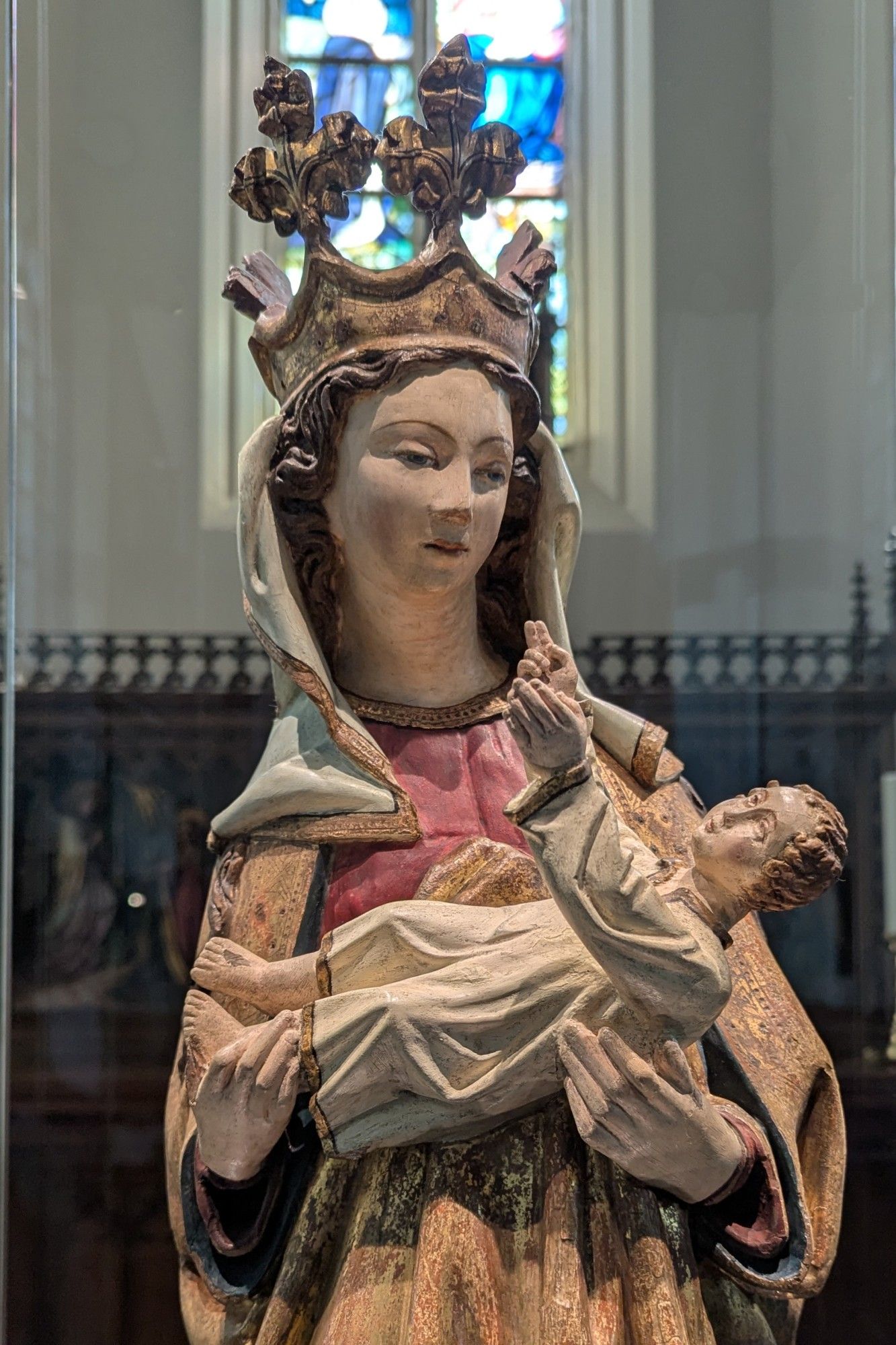
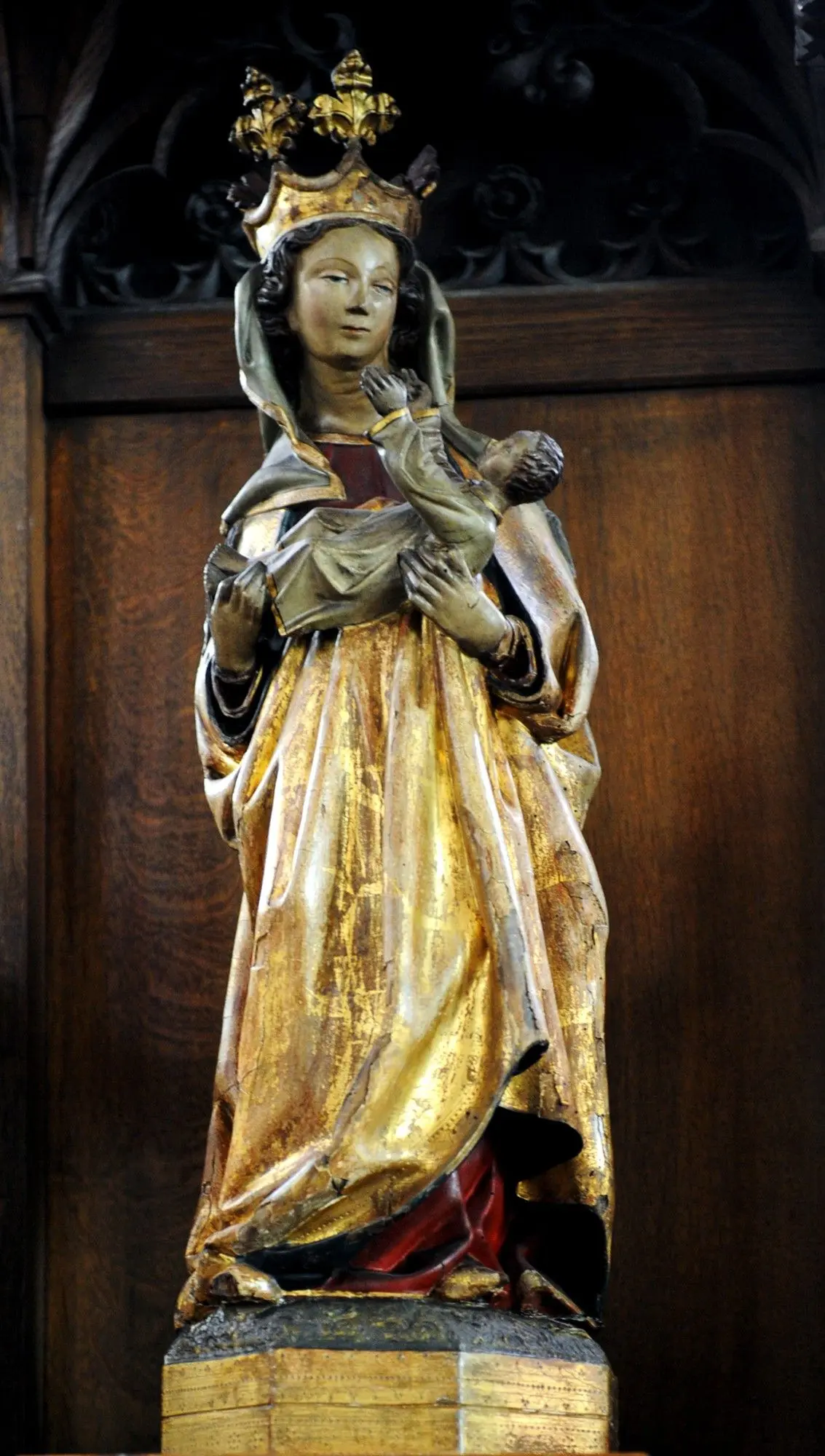
Statue of Our Lady (around 1400)
Restored to mark the 850th anniversary of St. Peter's Church, this polychrome wooden statue of…
Restored to mark the 850th anniversary of St. Peter's Church, this polychrome wooden statue of the Madonna and Child (approx. 68 cm) probably dates from the late 14th or early 15th century. The graceful Madonna, the fine folds and the craftsmanship are striking. Originally, the statue was also decorated with so-called cabochons, smooth-cut colourful gemstones without facets, often round or oval in shape. It is the oldest piece of heritage in the church.
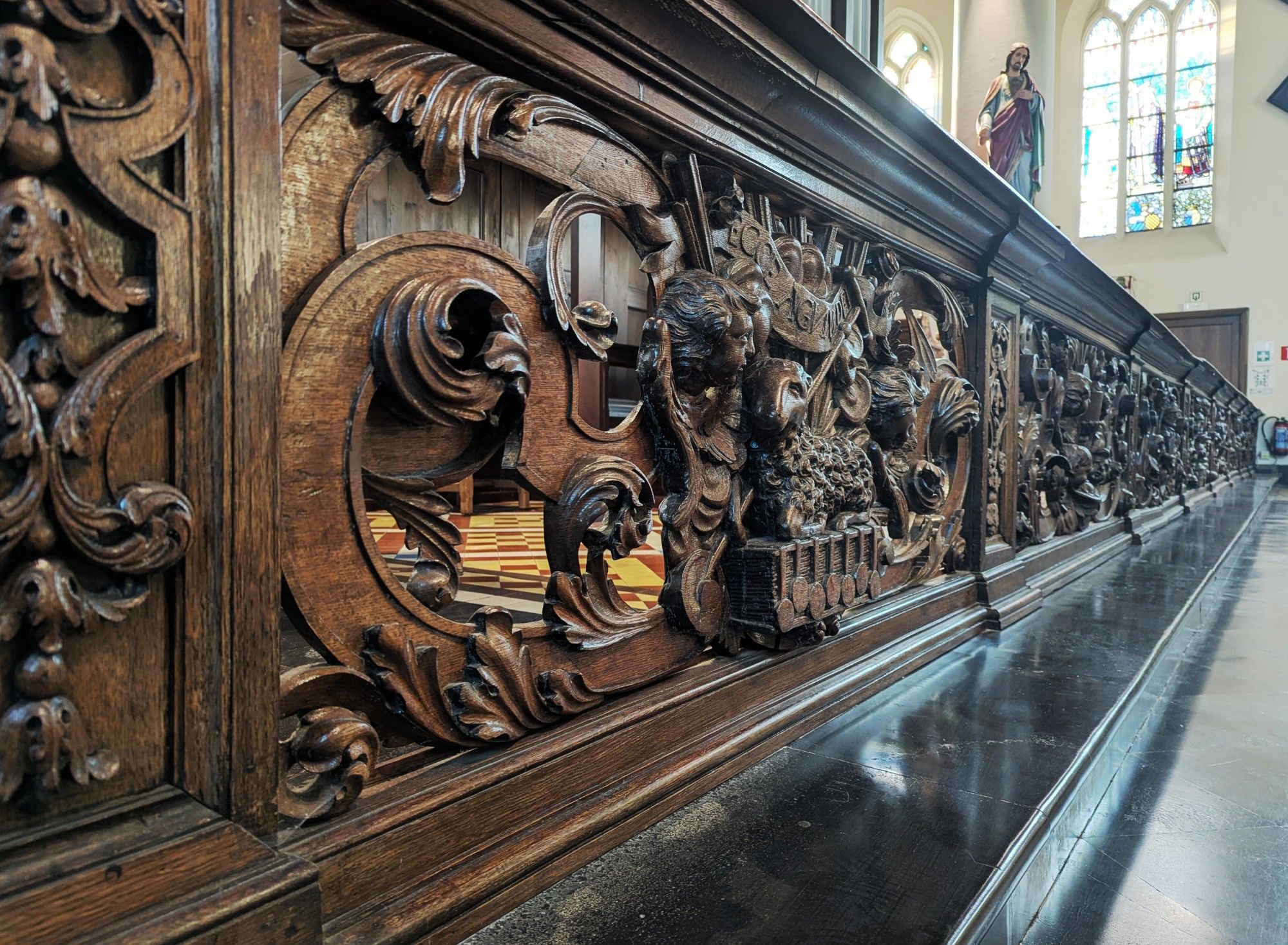
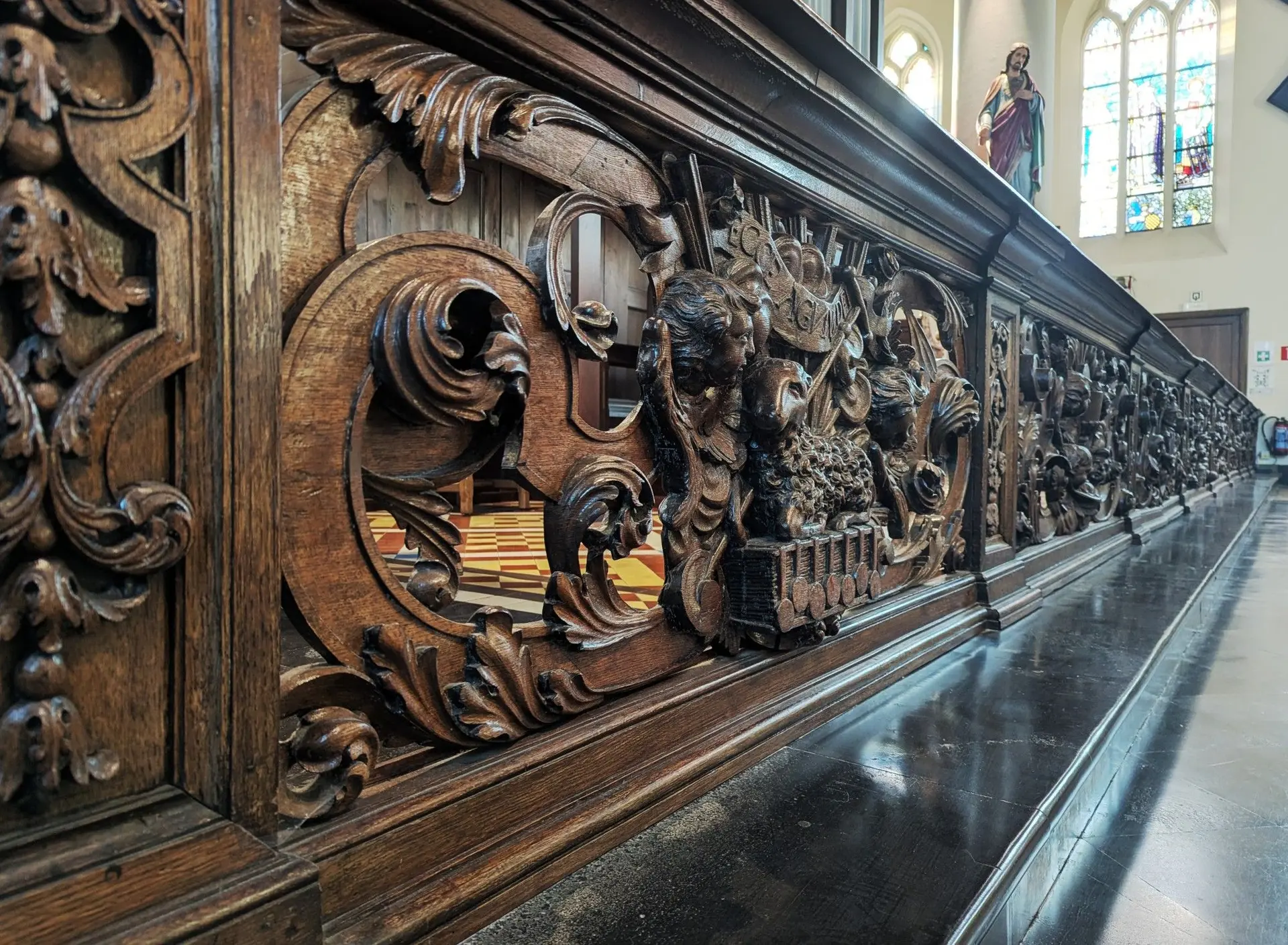
Communion rail (1718)
The communion rail, carved by Bruges master craftsman Michiel Clauwaert, was enlarged in 1865 to…
The communion rail, carved by Bruges master craftsman Michiel Clauwaert, was enlarged in 1865 to reach its present length of 20.26 metres. Its richly decorated panels and reliefs illustrate scenes from the Old and New Testaments, alongside figures such as Saint John, Saint Luke, Saint Mark, Saint Matthew, Saint Ursula, the Madonna and Child, the Mystic Lamb and the Ark of the Covenant. The most recent sections portray the Four Evangelists.
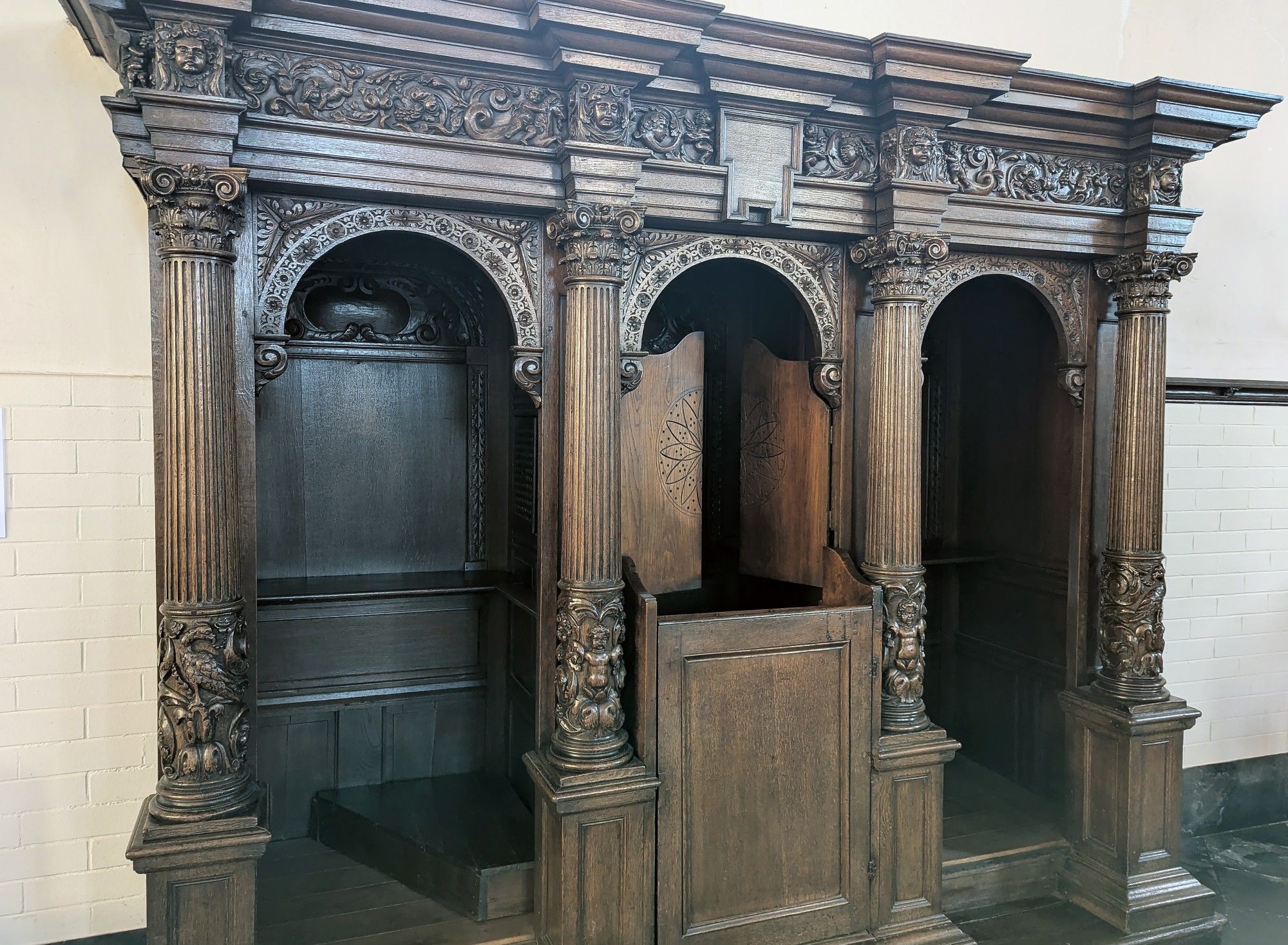
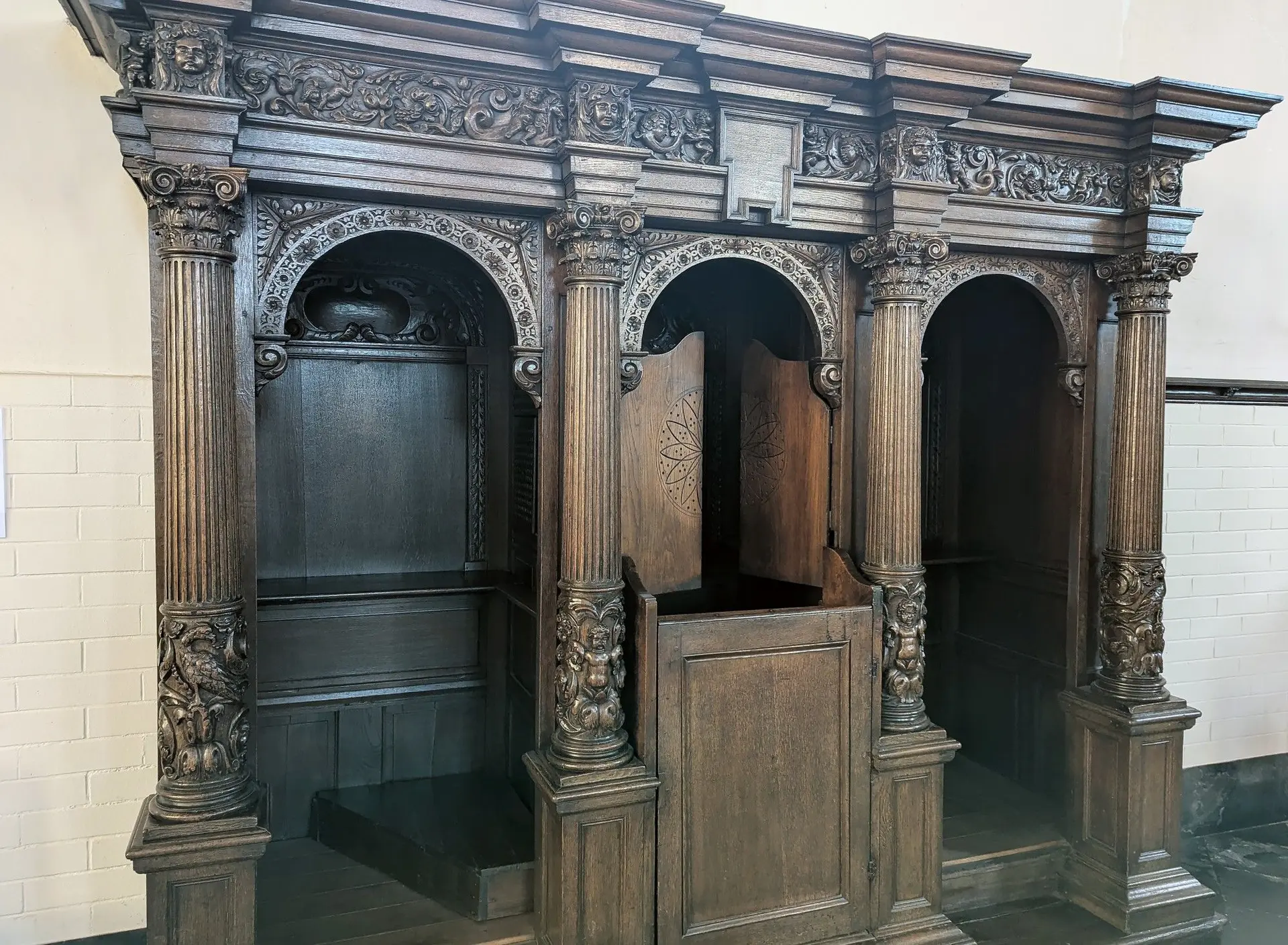
Confessionals (1663)
This oak Renaissance-style confessional was crafted by the Bruges master carpenter Rycquaert…
This oak Renaissance-style confessional was crafted by the Bruges master carpenter Rycquaert Brouckman. Four columns divide its three compartments beneath a richly decorated cornice. The columns and frieze feature carved foliage, cherubs, dolphins, fantastical birds and human faces, reflecting the influence of the confessionals in Saint Stephen’s Church in Ghent, though in a simpler form. The crowning element above the saint’s niche has not survived. In 2017, all confessionals were restored by Richardson-Weissenborn of Bruges.
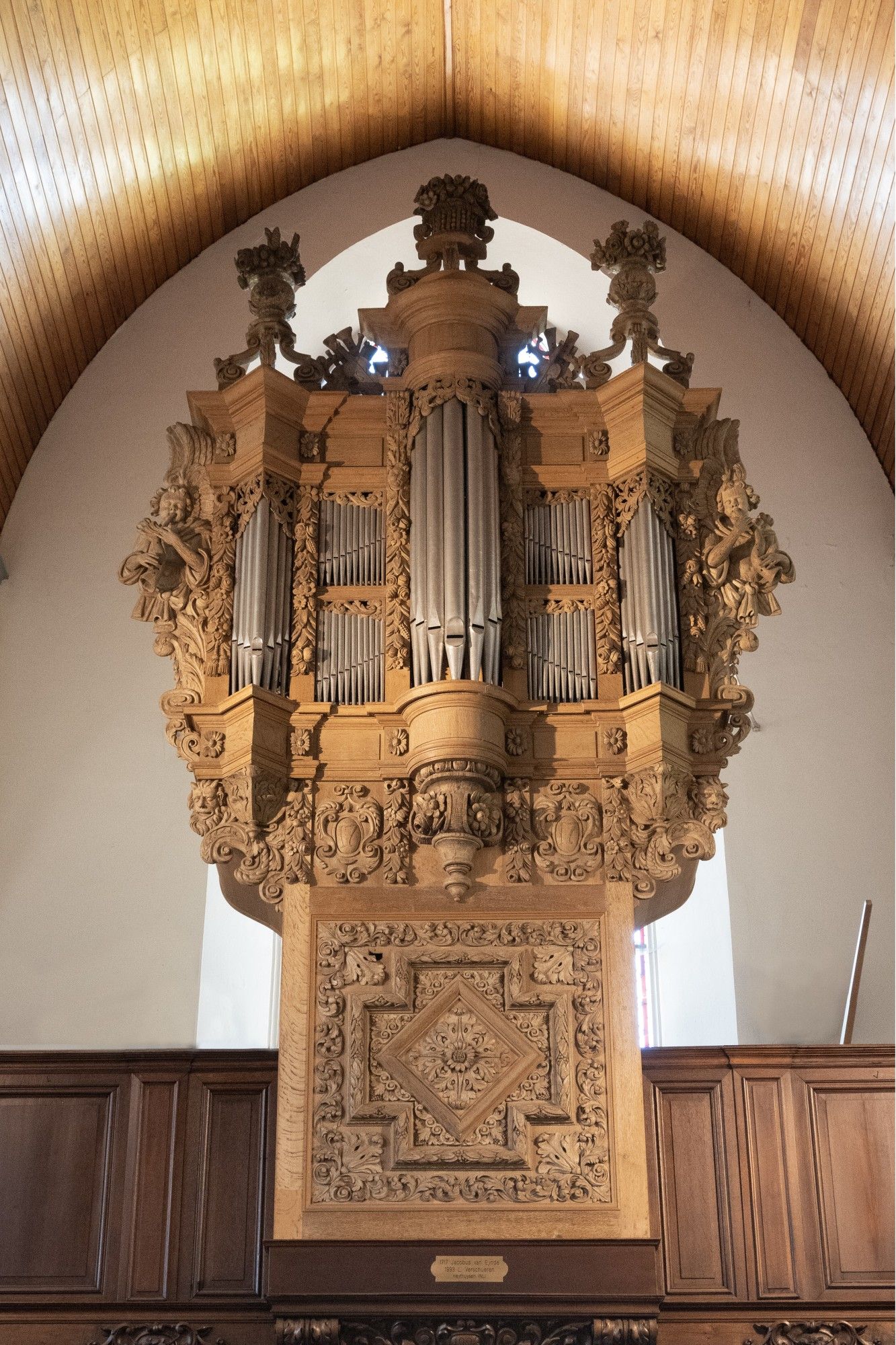
Van Eynde organ (1717)
Built in 1717 by Jacobus van Eynde to replace an older organ, this instrument is housed in a…
Built in 1717 by Jacobus van Eynde to replace an older organ, this instrument is housed in a finely carved Baroque case decorated with angels, vases and trophies. Over the centuries it underwent several restorations and modifications before being reconstructed in its original style in 1992-93 by Verschueren Orgelbouw. Protected since 1980, it is one of the oldest still-played organs in Flanders and has hosted annual organ concerts every August since 1994.
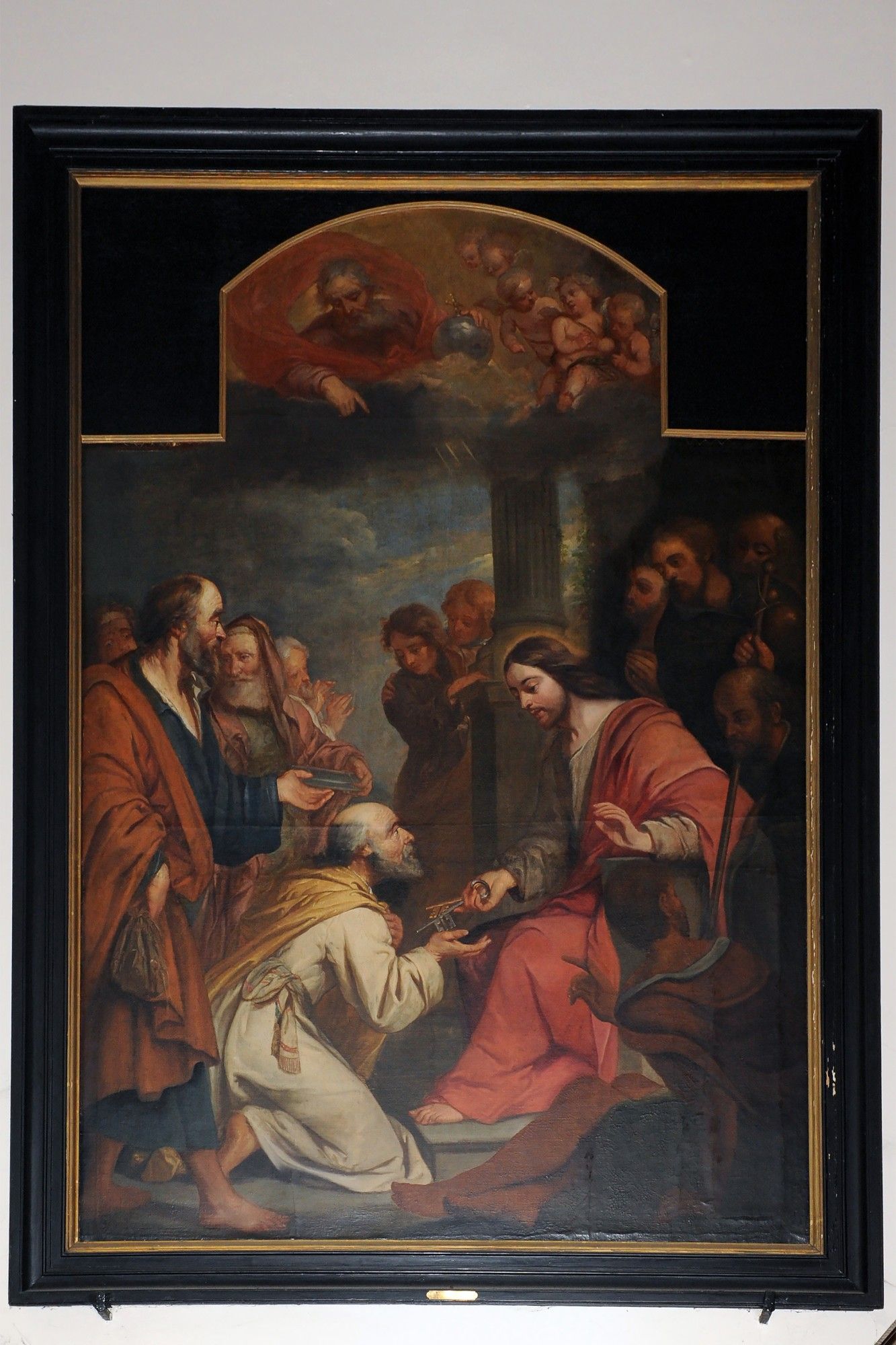
Painting “Christ handing the keys of Heaven to the Apostle Peter” (1658)
This painting by Bruges artist Jan Maes depicts Christ handing the Keys of the Church to the…
This painting by Bruges artist Jan Maes depicts Christ handing the Keys of the Church to the kneeling Saint Peter. Originally displayed above the high altar, it was found during an 18th-century restoration to conceal an earlier composition, the Adoration of the Shepherds. Visible remnants, including a seated figure and shepherd-like apostles, suggest that Maes adapted an unfinished Nativity scene into the present work, creating a unique blend of two subjects.
Labels

To find out more
Hours
Closed
Religious services
KerknetNearby buildings




Comments (0)