
Saint Blaise
Building profile
Historic/listed monument
Practical information




 © Églises Ouvertes
 © Églises Ouvertes
 © Églises Ouvertes
 © Églises Ouvertes
 © Églises Ouvertes
 © Églises Ouvertes
 © Églises Ouvertes
 © Églises Ouvertes
 © Églises Ouvertes
 © Églises Ouvertes
 © Églises Ouvertes
About this building
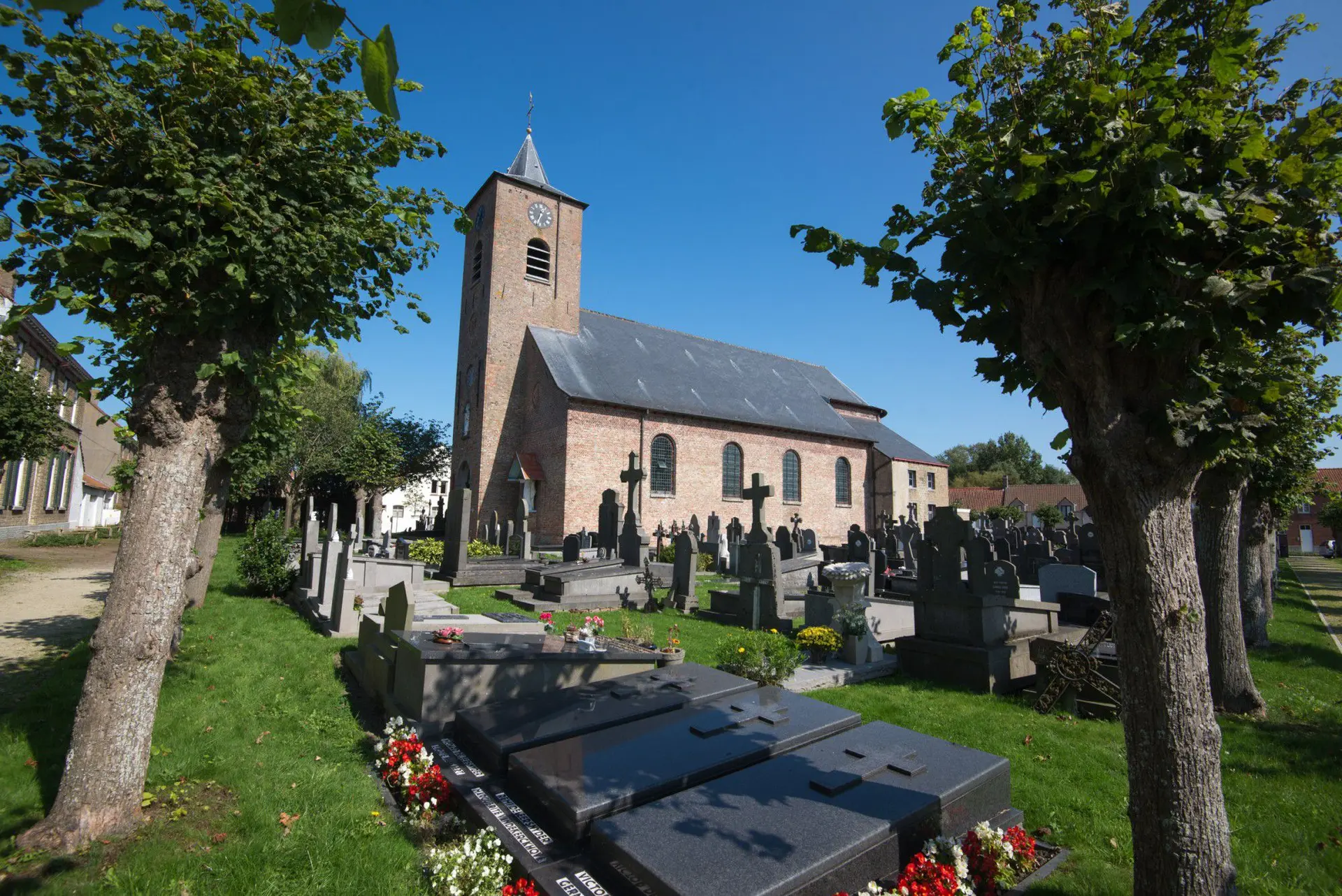
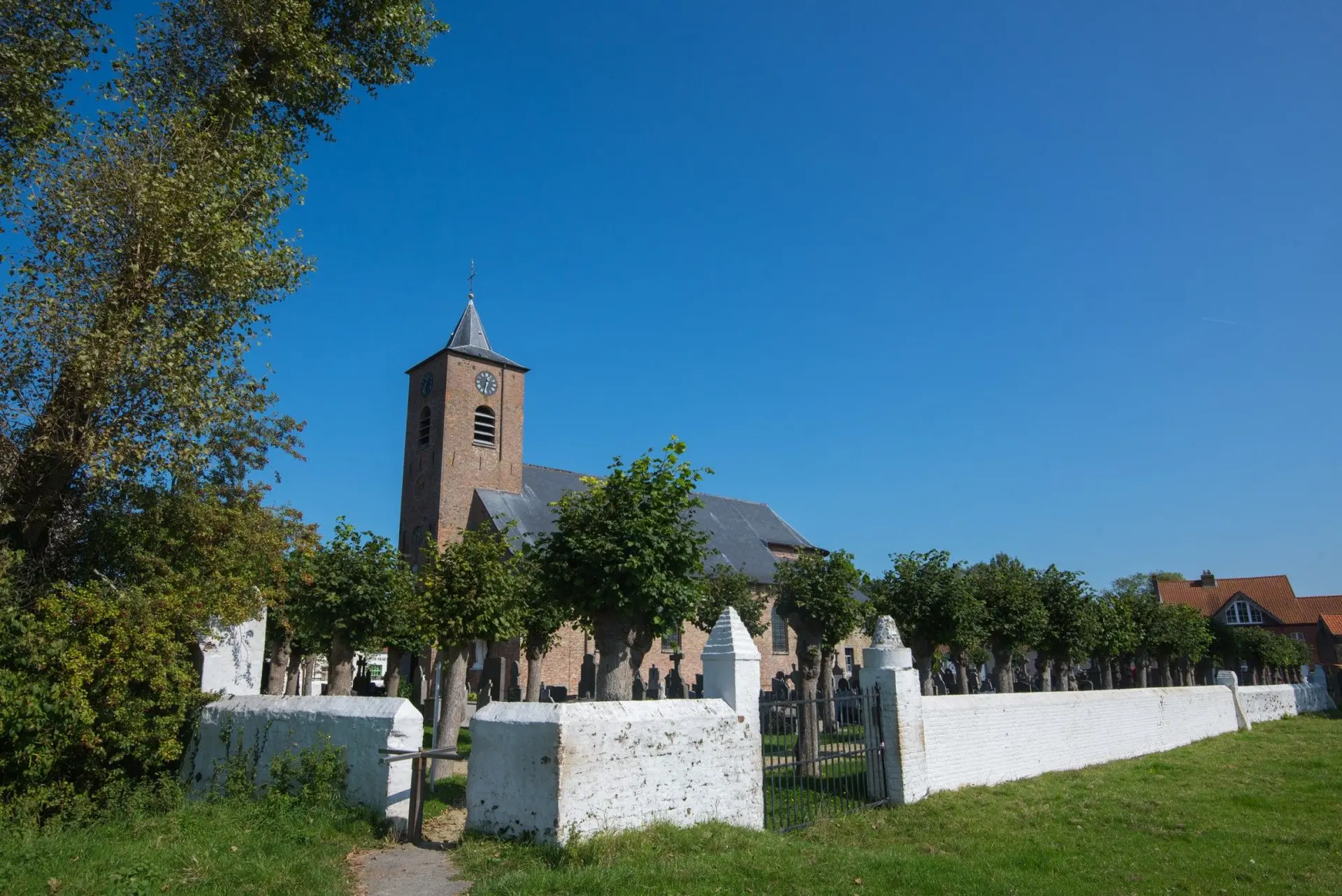
The neoclassical Saint Blaise Church is located in a protected village. It is surrounded by a cemetery where the toads are bordered with pollarded linden trees. At the cemetery, seven British soldiers are buried. It forms an atmospheric ensemble enclosed by a whitewashed cemetery wall and wrought iron gates.
The village and the oratory of St. Blaise as the patron saint are already mentioned in 988. Archaeological research confirmed that the unsightly untouched polder village Vlissegem is one of the oldest settlements on the coast.…
The neoclassical Saint Blaise Church is located in a protected village. It is surrounded by a cemetery where the toads are bordered with pollarded linden trees. At the cemetery, seven British soldiers are buried. It forms an atmospheric ensemble enclosed by a whitewashed cemetery wall and wrought iron gates.
The village and the oratory of St. Blaise as the patron saint are already mentioned in 988. Archaeological research confirmed that the unsightly untouched polder village Vlissegem is one of the oldest settlements on the coast.
In the 13th-14th century the primitive wooden church was replaced by a Gothic hall-church. This church was severely damaged during the Geuze Time (1566-1585) and was only partially restored due to a lack of money. By the end of 1788 the church was in such a poor building condition that the construction of a new parish church was decided. Only in 1834 the work was completed. Since then, the village owns this three-aisled church with west tower.
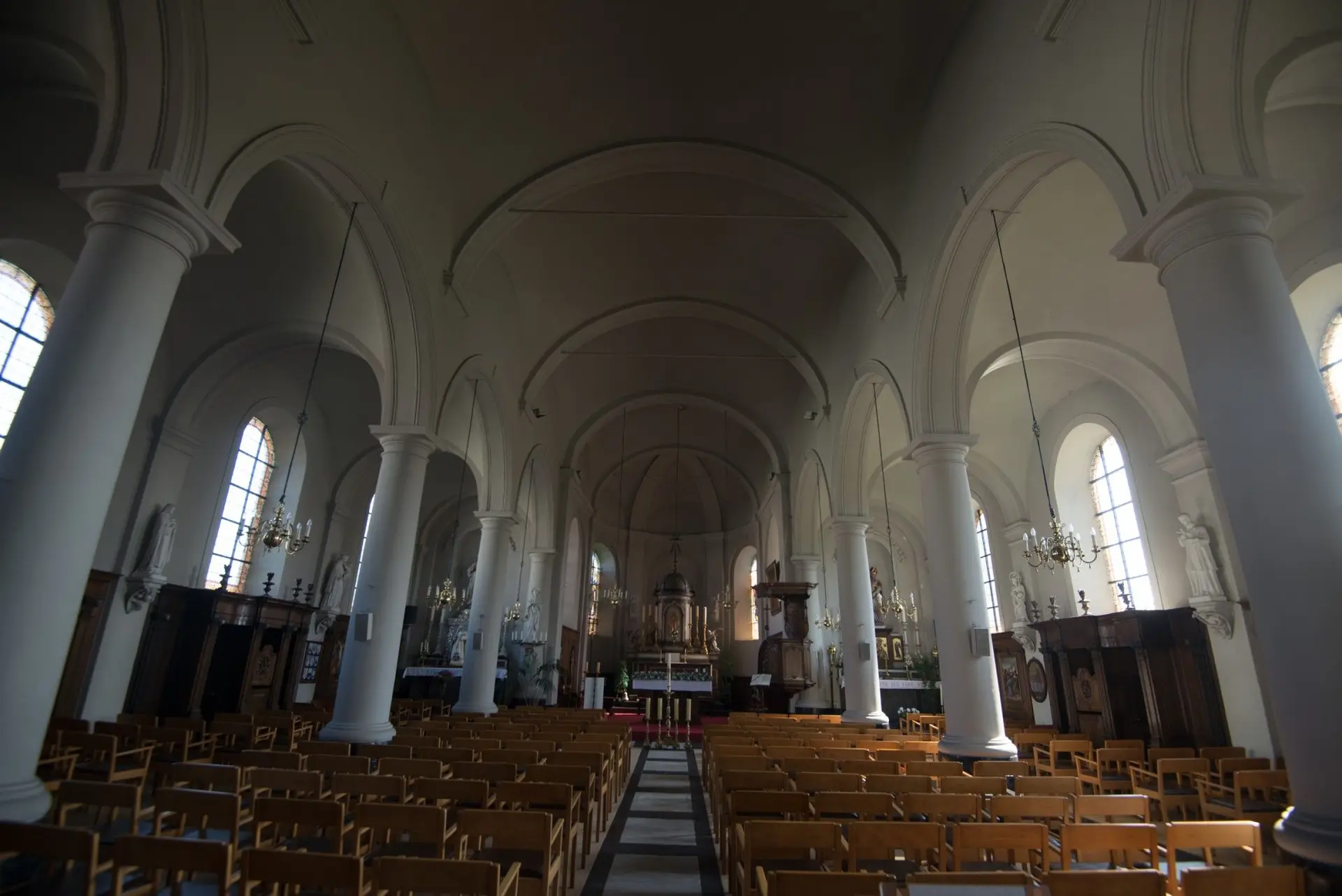
The sober neoclassical interior is plastered, painted white and arched by a barrel vault.
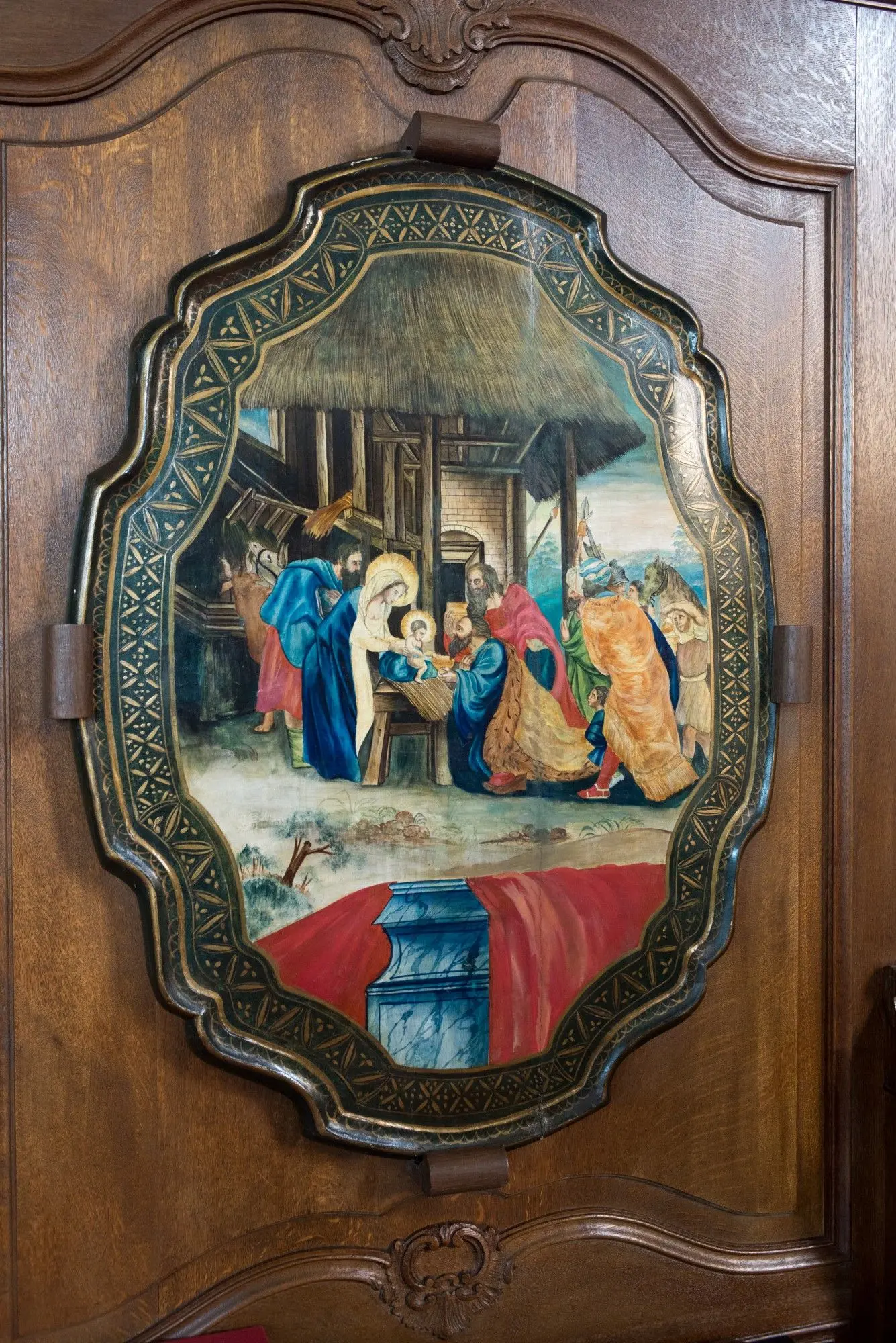
A few valuable 17th- and 18th-century paintings and sculptures are preserved in the church. Most of the furniture dates back to the 18th century.
In the tourist information offices there is a brochure available called “The Holy Blasius Church of Vlissegem, a charming country church”.
KIKIRPA : Photo-library online
Remarkable elements
Stained-glass windows
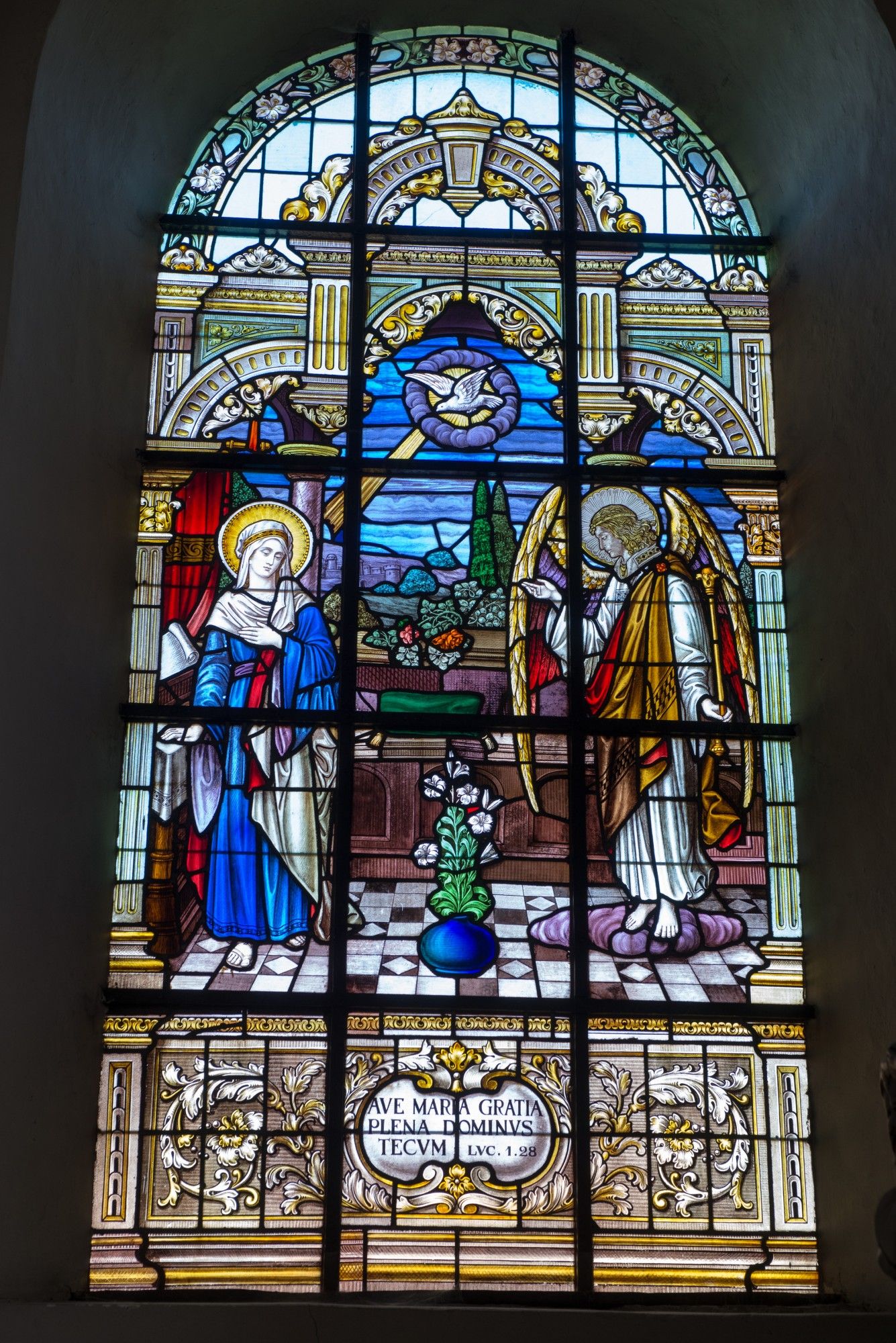
The two stained-glass windows in the choir date from 1931, supplied by Peene-Delodder from…
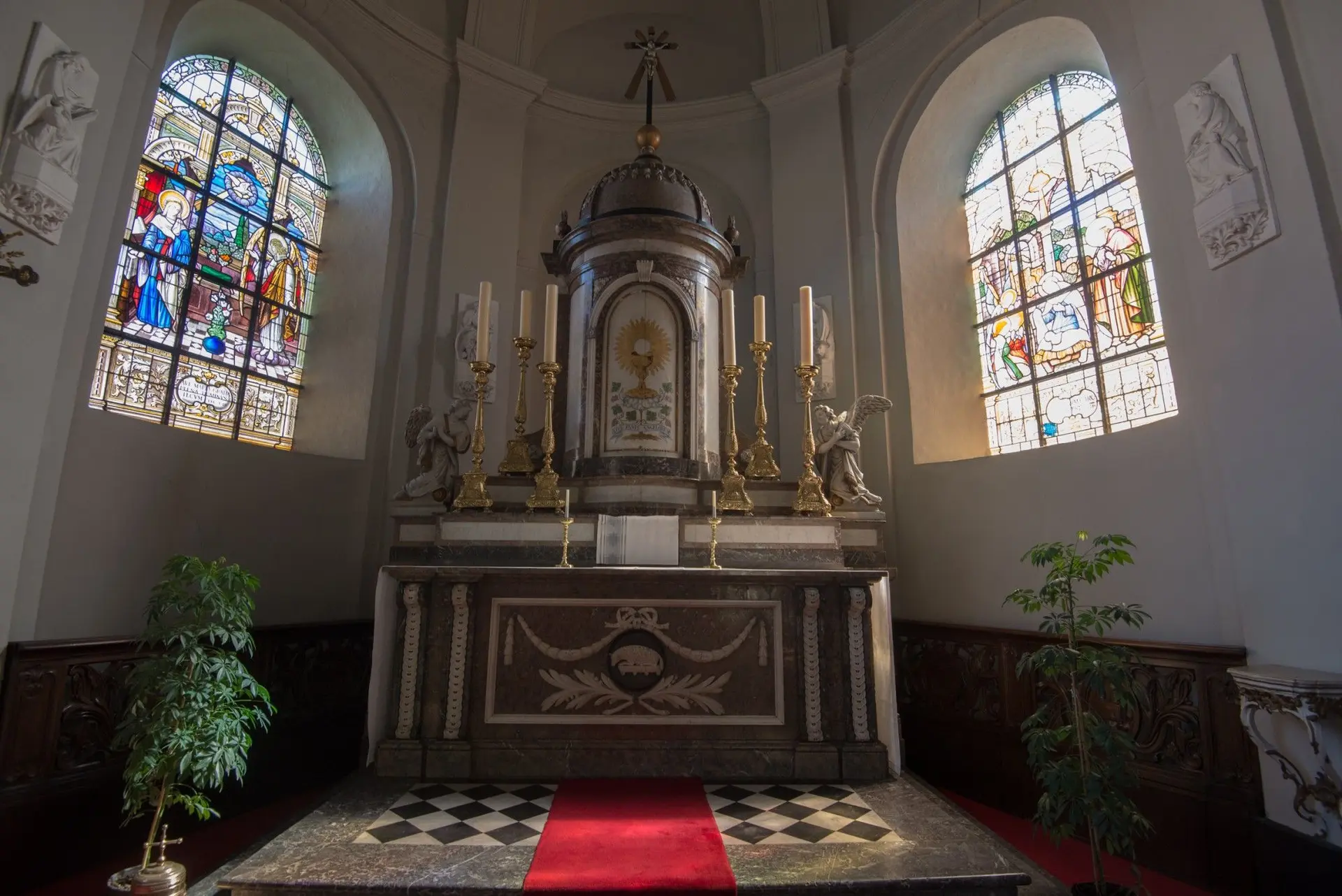
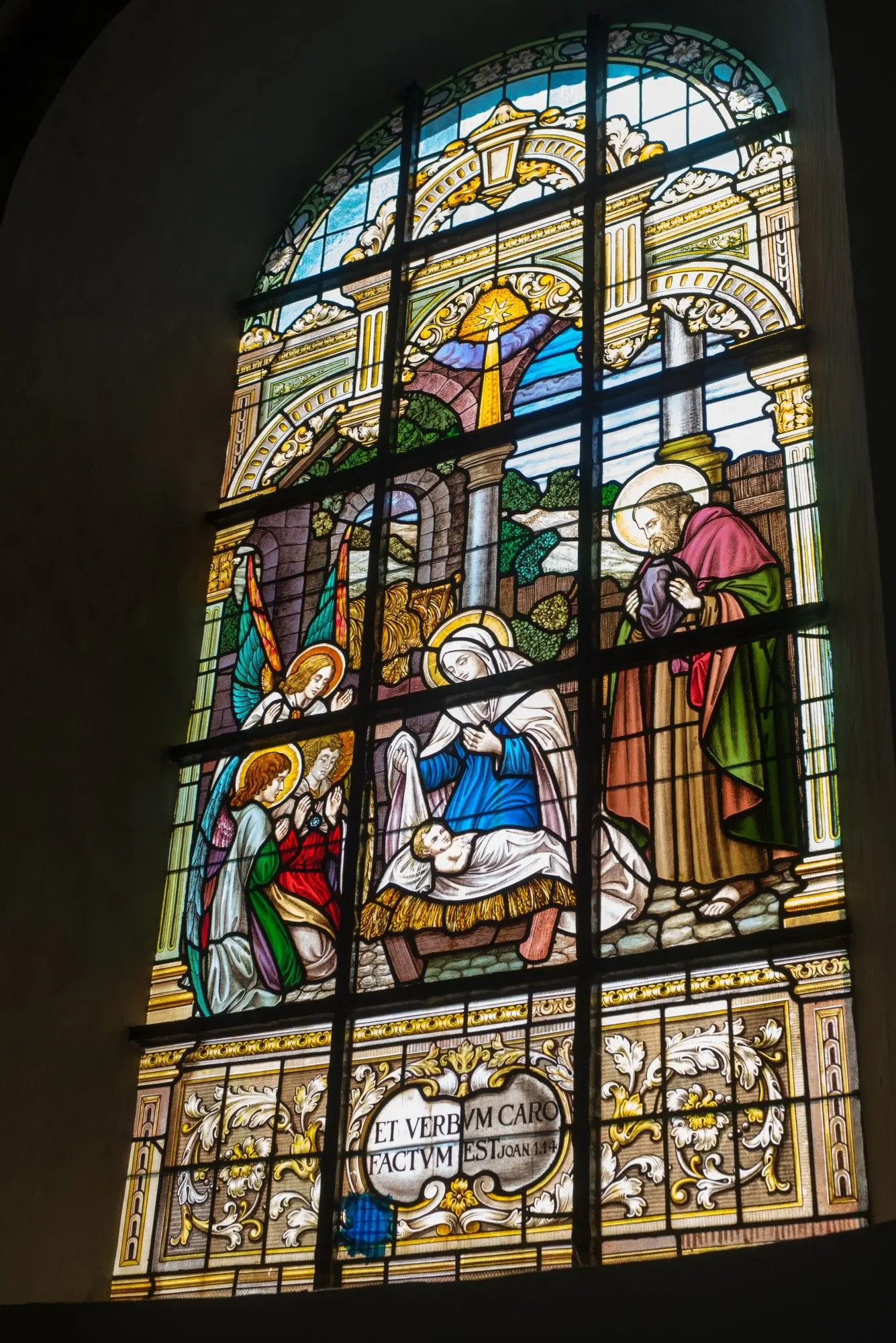
The two stained-glass windows in the choir date from 1931, supplied by Peene-Delodder from Bruges. Stained windows are eminently a Christian art form. Here you see a representation of the Annunciation and the Nativity.
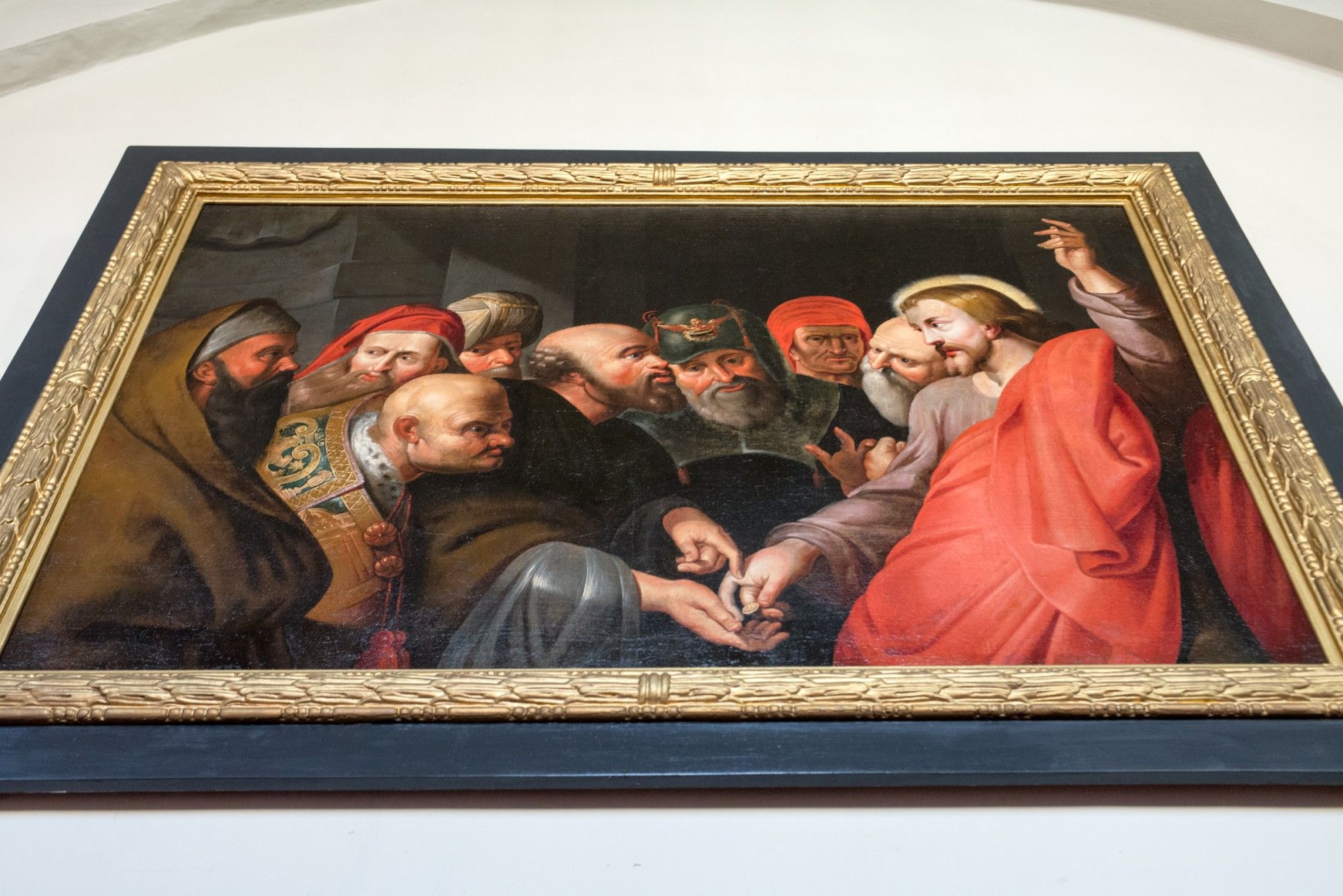
Painting Tribute money with Christ
The painting “The tribute money” on canvas dates from the 17th century. It refers to the passage…
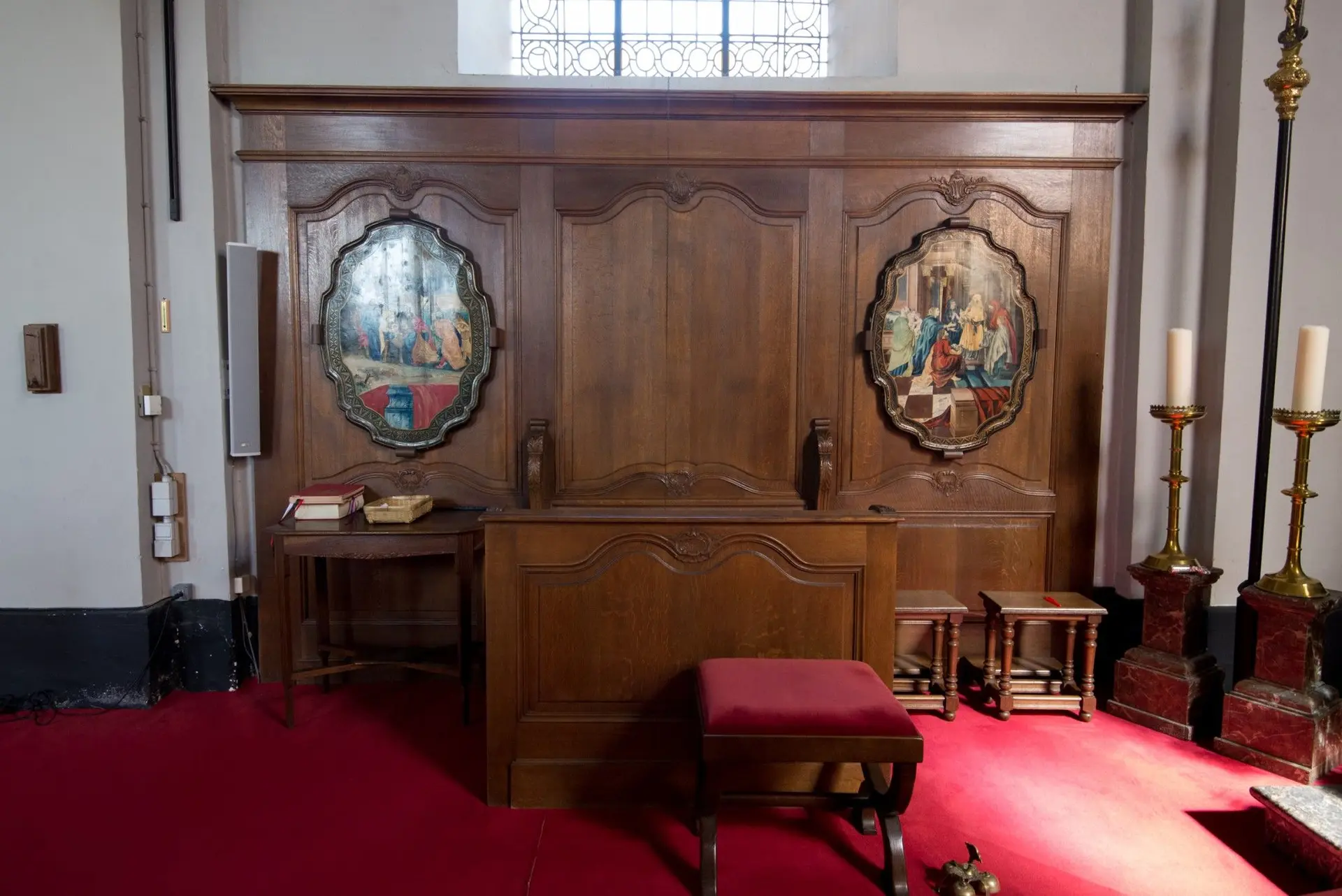
The painting “The tribute money” on canvas dates from the 17th century. It refers to the passage in which some Pharisees ask Jesus whether they should pay taxes to the emperor. Jesus saw through their hypocrisy and answered: ”Give to Caesar what is Caesar's and to God what is God's”.
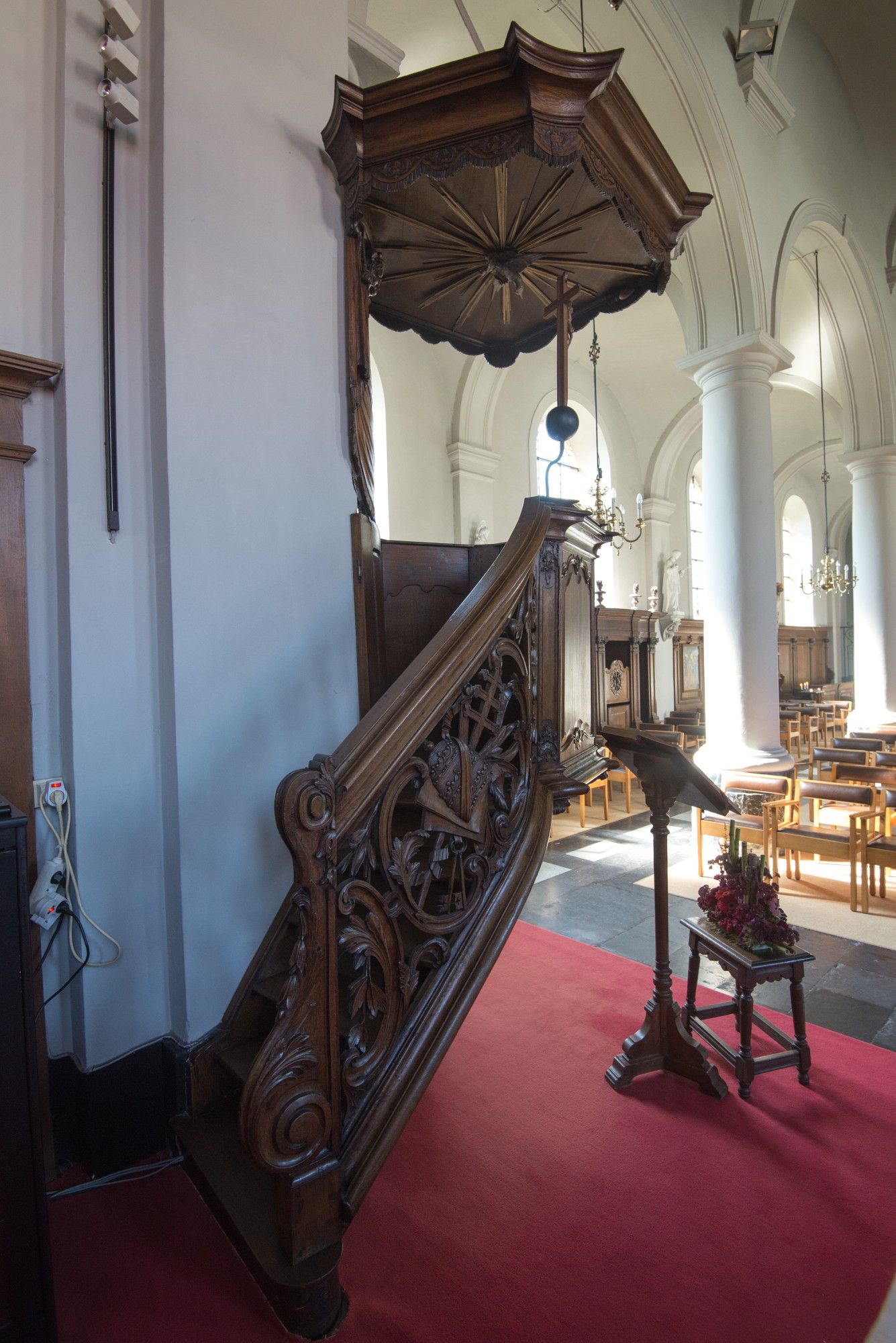
Pulpit (1777)
This oak-wood piece of church furniture dates from 1777, see the date on top of the front side…
This oak-wood piece of church furniture dates from 1777, see the date on top of the front side of the tub. The woodcarvings are made by the Bruges sculptor Dominic Dalsi, e.g. on the banister and on the back panel. On the banister the papal attributes are depicted: tiara, crosier, keys, fishing ring. Ambrosius Lauweryns made and assembled the pulpit, with the help of his servant François Corneilly.
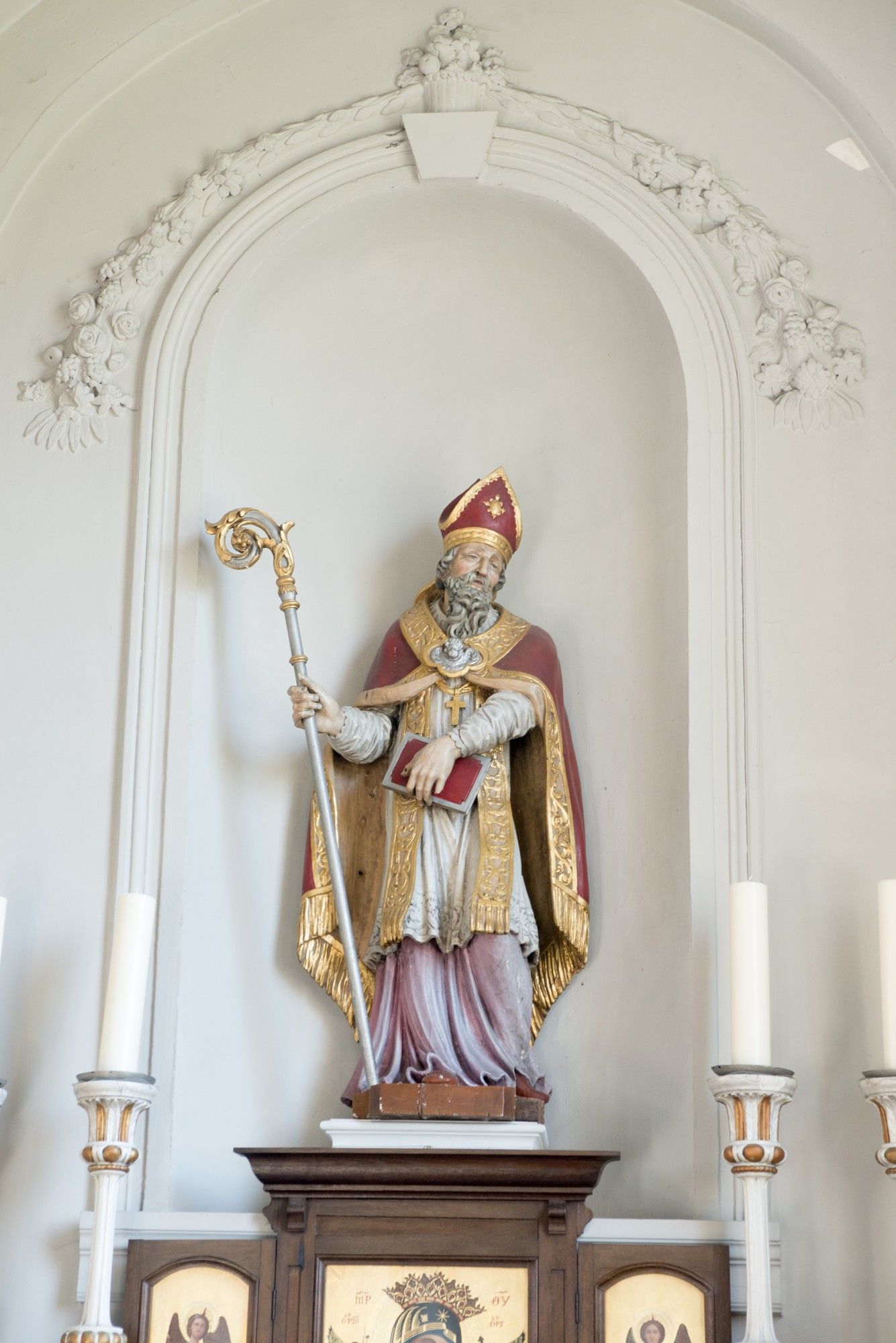
Sculpture of Saint Blaise and his relic
Above the Saint Blaise altar stands the statue of St. Blaise depicted as a bishop. The sculpture…
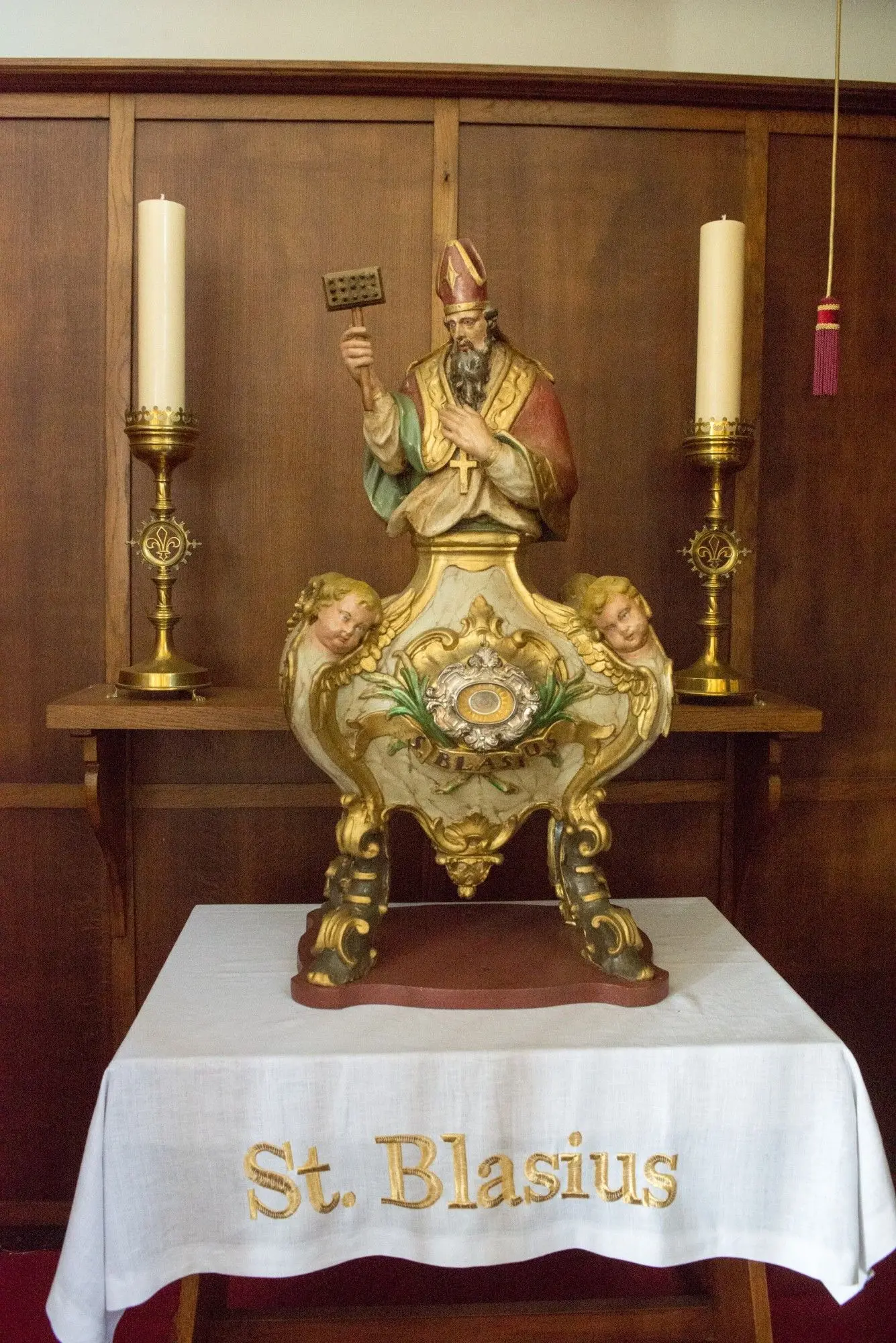
Above the Saint Blaise altar stands the statue of St. Blaise depicted as a bishop. The sculpture is polychrome and dating from the 18th century. A polychromed wooden reliquary from the 18th century contains the relic of the saint. The artful rococo reliquary stands on volute-shaped legs with angel heads. On the upper part St. Blaise is portrayed with a hackle (comb). In the socle we find the osculatorium (osculare = can) which houses the relic of St. Blaise.
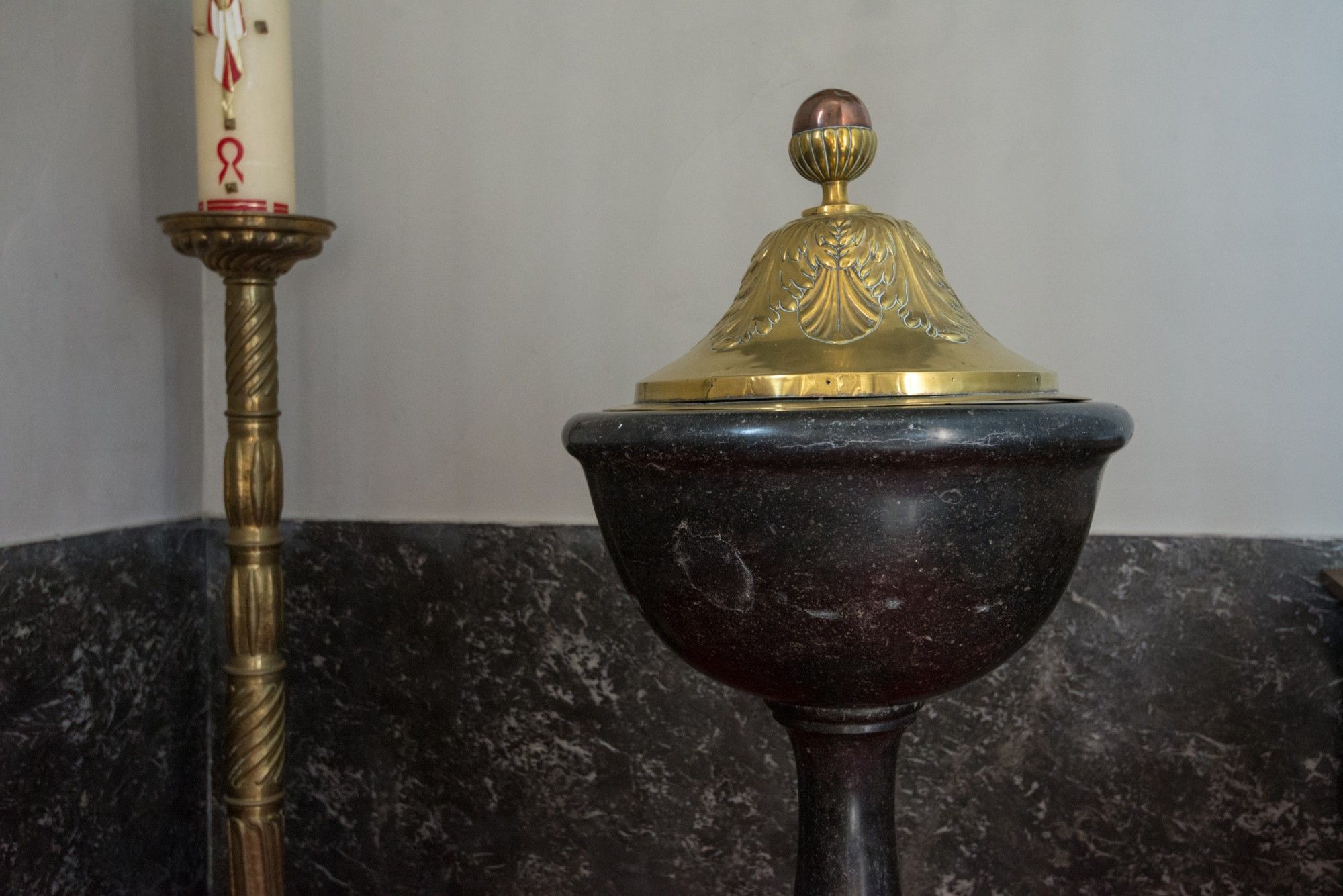
Baptismal font
The marble baptismal font consists of a round basin on a shaft. The font is closed by a…
The marble baptismal font consists of a round basin on a shaft. The font is closed by a bell-shaped lid in light copper that was purchased from silversmith Pieter Naert in 1830.
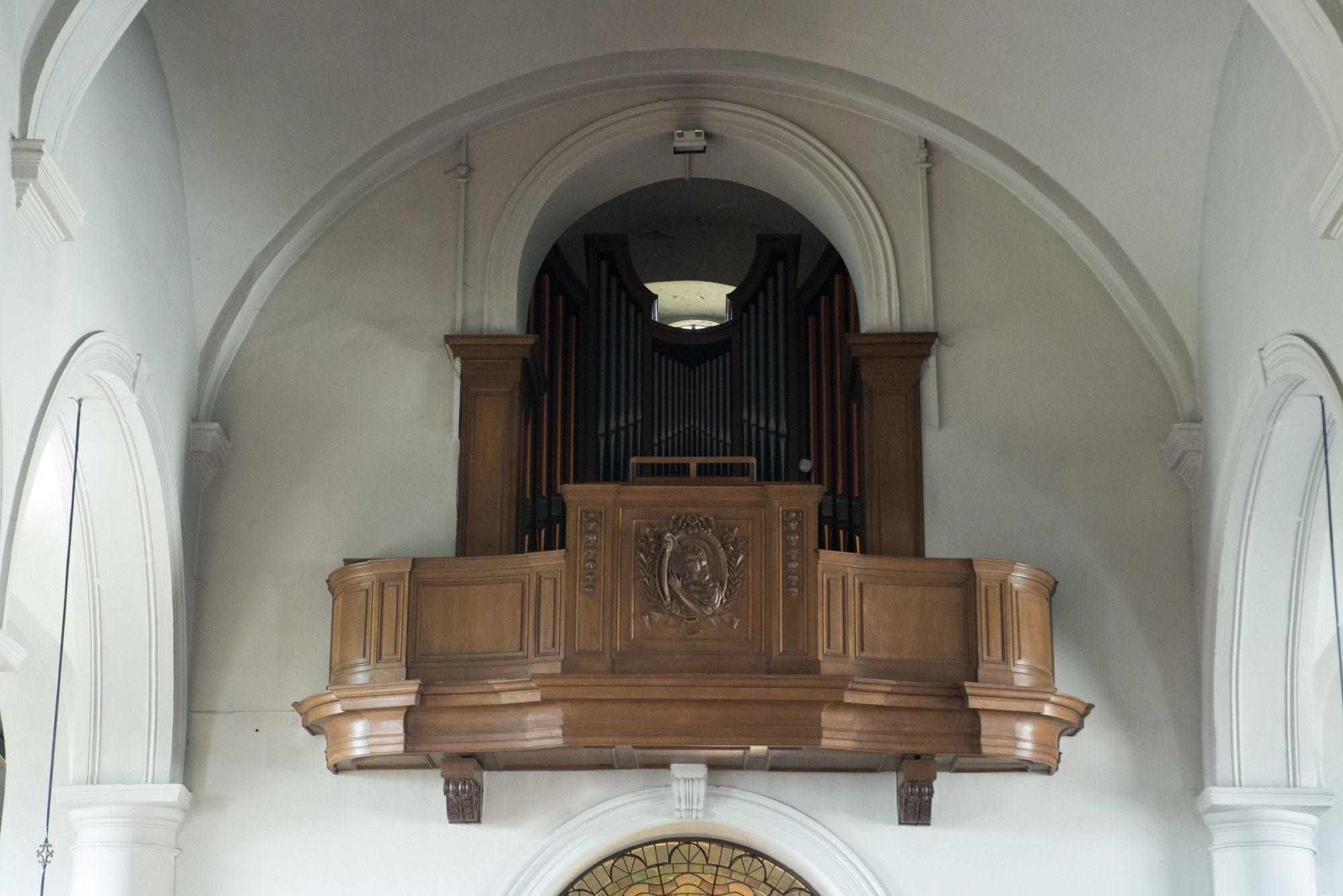
Organ
The house of Peteghem, renowned organ builders from Ghent, supplied the new organ in 1815,…
The house of Peteghem, renowned organ builders from Ghent, supplied the new organ in 1815, which, despite modifications, still retains much of Peteghem’s pipework. Carpenter Jacob Quagebuer of Vlissegem mounted the rood loft, and Anthony Knockaert provided the organ case. In 1892 the organ was moved back, with the clavier and organist’s seat placed in front. In 1940 the rood loft was raised, and a wooden bas-relief of St. Cecilia was added to the parapet.
Labels

To find out more
Hours
Closed
Religious services
Kerknet
Nearby buildings




Comments (0)