

Saint George
Building profile
Historic/listed monument
Practical information

 © EONDF
 © EONDF
 © EONDF
 © EONDF
 © EONDF
 © EONDF
About this building
Situated in the centre of the village of Hermaville, a « Village-Patrimoine », in an authentic and green setting, the church of St. George was listed as a Historical Monument in 1926. The building was rebuilt in 1782 ( nave and sanctuary) on the site of the previous church, whose architecture is known due to the water-colour drawings of the albums of Croy (no. 18) which represented the village at the beginning of the 17th century.
To reach the building it is necessary to cross the parish enclosure, and before entering, to admire the « porch-belfry » and its carved hooks on the…
Situated in the centre of the village of Hermaville, a « Village-Patrimoine », in an authentic and green setting, the church of St. George was listed as a Historical Monument in 1926. The building was rebuilt in 1782 ( nave and sanctuary) on the site of the previous church, whose architecture is known due to the water-colour drawings of the albums of Croy (no. 18) which represented the village at the beginning of the 17th century.
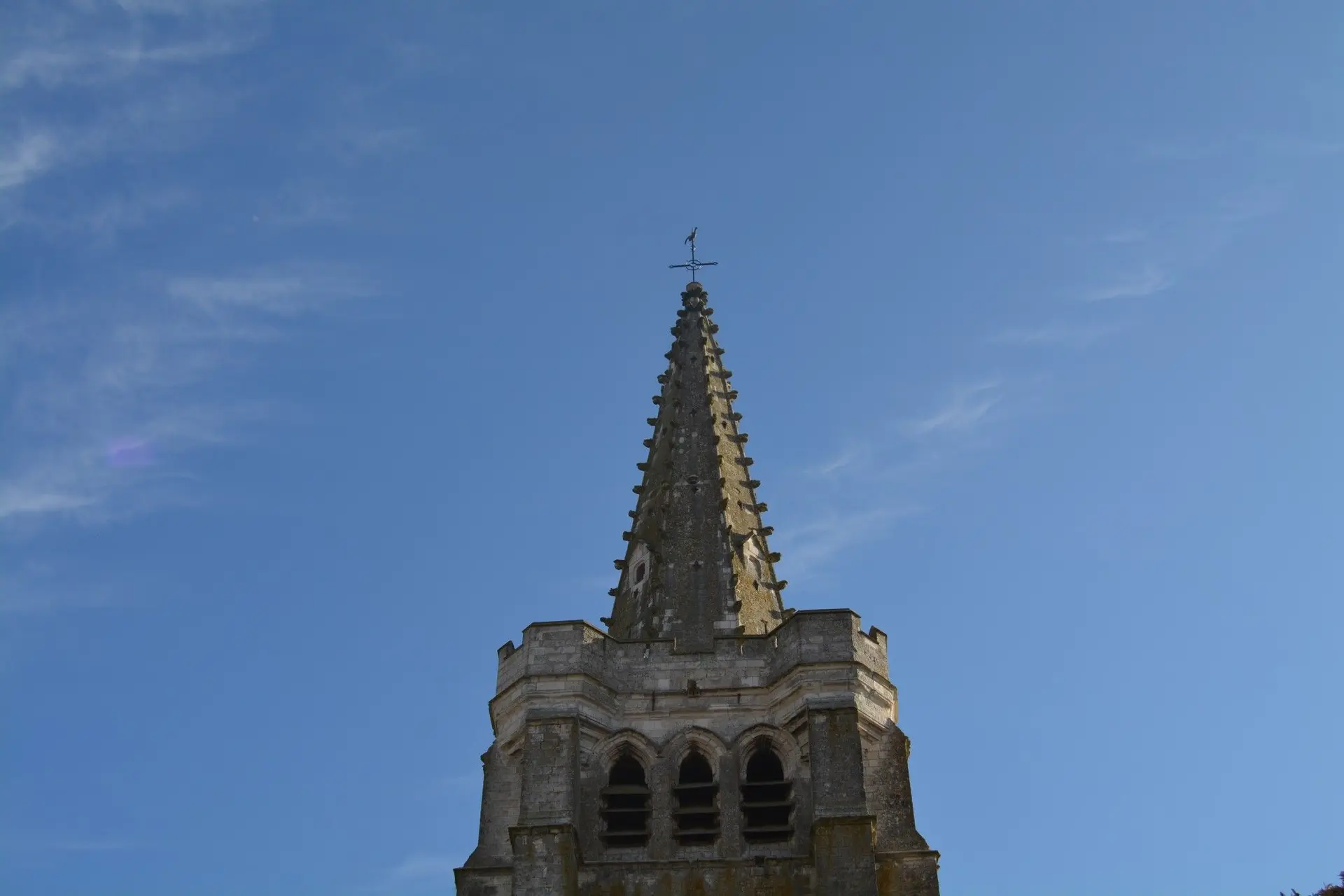
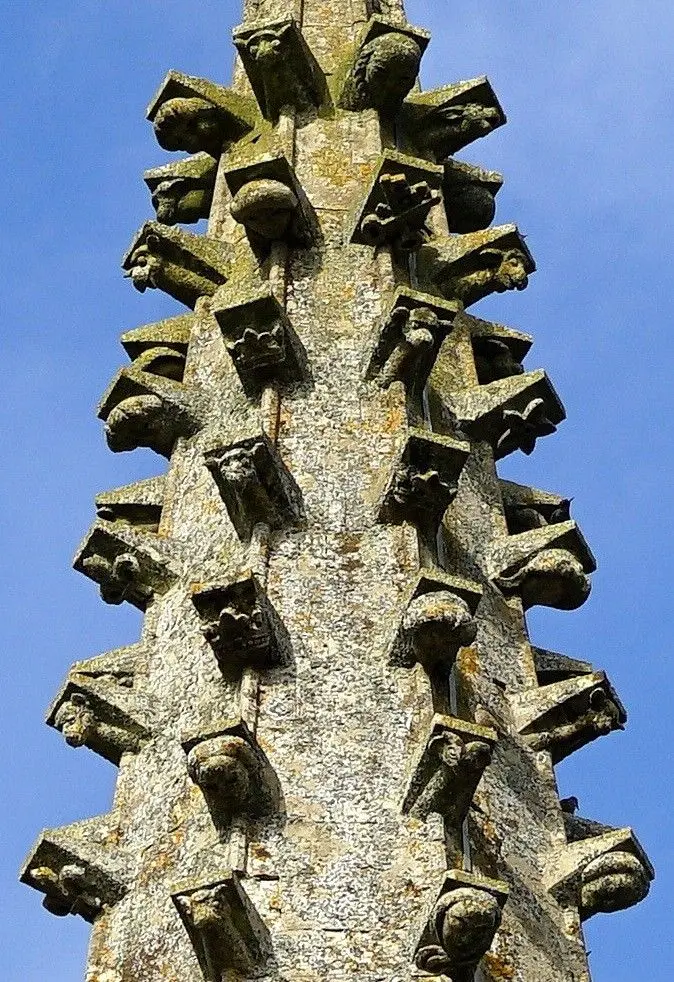
To reach the building it is necessary to cross the parish enclosure, and before entering, to admire the « porch-belfry » and its carved hooks on the steeple (1629).
Inside, the visitor is surprised by the light and airyness of the church, in spite of its sizeable dimensions for a village church.
In the neo-classical style, without a transept, it has three naves, abundently lit by contemporary stain-glass windows. Banners on the walls remind us of the existence since the end of the 19th century, of a local devotion to the Sacred Heart of Jesus.
In the sanctuary the two wooden statues by local artists represent Saint Antony and Saint Nicolas, and the baptismal font ( Renaissance), an 18th century communion bench, a beautiful ceramic « Stations of the Cross », a luminous stained glass window with the arms of Marshal Randon, are some of the elements of a decor which surprises with its great sobriety.
The church is the starting point for walks in the village and the surrounding countryside.
Remarkable elements
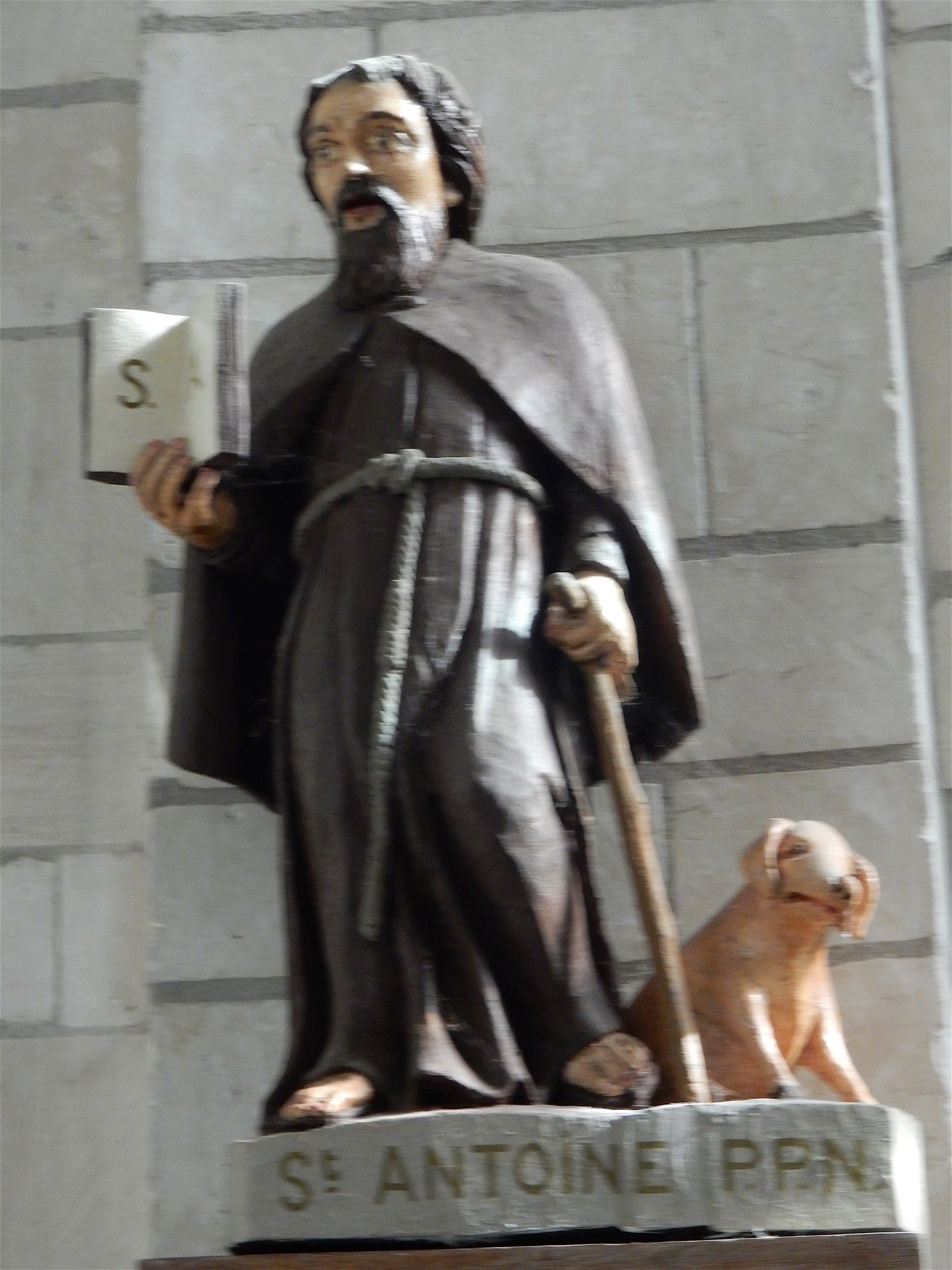
The statues in the choir
The carved wooden statues in the choir date from the 18th century. One may represent Saint…
The carved wooden statues in the choir date from the 18th century. One may represent Saint Nicholas, the other Saint Anthony of the Desert, depicted with a book and a pig. This iconography appeared at the end of the 14th century and refers to the Order of Saint Anthony, founded in 1095. These monks raised pigs to feed the poor and used lard in a balm reputed to cure ‘mal des ardents’ (St Anthony's fire).

The communion rail
The oak communion rail dates from the 18th century. It is a kind of fence separating the choir…
The oak communion rail dates from the 18th century. It is a kind of fence separating the choir from the nave. This architectural feature, which is waist-high, served as a separation during communion. The faithful would kneel in front of it while the priest presented them with the host. This method of communion was abandoned after the Second Vatican Council.
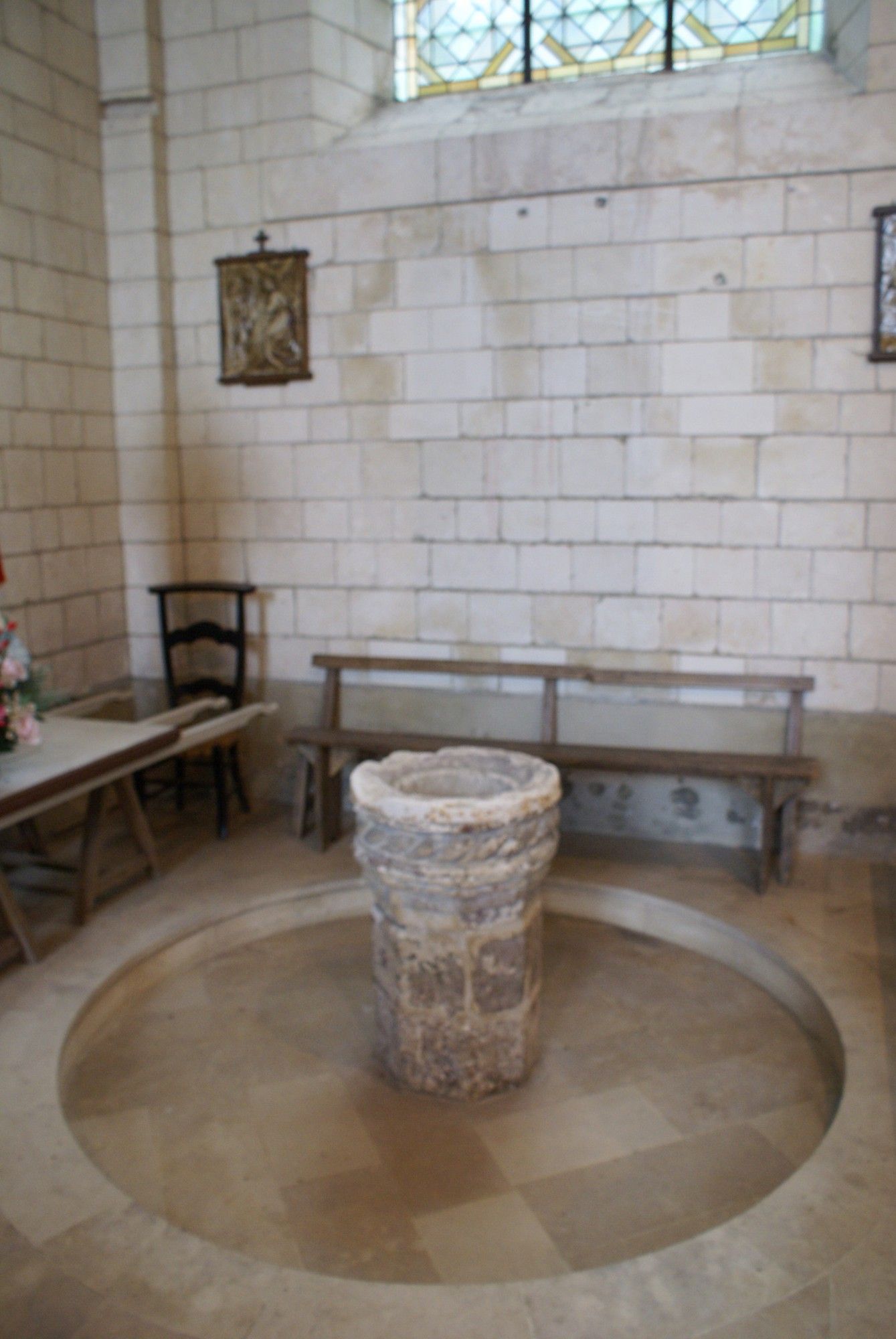
The baptismal font
The stone baptismal font dates from the 16th or 17th century. It occupies the centre of a…
The stone baptismal font dates from the 16th or 17th century. It occupies the centre of a ‘pool’, which is concealed for safety reasons by a removable floor.
Very simple in design, decorated only with a braided rope motif, it may have come from the old church in Hermaville, which was demolished in 1762 due to its dilapidated state. The current church dates from 1782.
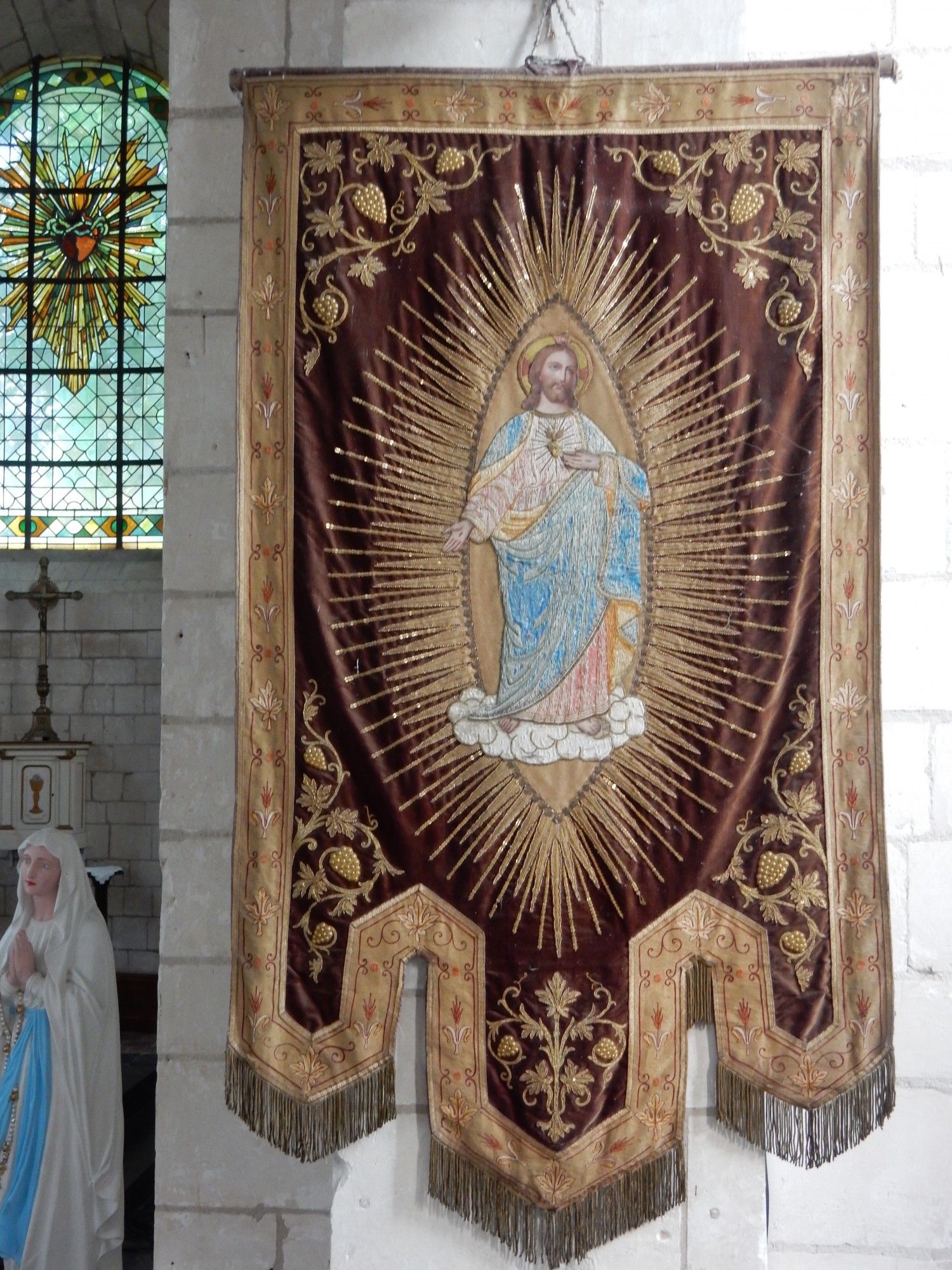
The Sacred Heart banner
This 19th or 20th century banner commemorates the existence of a local devotion to the ‘Sacred…
This 19th or 20th century banner commemorates the existence of a local devotion to the ‘Sacred Heart’, established in 1878 on the initiative of Father Modeste Lefebvre, then parish priest.
Until recently, the pilgrimage in honour of the Sacred Heart took the form of a triduum ending on the fourth Sunday in July.
Nowadays, it is limited to the Saturday and Sunday of that same weekend.

The plaque commemorating the parish's dead
In 1915, Cardinal Sevin, Archbishop of Lyon, asked parish priests to ‘engrave the names of our…
In 1915, Cardinal Sevin, Archbishop of Lyon, asked parish priests to ‘engrave the names of our soldiers, all names without exception, from the most illustrious to the most obscure. Engrave them on the walls of your churches’. These memorial plaques preceded the communal war memorials that were developed after the law of 25 October 1919. The parish war memorial plaque was torn down and broken during the German invasion of 1940.
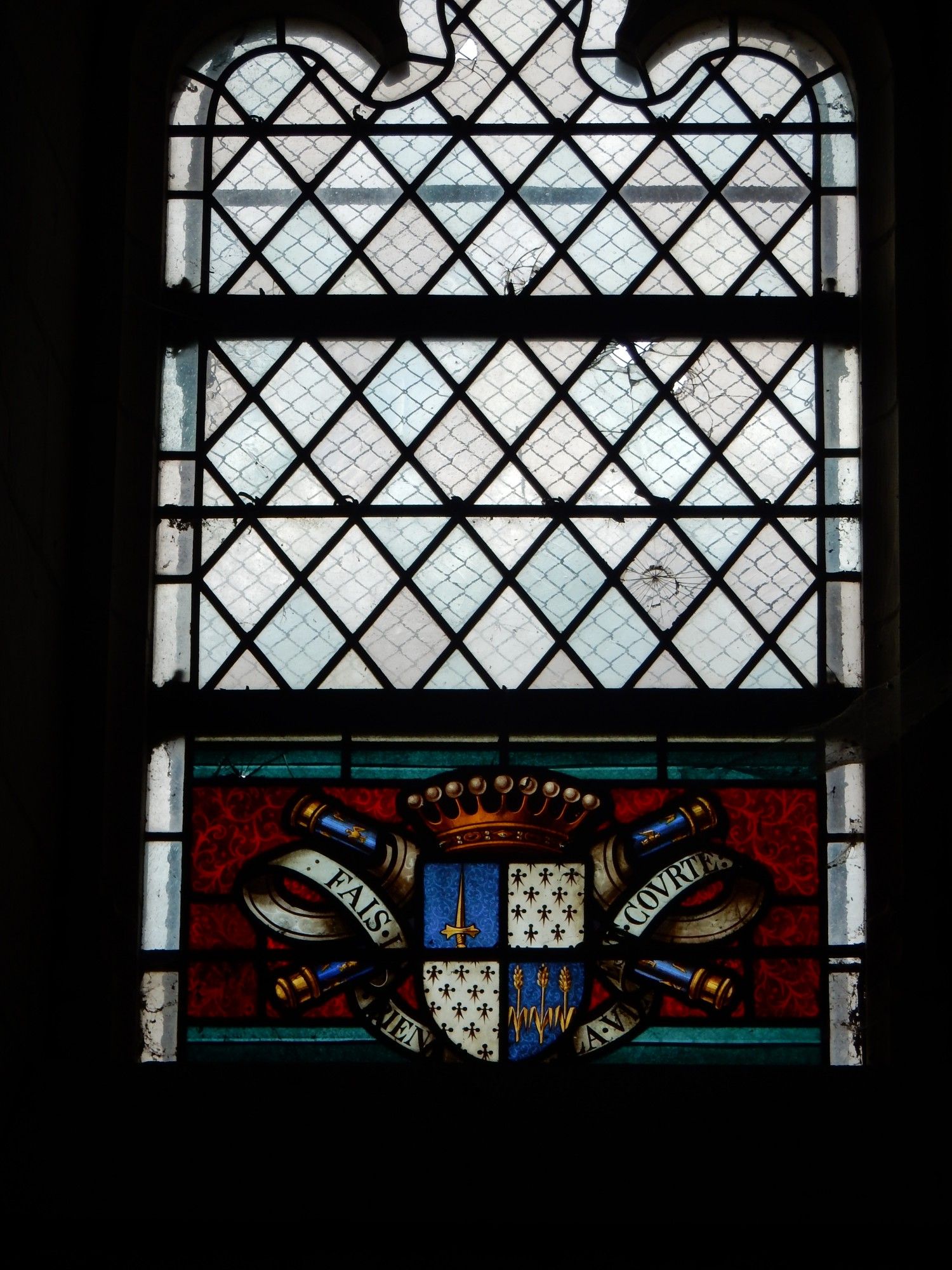
Stained glass window
Located on the west facade of the bell tower, this bright little stained glass window bears the…
Located on the west facade of the bell tower, this bright little stained glass window bears the coat of arms of Jacques-Louis Randon, Marshal of the Second Empire and owner of the Château d'Hermaville from 1849 to 1871 : the count's crown, the marshal's baton and his motto : ‘Do good, life is short’.


Medias
Hours
Closed
Additional information
+33 3 21 22 03 00 ou + 33 6 30 19 18 07linarddominique@arol.fr
Religious services
Saturday 6.30 pm
Sunday morning (once a month)
Nearby buildings


Tours associates

Comments (0)