
Saint Gummery
Building profile
Historic/listed monument
Practical information


 © Églises Ouvertes
 © Églises Ouvertes
 © Églises Ouvertes
 © Églises Ouvertes
 © Églises Ouvertes
 © Églises Ouvertes
 © Églises Ouvertes
 © Églises Ouvertes
 © Églises Ouvertes
 © Églises Ouvertes
 © Églises Ouvertes
 © Églises Ouvertes
 © Églises Ouvertes
 © Églises Ouvertes
 © Églises Ouvertes
About this building
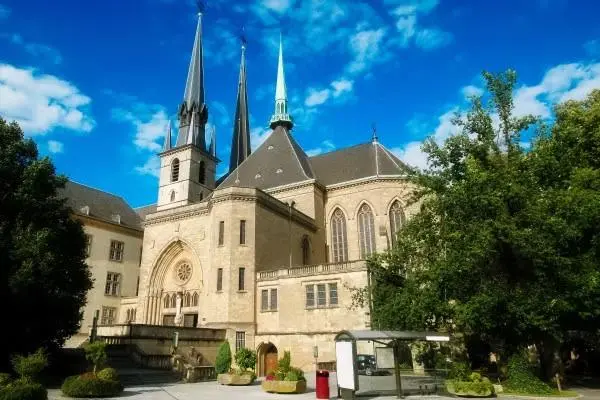
The church of Saint Gummery built between the 14th and 16th centuries is the most characteristic example of the flamboyant gothic style from Brabant. Members of the Kelderman family as well as Herman and Domien de Waghemakere are among the master craftsmen of this imposing building.
The tower is 83m high. Its gothic spire was burnt down in 1609 and in 1702 and was replaced by an octagonal rococo bell tower. This gave a particular aspect to the tower, which has been called the “pepperpot”.
The stained glass windows from the Middle Ages are…
The church of Saint Gummery built between the 14th and 16th centuries is the most characteristic example of the flamboyant gothic style from Brabant. Members of the Kelderman family as well as Herman and Domien de Waghemakere are among the master craftsmen of this imposing building.
The tower is 83m high. Its gothic spire was burnt down in 1609 and in 1702 and was replaced by an octagonal rococo bell tower. This gave a particular aspect to the tower, which has been called the “pepperpot”.
The stained glass windows from the Middle Ages are certainly renowned and are known as the “Imperial windows” (1516-1519).They depict Emperor Maximilian of Austria and Mary of Burgundy and Phillip le Beau and Jean of Castile, who were married here in 1496.
The flamboyant rood screen in white sandstone from the 16th century is unique in its style and its luxurious ornamentation with its depiction of the sixteen Stations of the Cross. In the side chapels there are a number of paintings and a triptych of the Colibrant family. The interior is resplendent in rich furnishings, the astonishing baptismal chapel, of which a part came from the cloisters of Chartreuse, a Pieta and other life size statues. There is also a treasure of silver religious relics from the 17th to 19th centuries.
On the Sunday after the 10th October there is a procession in which the silver reliquary containing the relics of Saint Gummery, weighing 800kgs, are carried by 16 inhabitants of Lier.
Remarkable elements

Organ loft in the chancel
The St. Gummarus church is a chapter church because it was linked to a chapter of canons. These…
The St. Gummarus church is a chapter church because it was linked to a chapter of canons. These had their seats in the chancel. The parishioners were seated in the nave. Between nave and chancel was an organ loft for members of the choir and the organ. There was also a platform with a pulpit. From afar the organ loft in late gothic style resembles a mass of stone lace. On closer inspection we detect 16 Stations of the Cross, patron saint St. Gummaris, the evangelists and the church Fathers.

Stained glass window: Coronation of the Virgin Mary
Admired since the late 15th century, this clear window, lit by the midday sun, shows the…
Admired since the late 15th century, this clear window, lit by the midday sun, shows the coronation of the Virgin by the Holy Trinity. A blue and white cloud medallion surrounds the grisaille scene, echoing the style of Flemish Primitives like Van der Weyden and Bouts. Restored in the 19th century by J.-B. Capronnier, it also bears a verse from the Song of Solomon: “Come from Lebanon, my bride, and be crowned.”

Shrine of St. Gummarus
Yearly the 800kg heavy St. Gummarus shrine is carried in procession through the streets of Lier…
Yearly the 800kg heavy St. Gummarus shrine is carried in procession through the streets of Lier by the Society of Bearers. It normally rests in the chancel, and the relics of the saint are kept in the altar devoted to St. Gummarus. On four sides of the silver shrine scenes from the legends of St. Gummarus are depicted. On the top is a silver tree. The shrine was made in the 17th century by silversmith Wierick Somers II.

Colibrant triptych
Before leaving on his pilgrimage to the Holy Land, Joris Colibrant commissioned this triptych,…
Before leaving on his pilgrimage to the Holy Land, Joris Colibrant commissioned this triptych, though he died on the journey and never saw it. His grandson, Goossen Van der Weyden, illustrated the seven joys and sorrows of the Virgin Mary: the Annunciation on the left panel, the marriage of Mary and Joseph in the center, and Jesus’ presentation in the temple on the right, adding symbolic depth beyond mere realism.
Copy of the Shroud of Turin
On this finely woven cloth the front and back of the dead body of Christ are painted. It looks…
On this finely woven cloth the front and back of the dead body of Christ are painted. It looks as if Christ was lying on the cloth which was then folded over his head. The original Shroud is three times larger than this copy but has been severely damaged by fire. The name of the maker remains a mystery. The cloth was the property of Margaretha of Austria and her chevalier d’honneur donated it to an abbey in Lier. After many years the copy was finally shown to the parishioners.
Painting “The Last Supper”, Maarten De Vos
Like many late 16th century artists, Maarten De Vos traveled to Italy and absorbed Renaissance…
Like many late 16th century artists, Maarten De Vos traveled to Italy and absorbed Renaissance ideas. In his Last Supper, he introduces classical columns and mythological motifs reflecting this revival. The scene highlights Christ’s human suffering and the apostles’ growing indifference, foreshadowing His moral agony in the Garden of Olives.
Pilgrimage paths
This building sits on the following pilgrimage routes


Medias
To find out more
Hours
Closed
Additional information
During the restoration works (2021-2029) at St Gummarus Church, efforts will be made to ensure permanent public opening. The mode of opening will change over the years depending on the type of works. More info.Religious services
Kerknet
Nearby buildings






Comments (0)