

Saint Joseph
Building profile
Practical information


 © Églises Ouvertes
 © Églises Ouvertes
 © Églises Ouvertes
 © Églises Ouvertes
 © Églises Ouvertes
 © Églises Ouvertes
 © Églises Ouvertes
 © Églises Ouvertes
About this building
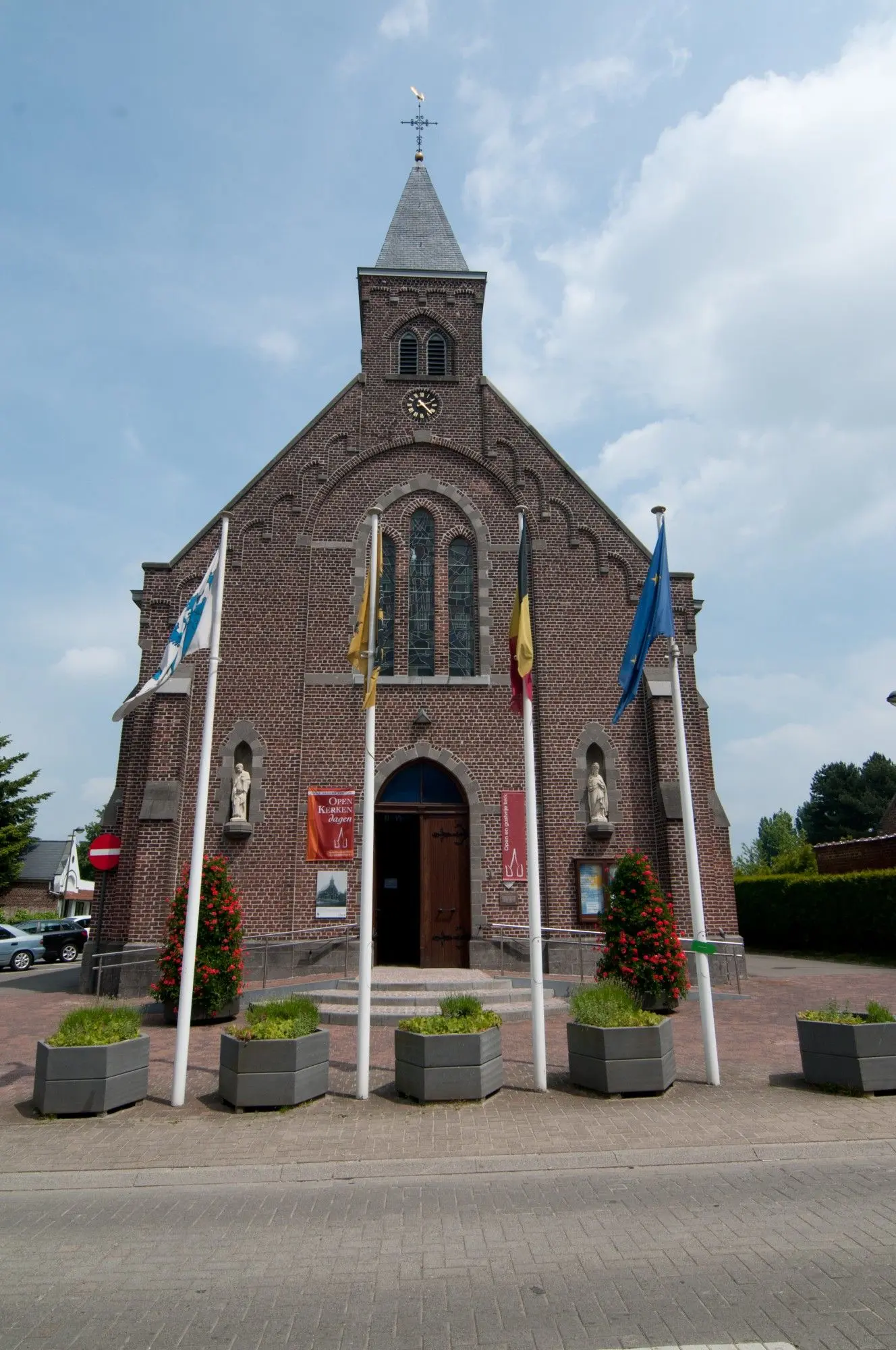
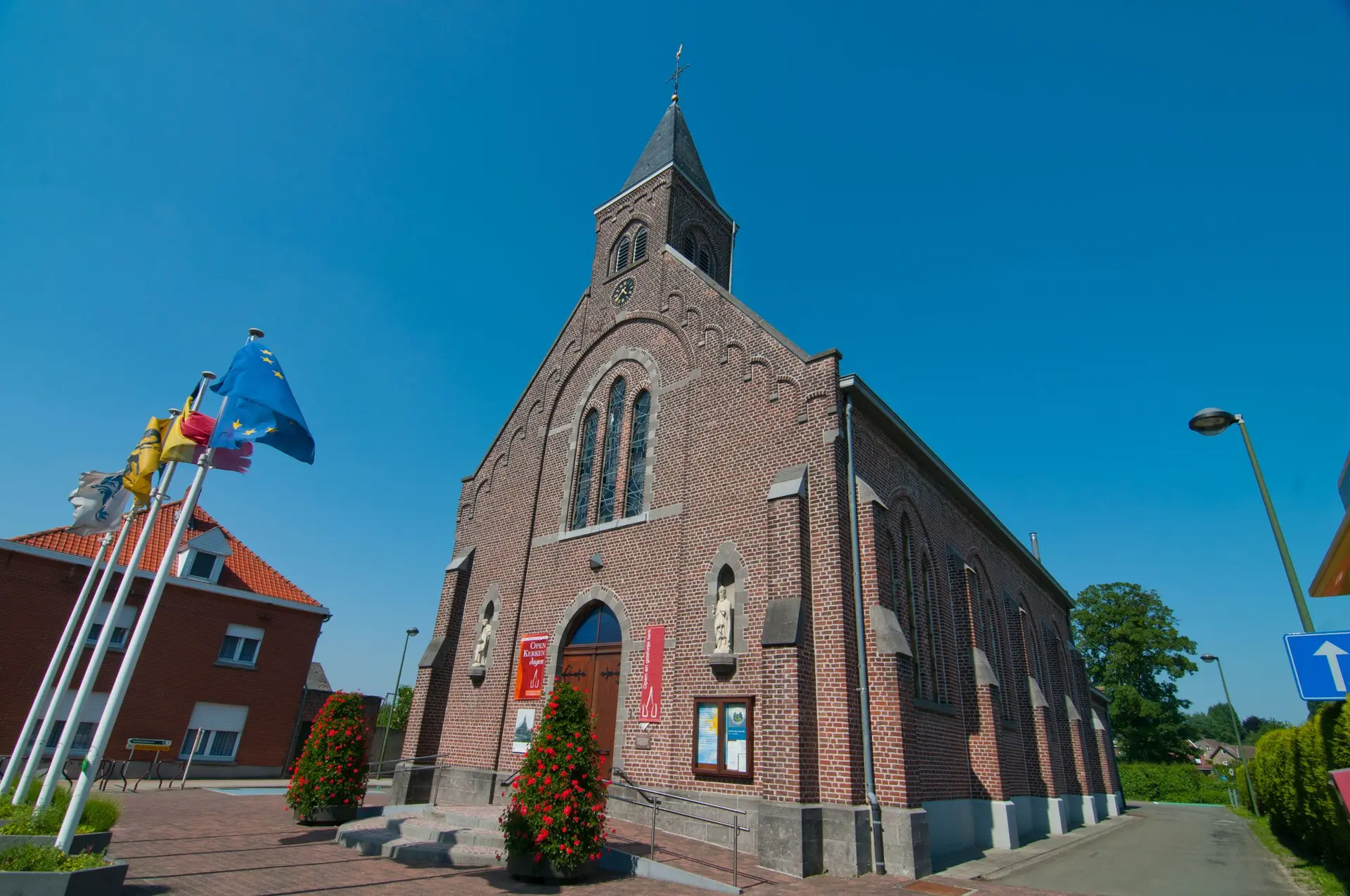
The parish of Moorsel was made independent in 1965. Previously, this parish was part of Sterrebeck and Tervuren but in the beginning of the 20th century the villagers, led by the brothers Coosemens, demanded their own church. Originally they planned a Neo Gothic church with three naves but this was reduced to one central nave. Work began in 1905 and was completely finished in a year but the church was much smaller than the original plan.
Damaged during the Second World War, it was temporarily repaired but the final restoration only occurred between 1998 and…
The parish of Moorsel was made independent in 1965. Previously, this parish was part of Sterrebeck and Tervuren but in the beginning of the 20th century the villagers, led by the brothers Coosemens, demanded their own church. Originally they planned a Neo Gothic church with three naves but this was reduced to one central nave. Work began in 1905 and was completely finished in a year but the church was much smaller than the original plan.
Damaged during the Second World War, it was temporarily repaired but the final restoration only occurred between 1998 and 2002.
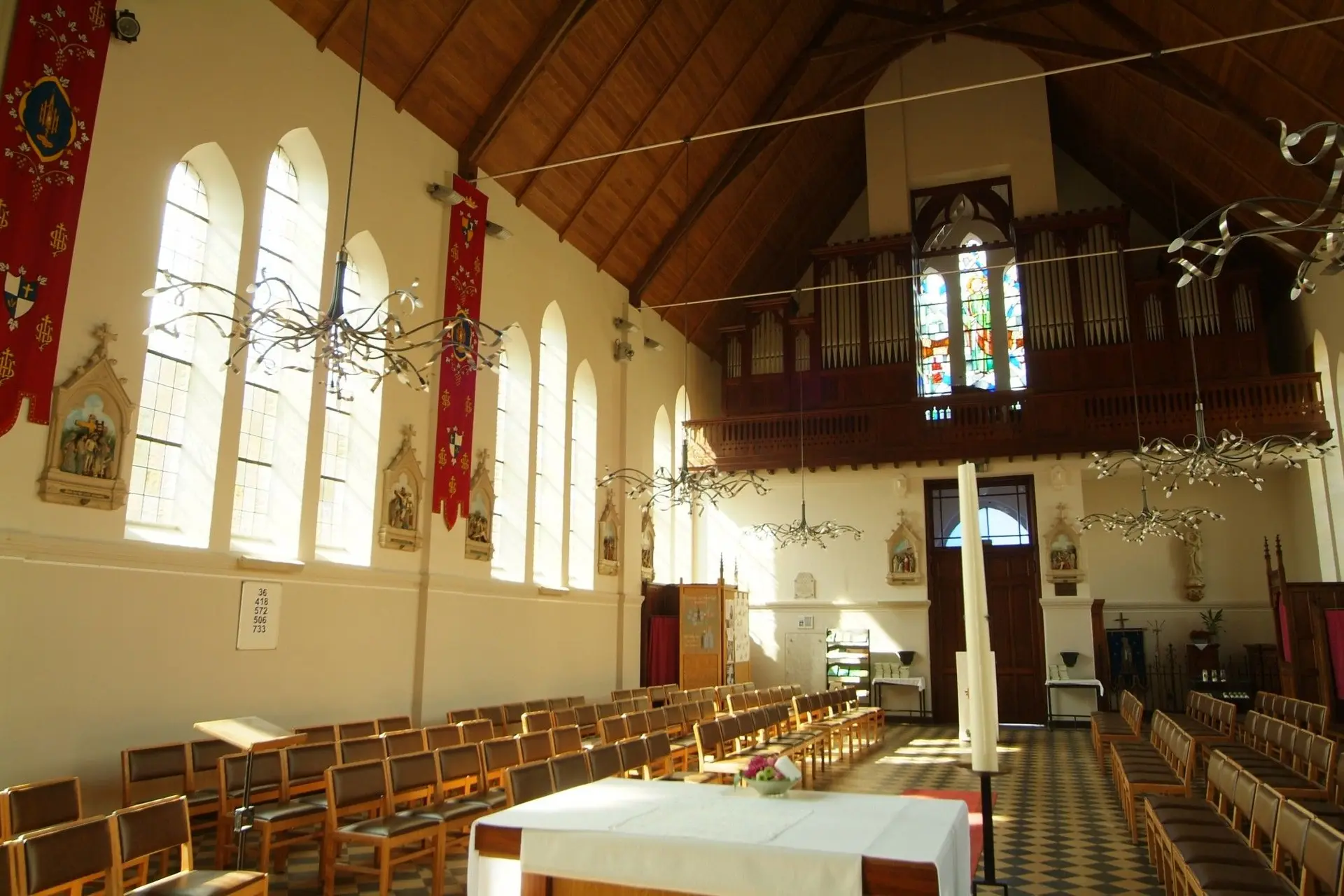
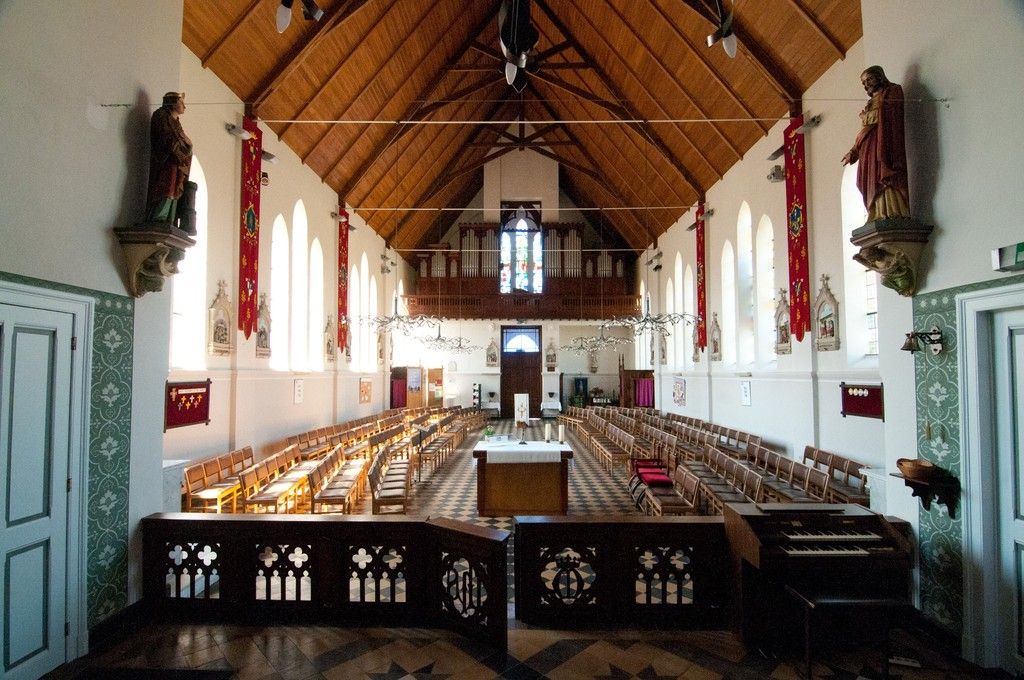
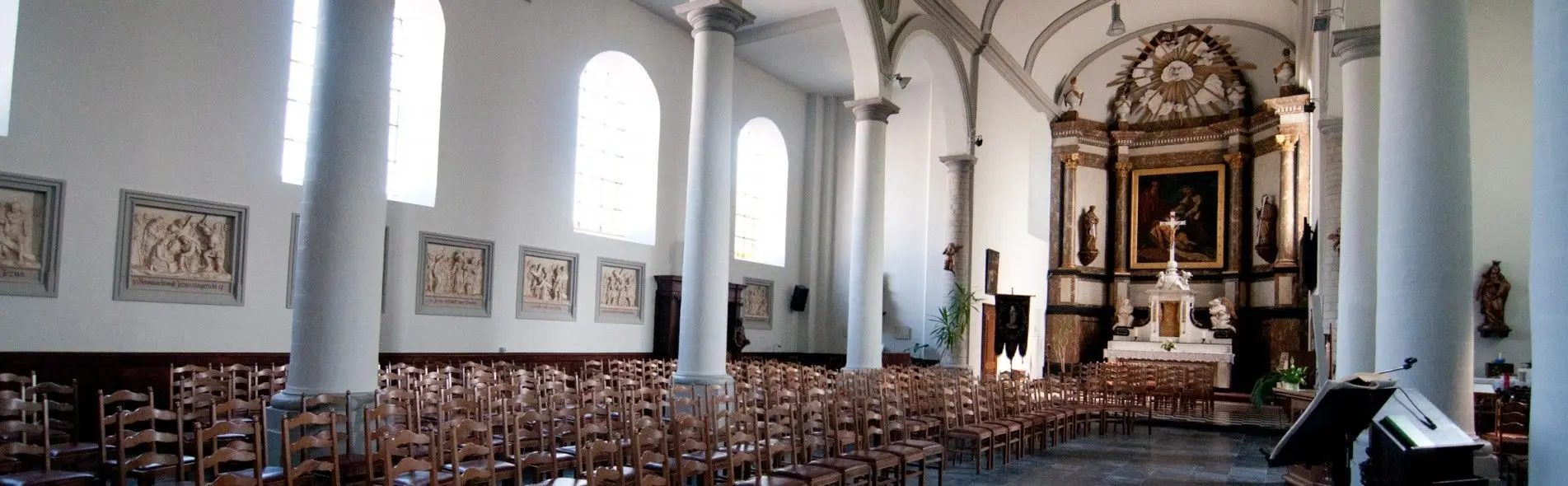
Now, the pews placed in and ellipse invite people to sit closer to the altar to commune with themselves or to hear the priest.
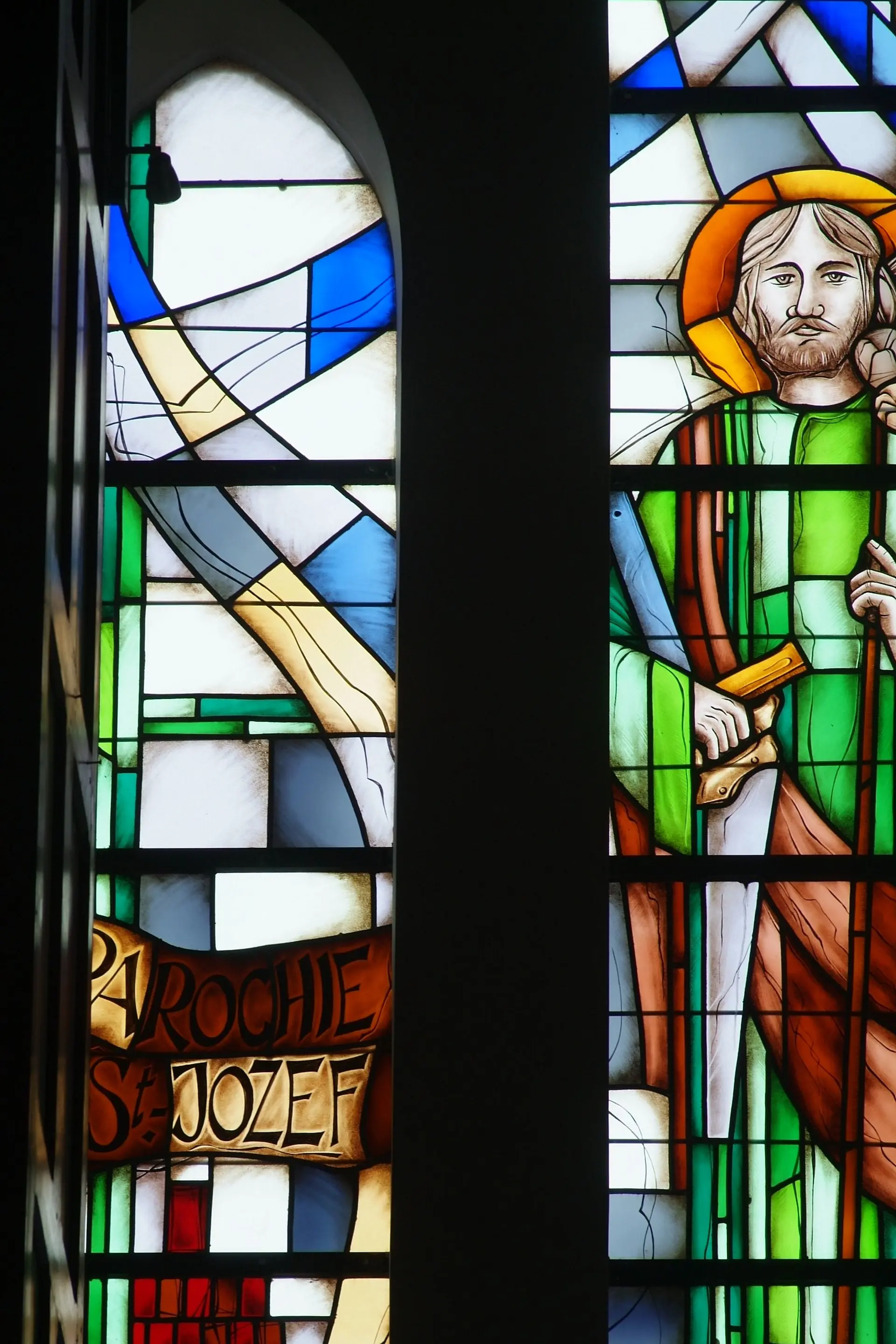
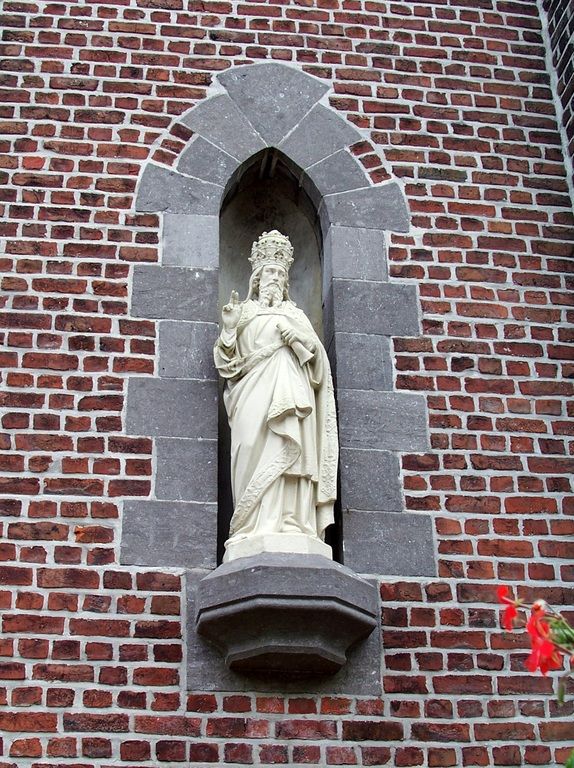
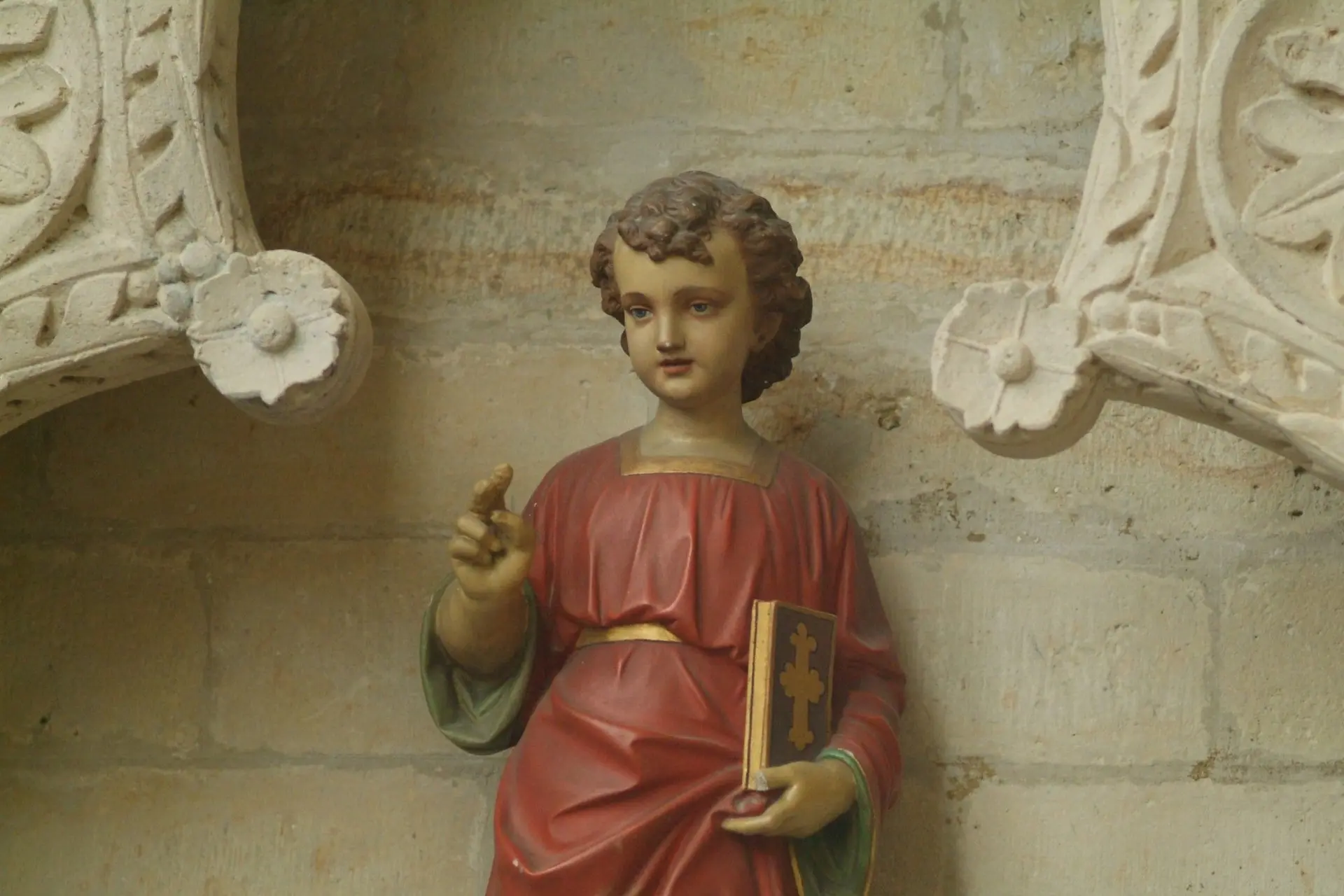
The statue of Saint Joseph is a modern version of an old one which had been lost. Also worth seeing is a statue of the Virgin 116metres high, and the grotto called “Lourdes” behind the church.
Moorsel is also known for its procession of Saint Cornelius.
Remarkable elements
Line-up
The line-up of the stairs is very remarkable. Pastor Jaak Vandelook was the major driving force…
The line-up of the stairs is very remarkable. Pastor Jaak Vandelook was the major driving force behind this line-up but the idea itself comes from Paul Vanderstuyft, a priest and an architect. The seats are positioned in an ellipse with the altar and the ambo (a small lectern that is used to read the Bible) placed at its foci. It is a reinforcement of the second word service, as the Second Vatican Council propagated. “The word became flesh” and still lives among the people.
Cornelius
Until a few decades ago, Saint Cornelius was strongly venerated in Moorsel. A special mass was…
Until a few decades ago, Saint Cornelius was strongly venerated in Moorsel. A special mass was held every first Tuesday of the month, and on Easter Monday many pilgrims from nearby villages came to honor him. People invoked Cornelius for illnesses threatening children, such as convulsions, whooping cough, and seizures. Statues of Saint Joseph and Saint Cornelius stand on the church façade.
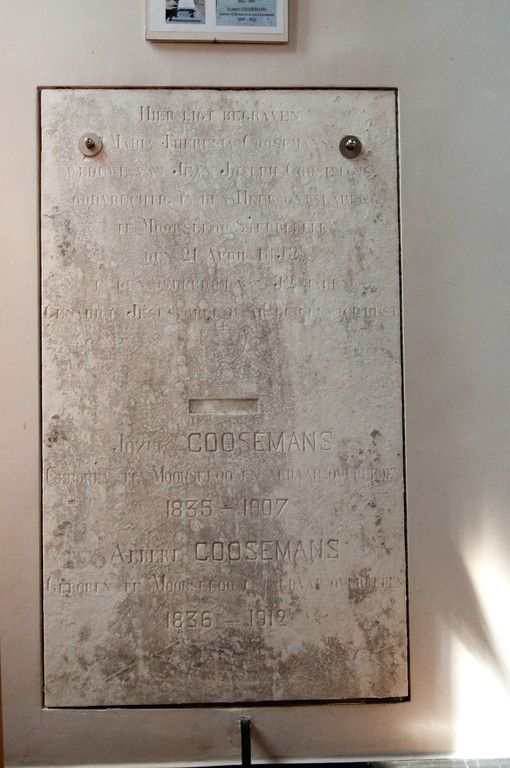
Tombstone Coosemans family
The mausoleum of the Coosemans family was in such a poor condition in 2002 that the church…
The mausoleum of the Coosemans family was in such a poor condition in 2002 that the church council decided to restore it. A new cover stone was cut and the old stone was walled in a back wall. It serves as a tribute to the builders of this church.
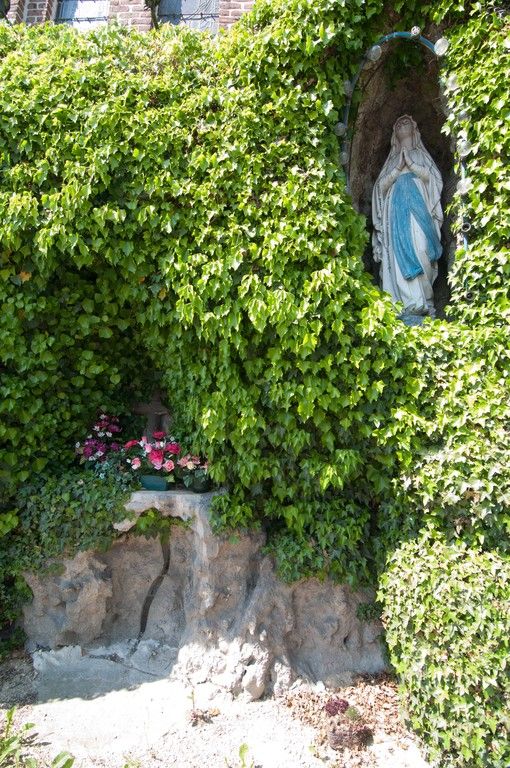
Lourdes Grotto
Since the first existence of the church, there has been a Lourdes Grotto at the backside. Mary…
Since the first existence of the church, there has been a Lourdes Grotto at the backside. Mary gets some special attention during the month of May. People come together on Palm Sunday to consecrate palm branches and to go to church in procession. A candle procession leaves at the grotto after prayer on the Feast of Assumption and goes to Our Lady of the Voskapel.
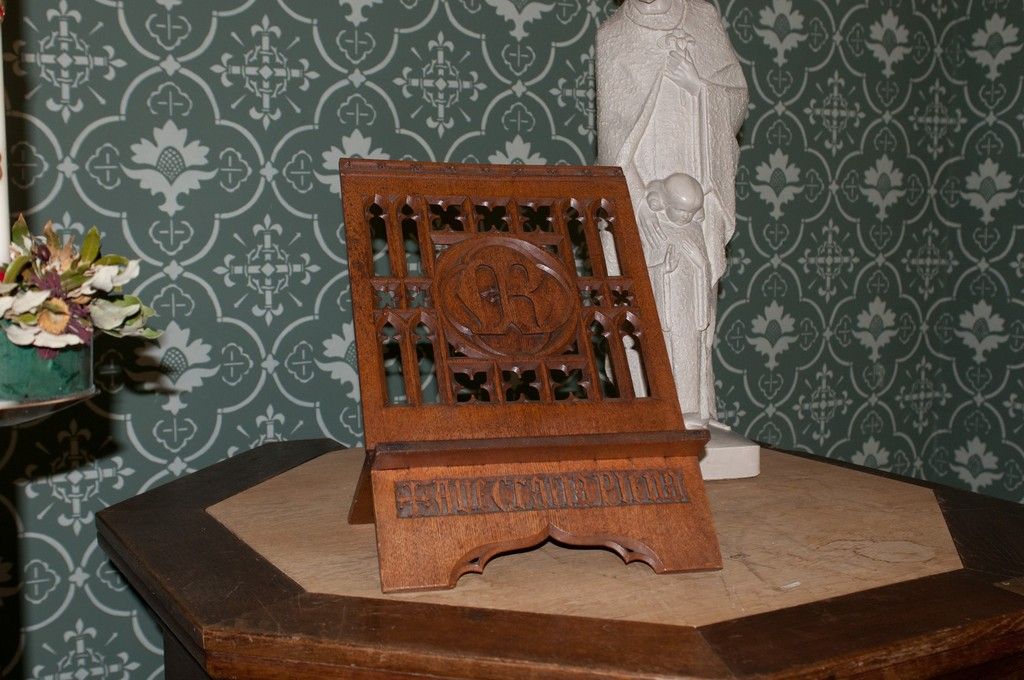
Lectern
Moorsel owns a beautiful Gothic foldable lectern with the inscription “AVE GRATIA PLENA”. It is…
Moorsel owns a beautiful Gothic foldable lectern with the inscription “AVE GRATIA PLENA”. It is made out of one piece of beech wood. According to the curator of the Pilgrim museum in Leiden there are only three lecterns likes this one left. He knew the location of two of them: one is in his museum and one in an American museum. Could it be that Moorsel owns the third one?
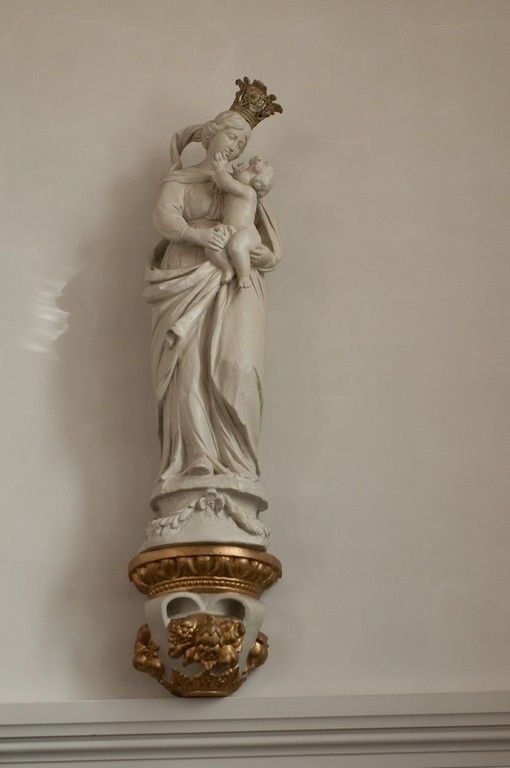
Statue of Our Lady
An exceptional statue of Our Lady of the Immaculate Conception can be found in this church. It…
An exceptional statue of Our Lady of the Immaculate Conception can be found in this church. It was a gift from the nuns of Overijse. Art historian Lode De Clercq describes it as follows: “Wooden sculpture (oak), probably from the first half of the 18th century. The statue is 116 cm high (3,8 feet).” Mary is characterised by a lenghtened proportion. The extreme thinnes is even more enhanced by the double pedestal. A small sample taken from the back has shown that the Madonna still wears her original polychrome.
Hours
Closed
Additional information
Closed during school holidays.+32-2-766 53 40 - toerisme@tervuren.be
+32 2 767 68 63 - heemkundetervuren@gmail.com
Religious services
Kerknet
Nearby buildings





Comments (0)