

Saint Servatius
Building profile
Historic/listed monument
Practical information


 © Églises Ouvertes
 © Églises Ouvertes
 © Églises Ouvertes
 © Églises Ouvertes
 © Églises Ouvertes
 © Églises Ouvertes
 © Églises Ouvertes
 © Églises Ouvertes
 © Églises Ouvertes
 © Églises Ouvertes
 © Églises Ouvertes
About this building
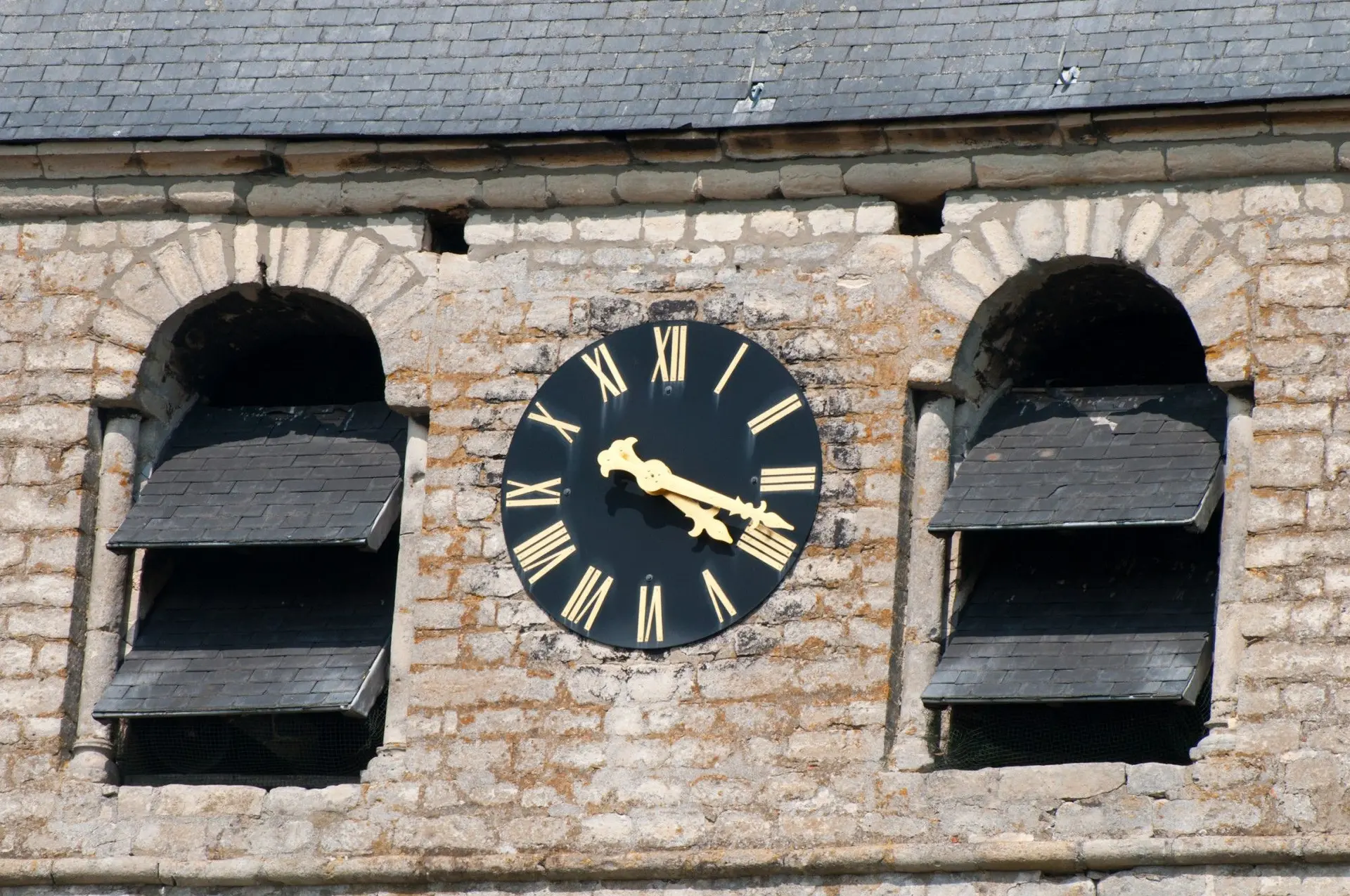
Late classical building from 1794, completed in 1831. Three naves in a rectangular choir, crowned with a 35 meter tower and two clocks. The church is the third one in the village, after the previous two were destroyed by fire or demolition.
The altar dates from 1843, in Louis XIV style. It has a Descent from the Cross from a somewhat later date. In the 1980s the new altar was set up, made from parts of the pulpit. The oak likeness of the patron saint, Saint Servatius, is in the sacristy.
The Entombment of…
Late classical building from 1794, completed in 1831. Three naves in a rectangular choir, crowned with a 35 meter tower and two clocks. The church is the third one in the village, after the previous two were destroyed by fire or demolition.
The altar dates from 1843, in Louis XIV style. It has a Descent from the Cross from a somewhat later date. In the 1980s the new altar was set up, made from parts of the pulpit. The oak likeness of the patron saint, Saint Servatius, is in the sacristy.
The Entombment of Christ is a copy of a Caravaggio from the Vatican. The Holy Trinity, a Flemish Primitive, was restaured in 2008 by the Royal Institute for the Artistic Heritage of Belgium.
Of the numerous other paintings and objects, a few come from the Romanesque Saint Lambert Chapel (1050) in Lelle. The Van Steenlant stroll refers to a noble family of Berg-Lelle.
Remarkable elements

Triptych
The triptych is by the hand of an unknown master of the Flemish primitives and dates back to the…
The triptych is by the hand of an unknown master of the Flemish primitives and dates back to the end of the 15th century. It consists of 5 paintings. The benefactors of the artwork are depicted on the front of the two side panels and on the back one can see the “Flagellation” and “The Descent”. The panel in the middle is adorned with the “Holy Trinity”. It portrays the Holy Spirit in a human form, which is quite unique.

Painting “The entombment of Christ”
This “Entombment of Christ ” is a copy of an artwork by the famous Italian master Michelangelo…
This “Entombment of Christ ” is a copy of an artwork by the famous Italian master Michelangelo Merisi da Caravaggio. He painted the original in the period 1603-1604. At the moment, the original hangs in the Picture Gallery of the Vatican. Rubens, who was a good friend of Caravaggio in the Italian period, also made a copy of this painting. The Rubens’ copy can be found in the National Gallery in Ottowa (Canada).

“Ecce Homo”
There is an “Ecce Homo” statue, a statue of Christ on a cold stone, on the left at the front of…
There is an “Ecce Homo” statue, a statue of Christ on a cold stone, on the left at the front of the church. It was made by an unknown artist and dates back to the 17th century. The statue originally came from the disassembled Saint Lambert Chapel in the hamlet Berg-Lelle.

Saint Joseph with baby Jesus
There is a statue of Saint Joseph with baby Jesus on his arm (oak, 18th century) on the left at…
There is a statue of Saint Joseph with baby Jesus on his arm (oak, 18th century) on the left at the back of the church. Probably, the statue also originally came from the disassembled Saint Lambert Chapel in the hamlet Berg-Lelle.

Stained glass window Saint Servatius
The stained glass window of Saint Servatius was transferred to this church from the eponymous…
The stained glass window of Saint Servatius was transferred to this church from the eponymous chapel in the hamlet Berg-Heide on March 6, 2008. It was placed in the southern wall close to the third bay.

Statue Our Lady of the seven sorrows
The eighteenth-century oak statue of Our Lady with the seven sorrows stands on the right at the…
The eighteenth-century oak statue of Our Lady with the seven sorrows stands on the right at the front of the church. She is, together with Saint Servatius, a patron saint of this church.
Labels

To find out more
Hours
Closed
Religious services
Kerknet
Nearby buildings





Comments (0)