

Saint Lambert
Building profile
Historic/listed monument
Practical information


 © Églises Ouvertes
 © Églises Ouvertes
 © Églises Ouvertes
 © Églises Ouvertes
 © Églises Ouvertes
 © Églises Ouvertes
 © Églises Ouvertes
 © Églises Ouvertes
 © Églises Ouvertes
 © Églises Ouvertes
 © Églises Ouvertes
About this building
Built undoubtedly on the remains of an older building, the church today offers to the eye a beautiful tower in the…
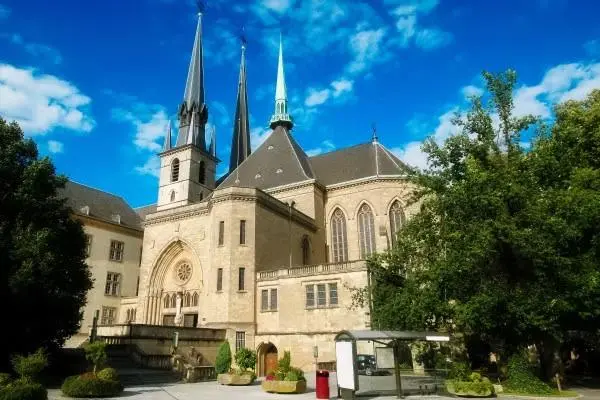
Built undoubtedly on the remains of an older building, the church today offers to the eye a beautiful tower in the Gothic-Hennuyer style created in the 16th century (keystone dated 1589) and rebuilt in 1720. The central nave and aisles date from the 1660's. The beautiful baroque south side altar dates from the late 17th and early 18th centuries. In the 18th century, the transept and the choir were built in classical style.
The church has been listed since 1955. It underwent a major restoration between 1967 and 1975, under the direction of the architect Simon Brigode.
A must see, the beautiful door of the Prince de Ligne dated 1666, the baroque altar dedicated to Saint Lambert, the altar dedicated to Our Lady of the Lights to whom the Barbençonnais devote a very special worship, the many votive monuments in marble from the region and the old cemetery surrounding the church.
Both the stones of the latter and the thousand and one small treasures hidden in the church, everything here is a reminder of the traditional beliefs and history of one of the most beautiful villages in Wallonia. One of the most beautiful and endearing too!
KIKIRPA : Photo-library online
Remarkable elements

The gothic door
On the south side of the church stands a fine late-Gothic door (late 16th c.) with chamfered…
On the south side of the church stands a fine late-Gothic door (late 16th c.) with chamfered jambs, prismatic bases and a lintel adorned with a finial and a blank escutcheon. Above it, a large panel displays the coat of arms of the Princes of Ligne, lords of Barbençon. Faint Gothic lettering still reveals the motto “Tant que dure”. The date 1666 refers to embellishment work carried out in the 17th century under Prince Albert.

The baroque altar
The southern side altar (late 17th - early 18th century) is a fine example of pure Baroque…
The southern side altar (late 17th - early 18th century) is a fine example of pure Baroque style: a red and gray marble table, a marbled wooden altarpiece, twisted columns adorned with foliage, vine motifs, angels, and cherubs, all topped by a statue of Saint Lambert, to whom the church is dedicated. Saint Lambert also appears in the large stained glass window on the right and in the niche on the left. On the altar itself, there is a striking polychrome wooden statue of Saint Joseph holding the Child.

The altar of Our Lady of Lights
In the northern side altar, a beautiful statue of the Virgin and Child symbolizes the deep…
In the northern side altar, a beautiful statue of the Virgin and Child symbolizes the deep devotion of the people of Barbençon to Our Lady of Lights. Every year, on August 15, a procession carries the statue back to the chapel dedicated to her on the village heights, accompanied by music and a military escort. The statue’s return to the church, to the sound of drums and fifes, remains a highly emotional moment.

Tombstones and votive niches
Numerous funerary slabs decorate the columns, walls and floor of the church. There are…
Numerous funerary slabs decorate the columns, walls and floor of the church. There are references to the lords of Barbençon, their servants and the parish priests. In the chancel of the church, the marble baptismal font and the niches dedicated to the saints formerly venerated by the villagers are particularly noteworthy. There's plenty of marble to go around.

The high altar
Designed in the Louis XV style, this grand altarpiece is made of white and gray marbled wood. It…
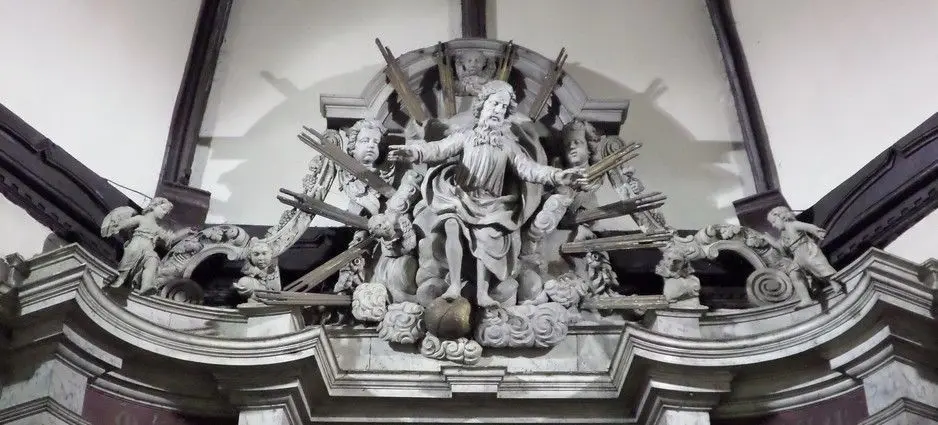
Designed in the Louis XV style, this grand altarpiece is made of white and gray marbled wood. It features elegant columns with gilded capitals and a canopy sheltering a statue of God the Father surrounded by golden rays. At its center, a large painting of unknown origin depicts Christ’s Ascension. The high altar is likely less radiant today than it was when built between 1740 and 1760, which is why restoration efforts are currently underway.

The funerary stele of Marie Poschet
Marie Poschet, who passed away in 1767, belonged to a wealthy family of ironmasters in the…
Marie Poschet, who passed away in 1767, belonged to a wealthy family of ironmasters in the region. She married a local minor noble, Mr. de Colnet, a master glassmaker. The beautiful funerary monument marking her tomb showcases the craftsmanship of the region’s marble workers. Several details also reflect the era’s perception of death. The stele still bears the scars of damage inflicted during the French Revolution, as Barbençon was still under French rule in 1789.


To find out more
Hours
Closed
Additional information
Self-guided tours with information panels (French - Dutch).Guided tours can be arranged for small groups.
Contact:
Jacques Moriamé: +32 479 11 12 45 - jmoriame59@gmail.com
Nearby buildings




Comments (0)