
Saint Peter
Building profile
Historic/listed monument
Practical information


 © Églises Ouvertes
 © Églises Ouvertes
 © Églises Ouvertes
 © Églises Ouvertes
 © Églises Ouvertes
 © Églises Ouvertes
 © Églises Ouvertes
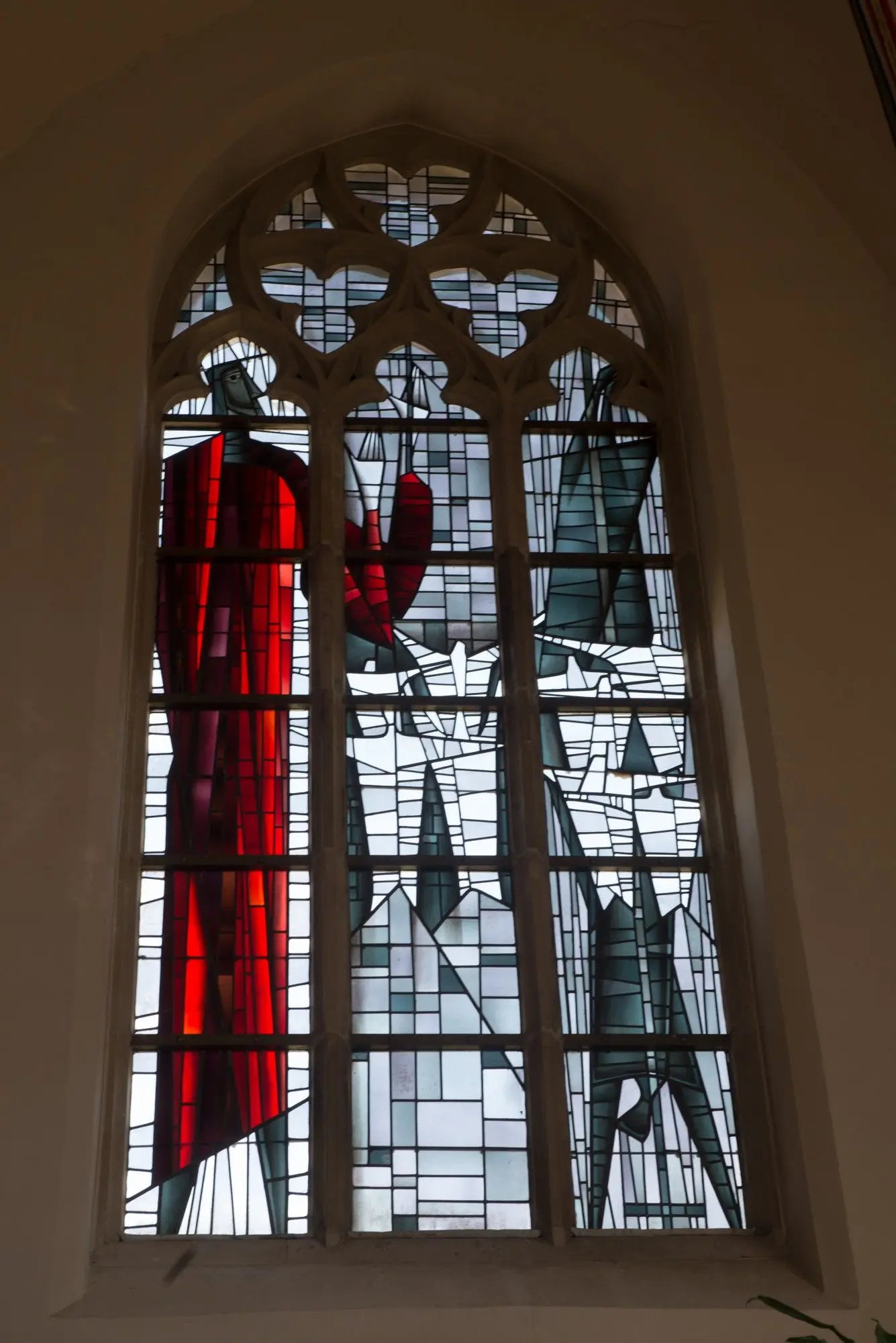 © Églises Ouvertes
About this building
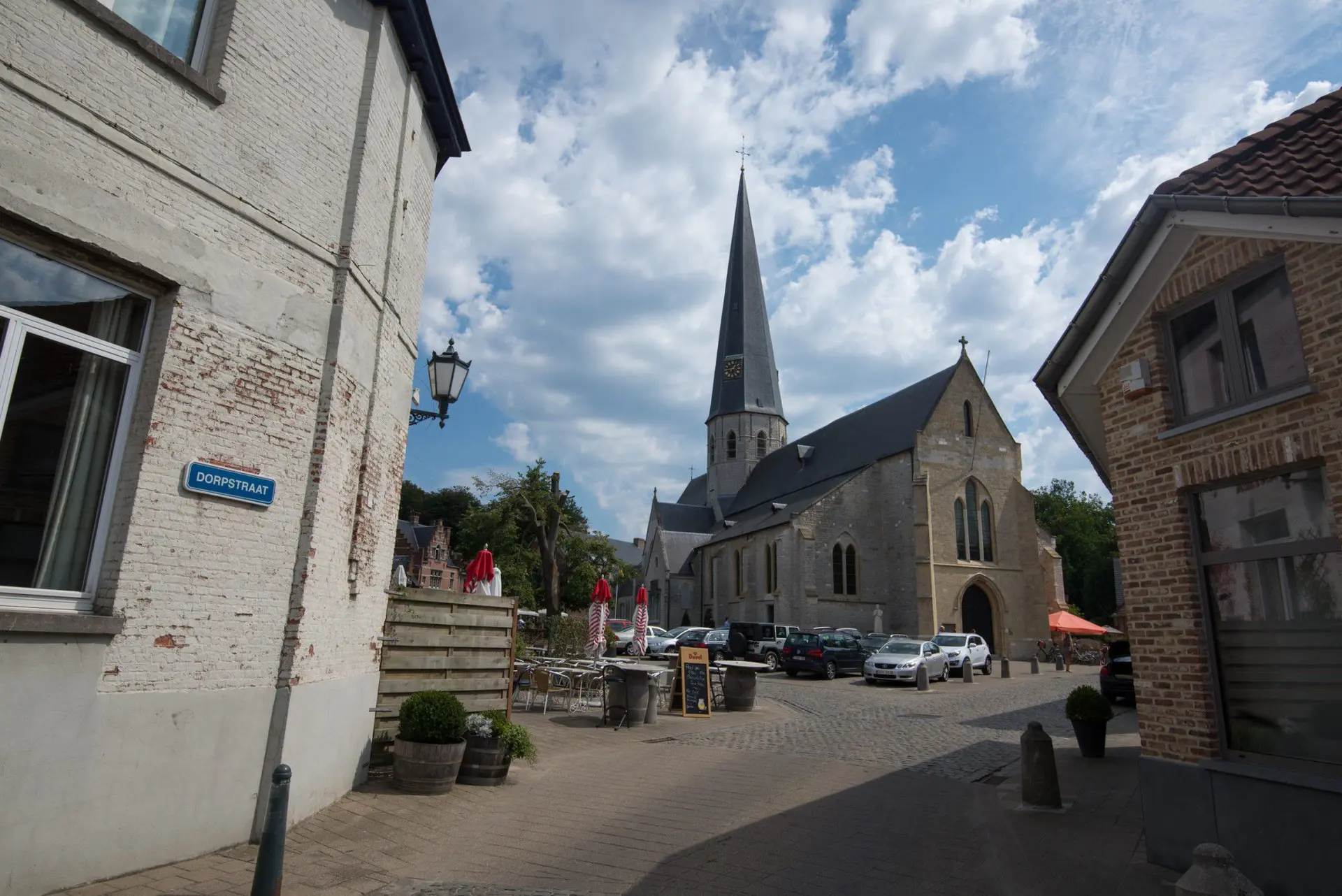
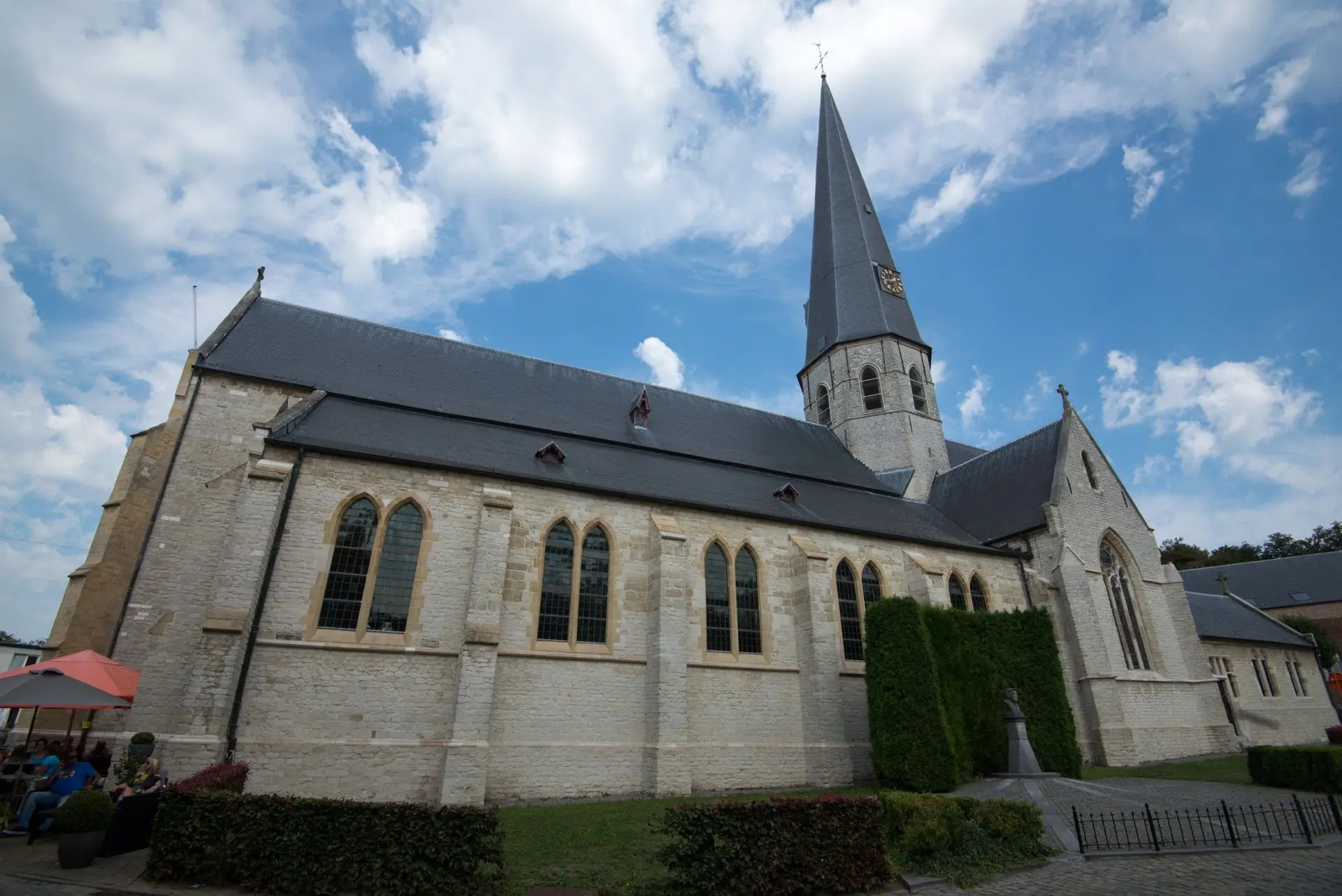
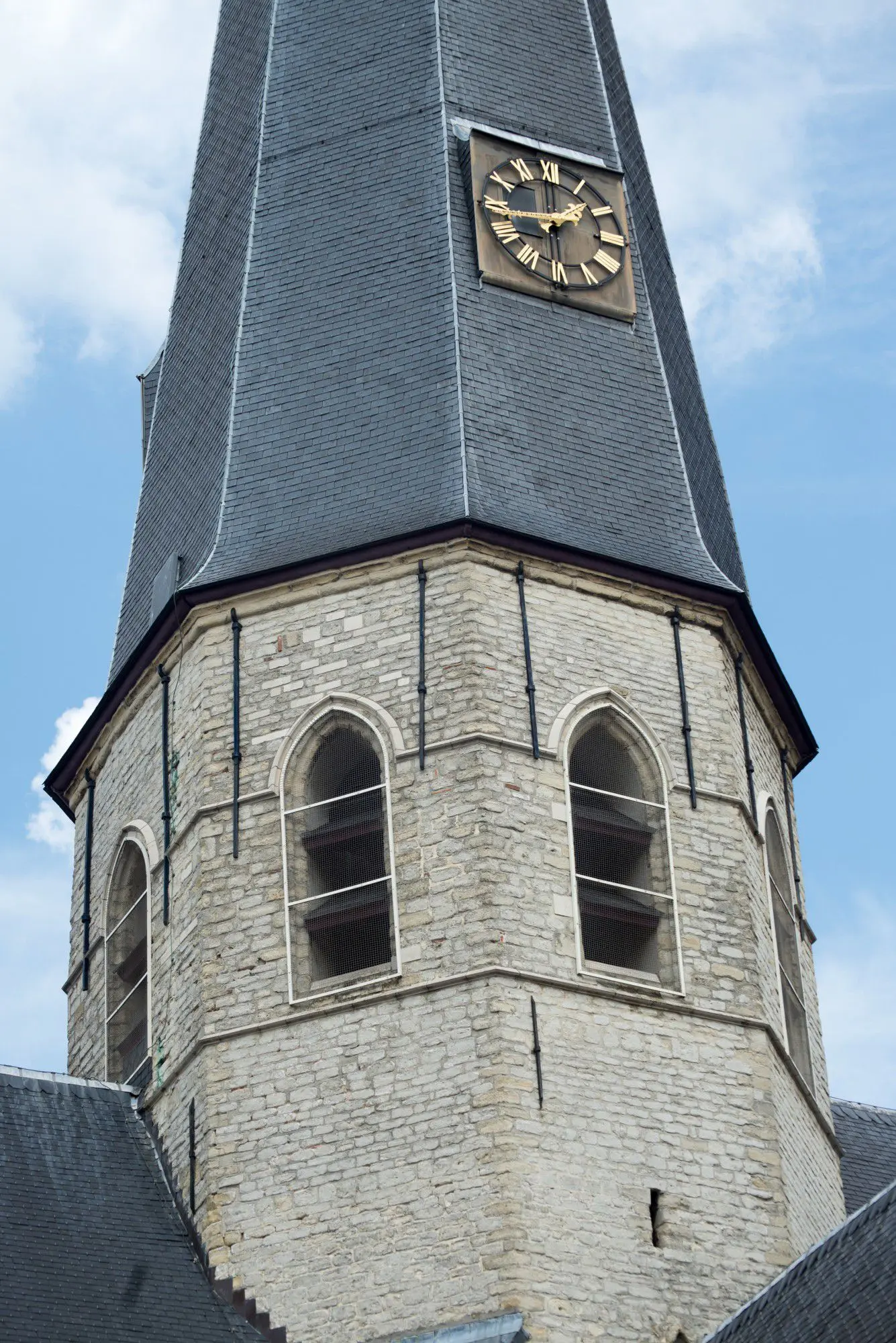
A roman oratory that according to lost records already existed before 964 made way around 1364 for a gothic cruciform church with lantern tower.
When the age-old parish of Bazel was added in 1559 to the Gent Diocese, the first big renovations to the church started. In this period, the transepts were added and the choir was renewed. The iconoclasts however caused a lot of damage between 1578 and 1587. In the course of the 17th century repairs started and the church was further adjusted to the…
A roman oratory that according to lost records already existed before 964 made way around 1364 for a gothic cruciform church with lantern tower.
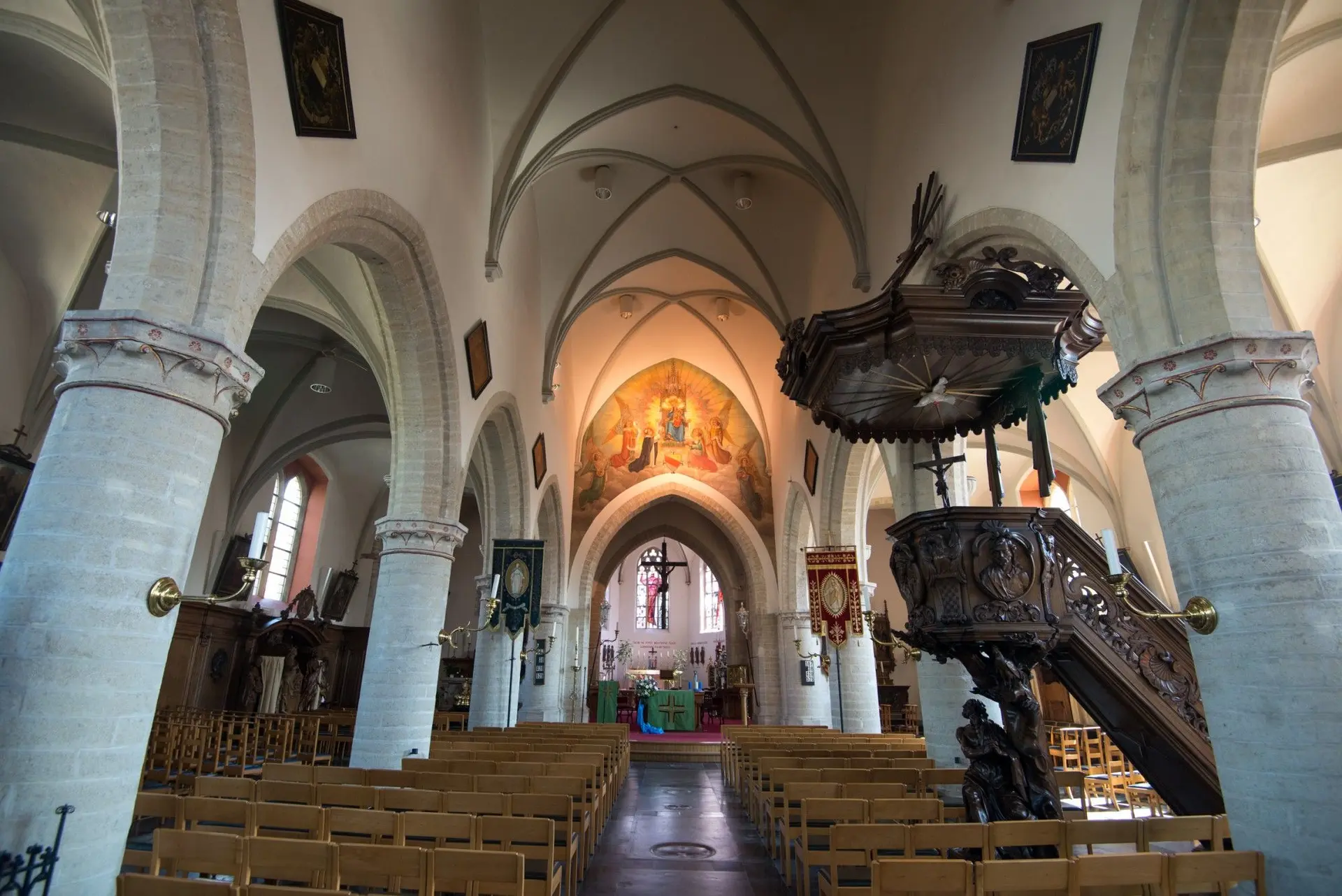
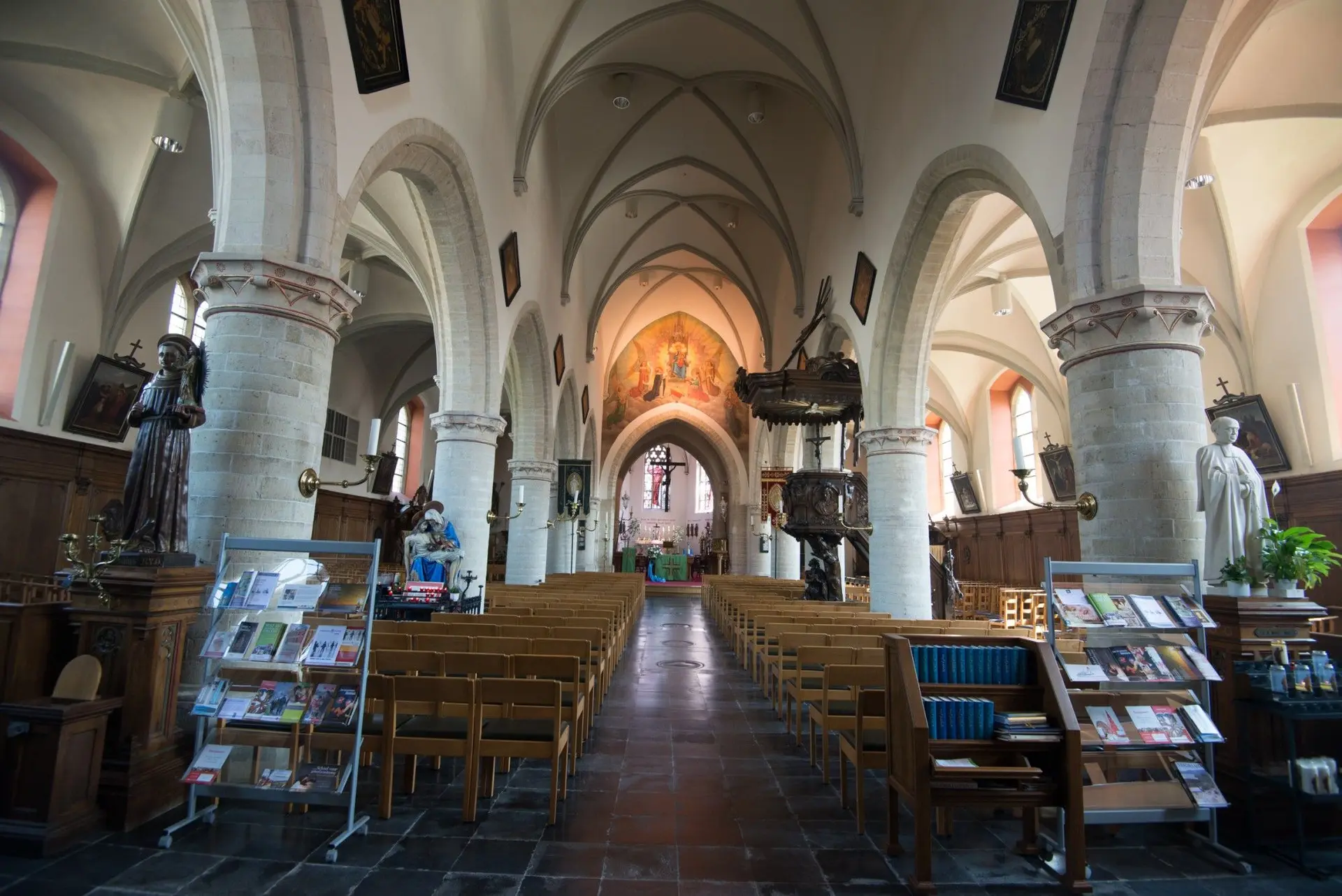
When the age-old parish of Bazel was added in 1559 to the Gent Diocese, the first big renovations to the church started. In this period, the transepts were added and the choir was renewed. The iconoclasts however caused a lot of damage between 1578 and 1587. In the course of the 17th century repairs started and the church was further adjusted to the esthetics of the high gothic e.g. by replacing the wooden barrel vaults in the ship with gothic stone rib vaults. As a result, the original roman top lights and murals were hidden. In the 17th century the church was further equipped with side aisles which were already renewed and extended in the course of the second half of the 17th century.
In 1879 the presbytery was completely burnt down. One combined the renovations with an extension to the church so as to meet the needs of the increased number of churchgoers. The design of the new church was supplied by architect P. Van Kerckhove, master builder of the city hall of Sint-Niklaas. The front of the church was demolished and was rebuild one bay further back. Moreover, the gothic stone vaults were placed 2 meters higher so that the interior appears much more spacious. The Saint Peter church still exists more or less in this form.
The interior and furniture of the church is very artistic and for the greater part financed by the parishioners. Several objects such as the pulpit and the confessional box are a creation of two well-known 18th century sculptors and woodcarvers from Temse: Adriaan and Filip Nijs. Furthermore, the classicistic paneling, the neogothic altars and the choirs stalls are worth taking a look at.
KIKIRPA : Photo-library online
Heritage bank Waasland
Film impression Saint-Peter church Bazel
Remarkable elements
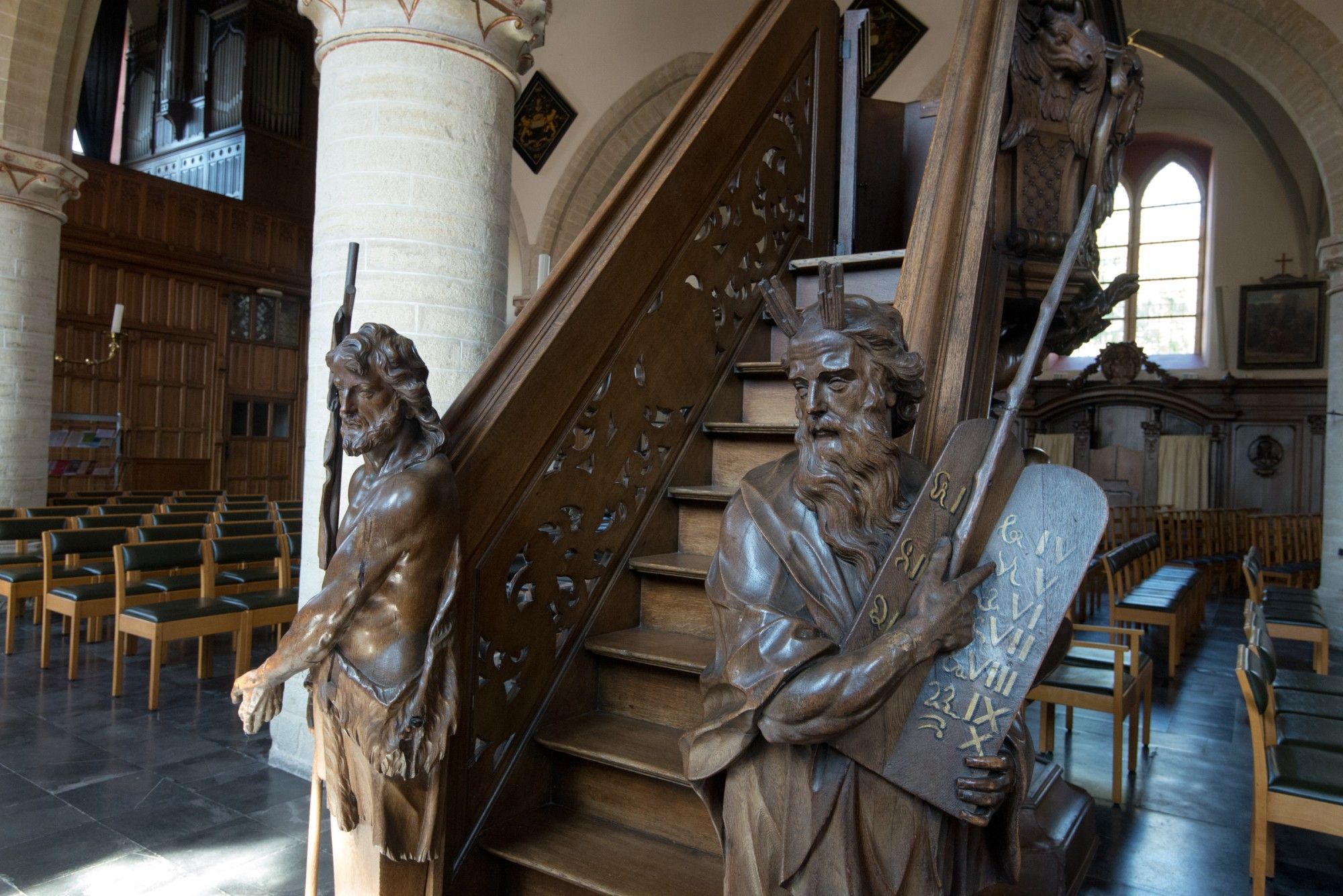
Pulpit
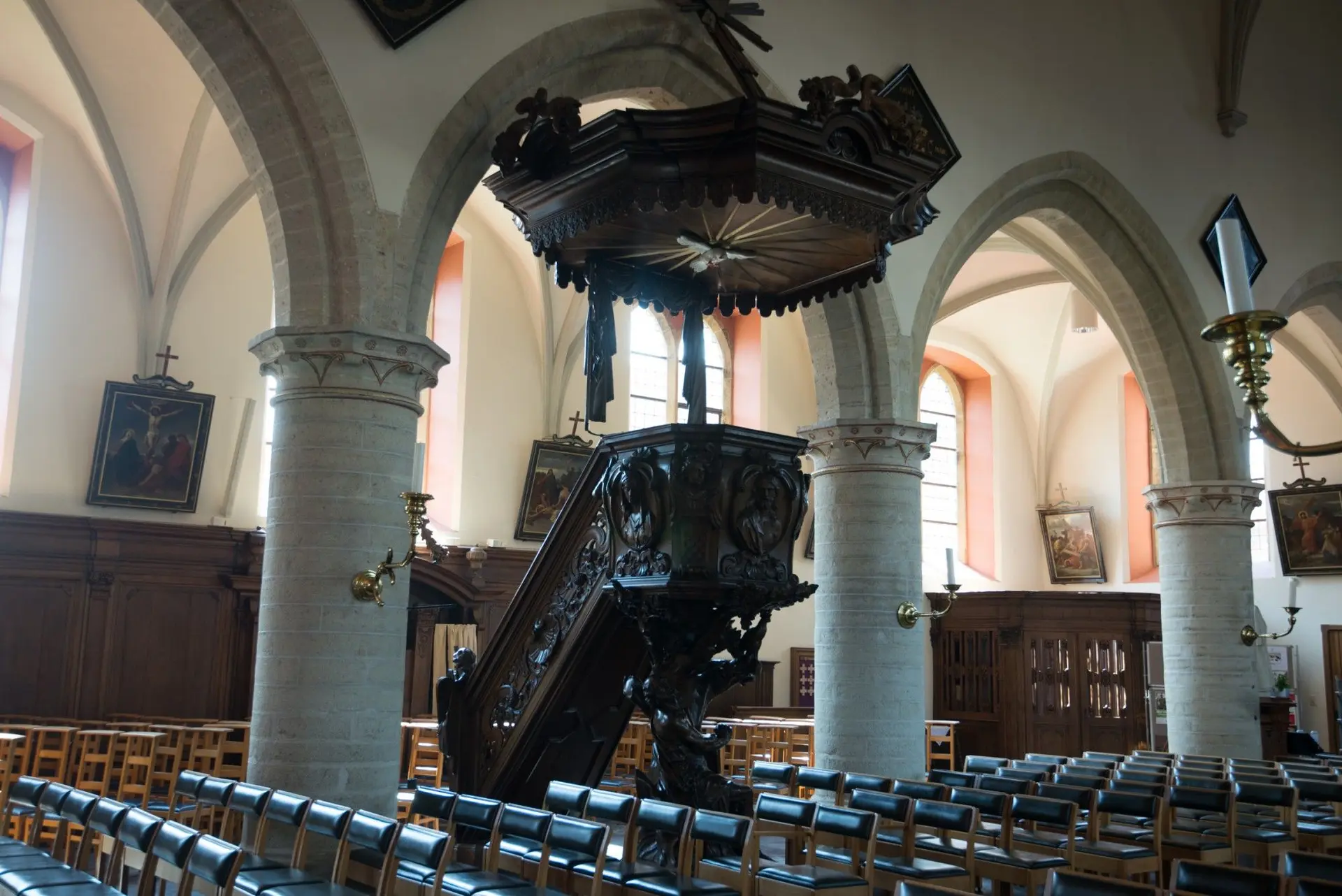
The pulpit (1727) with the figure of St. Peter, patron saint of the parish, is attributed to the…
The pulpit (1727) with the figure of St. Peter, patron saint of the parish, is attributed to the artist Adriaan Nijs and the cabinetmaker Martinus van Caster. On the cockpit are medallions with busts of Our Lady, Christ and St. John the Baptist, between the symbols of the 4 evangelists: the ox, symbol for Luke; angel, symbol for Matthew; eagle, symbol for John and lion, symbol for Mark.
At the beginning of the staircase we see herms of St. John the Baptist and Moses.
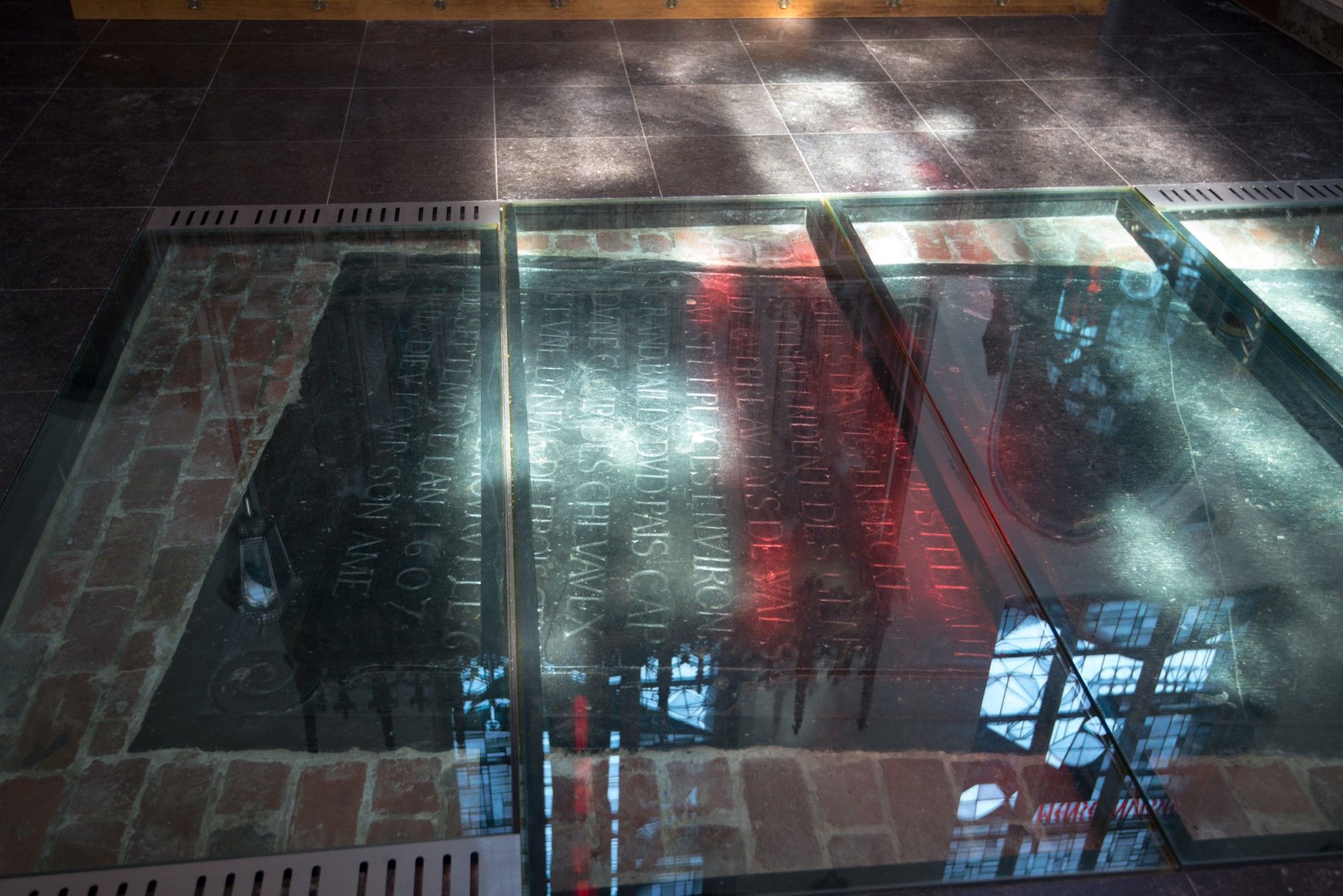
Thombstone of Van Steelant
In the chancel lies the tombstone of Servaas van Steelant, bailiff of the Land of Waas, who died…
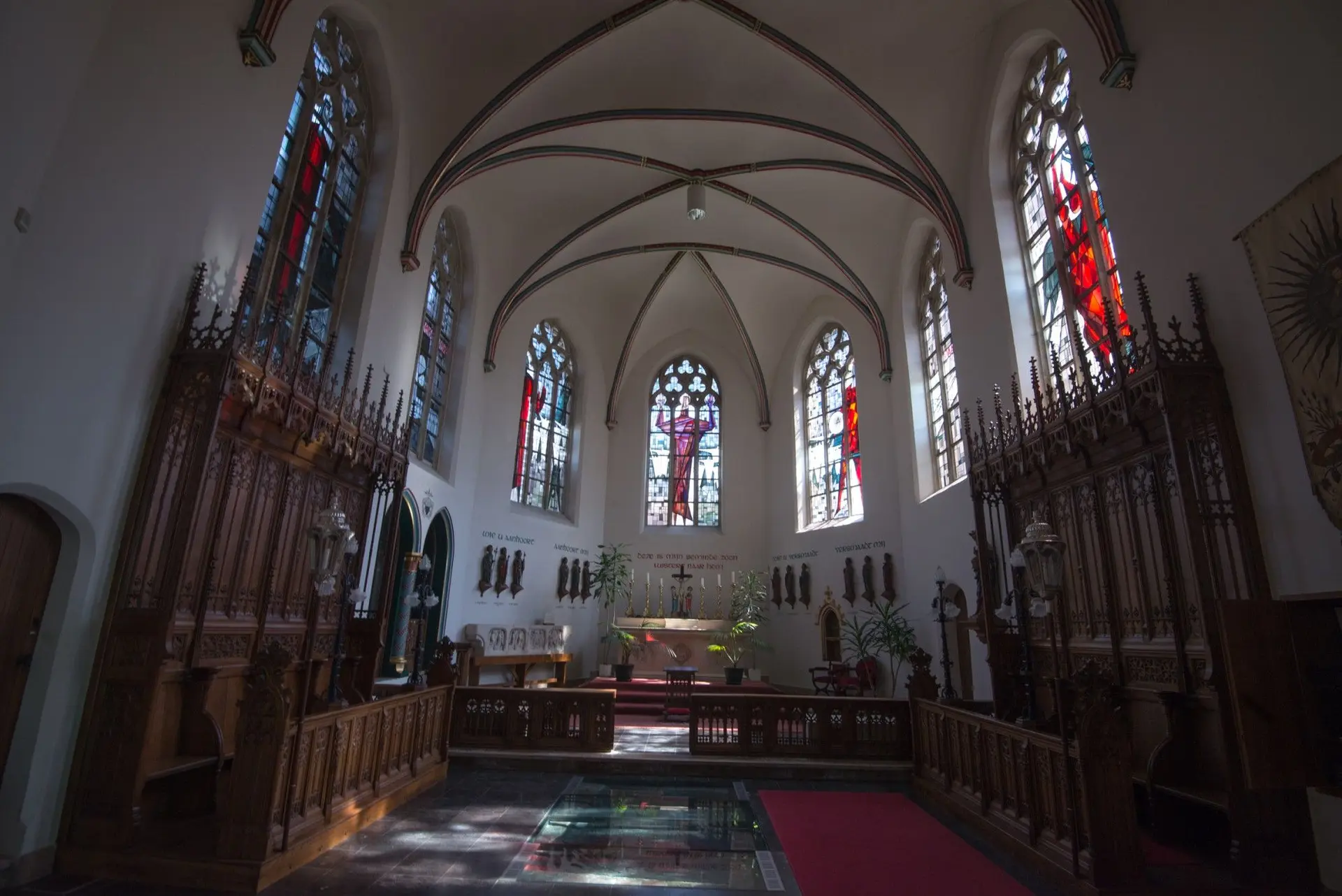
In the chancel lies the tombstone of Servaas van Steelant, bailiff of the Land of Waas, who died at the castle Wissekerke in 1607. During the last restoration (1998-1999) it was decided not to bury the tombstone under the floor again as was done during the repairs in 1879, when the new red floor of Rupelmond brick was laid.
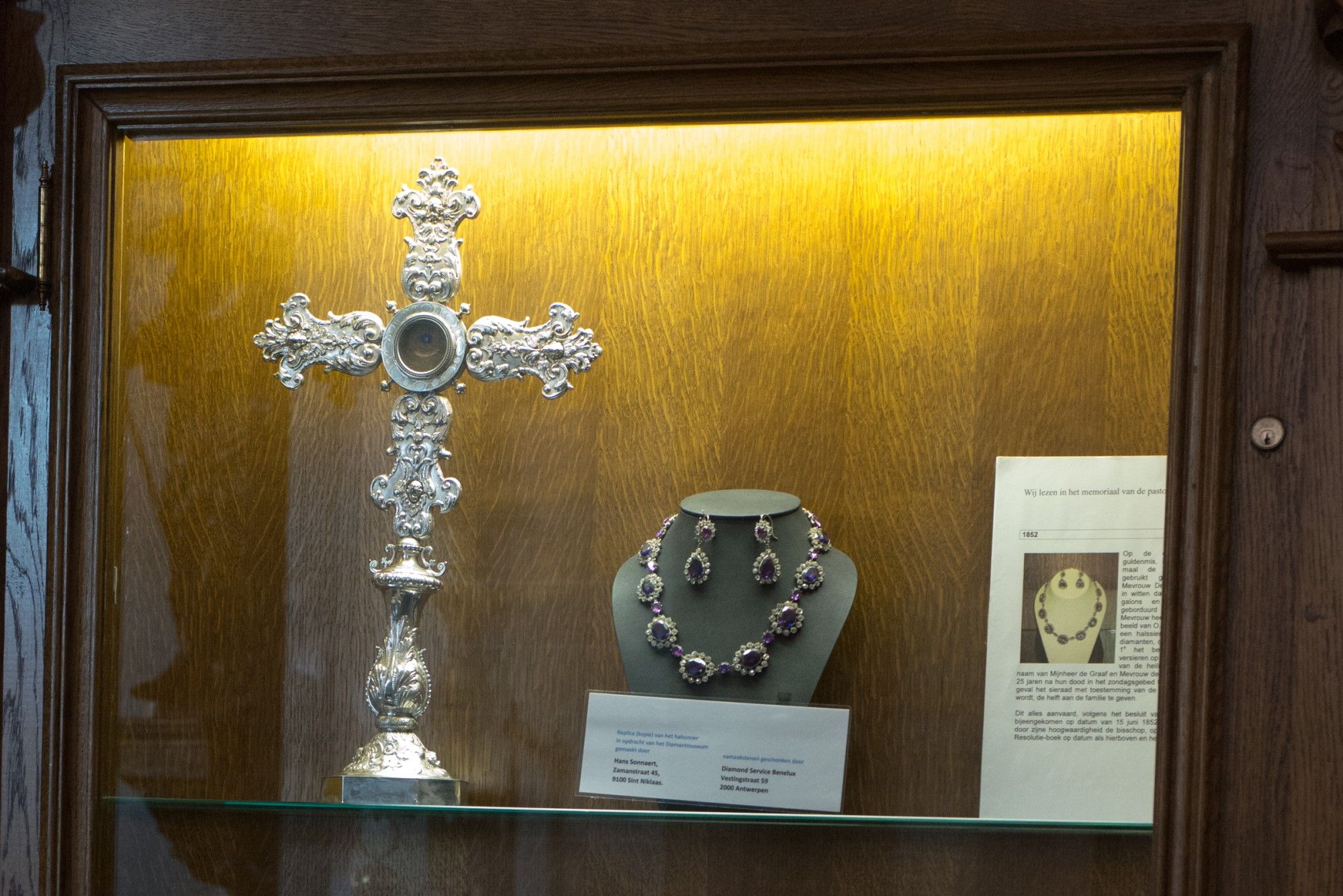
Necklace
As court lady to Empress Marie Louise, Zoé de Feltz maintained friendly ties with the imperial…
As court lady to Empress Marie Louise, Zoé de Feltz maintained friendly ties with the imperial couple. At the 1811 baptism of the king of Rome she held a special role: Princess Aldobandini carried the cap, while the countesses Vilain XIIII and de Beauveau held the water jug and salt vessel. Napoleon gifted Zoé a golden parure with amethysts. On 15 May 1852 she donated it to the Basel church; a replica is shown here.
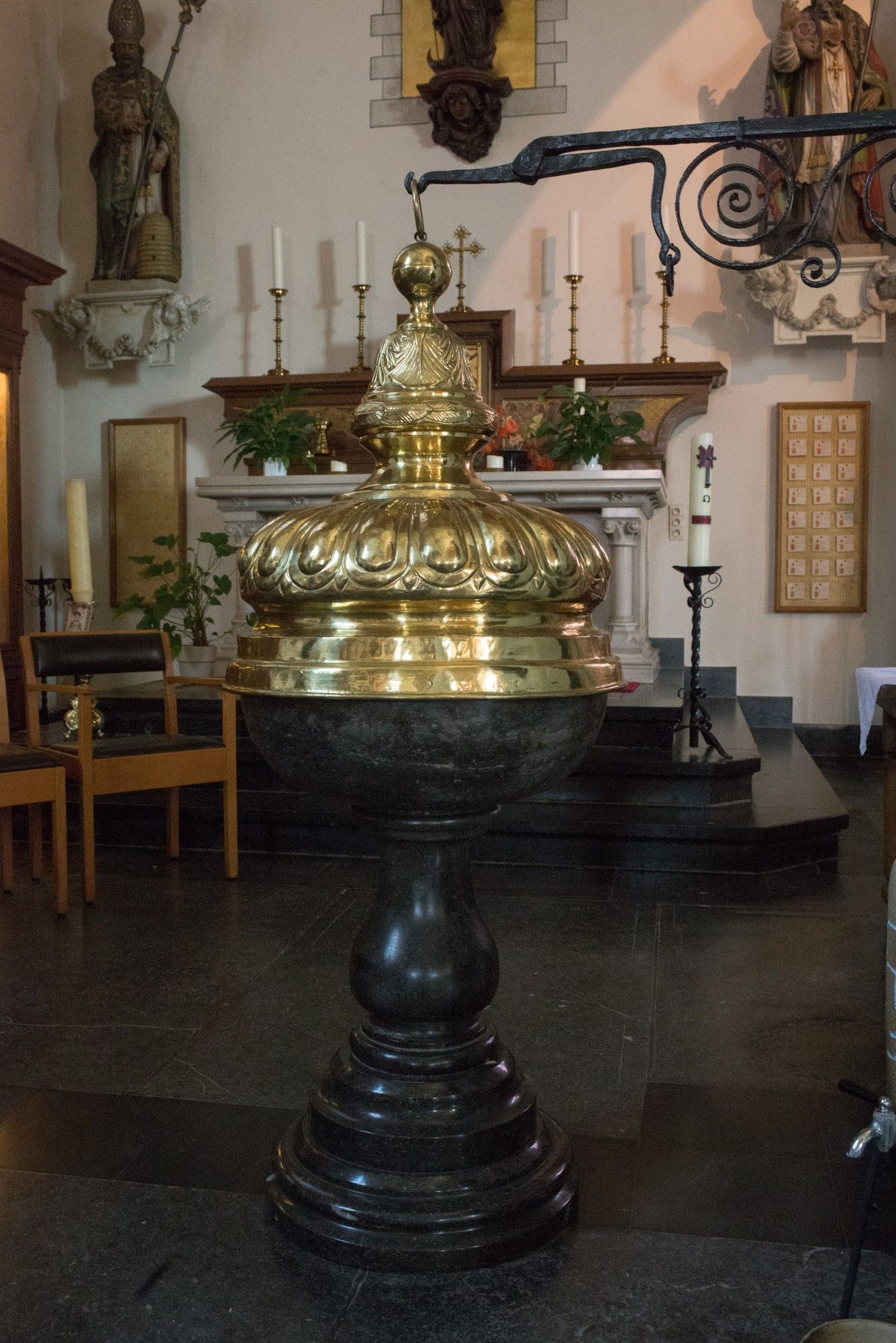
Baptismal font
In front of the altar of Our Lady and next to the main altar is the baptismal font. This…
In front of the altar of Our Lady and next to the main altar is the baptismal font. This baptismal font consists of a hard stone tub and shaft, with a copper lid and is from the 17th century. The accompanying hingework (turret) is from the 18th century and is executed in beautiful ironwork.
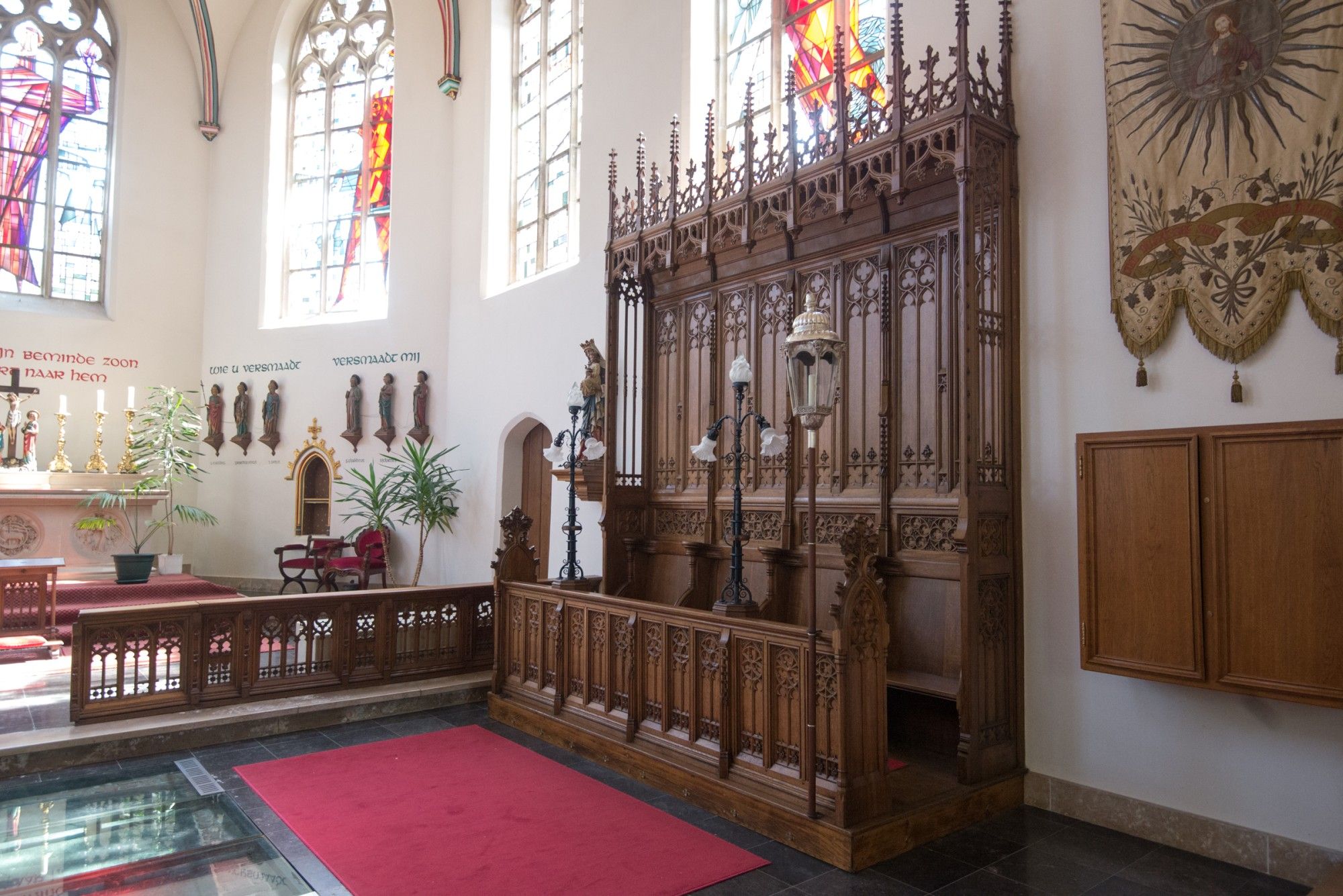
Communion bench
In front of the right side altar, the Saint Peter's altar, stands a piece of the communion bench…
In front of the right side altar, the Saint Peter's altar, stands a piece of the communion bench (oak), left over after the fire of 1879. This communion bench was made by Adriaan Nijs and dates from 1730. Pieter Stuer, inhabitant of Basel, who died in 1730, had donated the money needed to make a communion bank. It is a fragment that depicts the Lamb of the Apocalypse in a wreath of rays and clouds together with Eucharistic symbols.

Tourist corner
The “tourist corner” at the back of the church was created by De Ghesellen van Sint Pieter, who…
The “tourist corner” at the back of the church was created by De Ghesellen van Sint Pieter, who produced a CD ROM with reconstructions and a virtual walk through hidden areas such as the vaults and the tower. It can be viewed on the screen using the swivel arm controls. A 1/10 scale model of the tower was made for study. Opposite the entrance, 1879 plans show the church before and after the fire and the major changes that followed.
Labels

Medias
Hours
Closed
Religious services
Kerknet
Nearby buildings



Comments (0)