
Saint Stephen
Building profile
Practical information


 © Églises Ouvertes
 © Églises Ouvertes
 © Églises Ouvertes
 © Églises Ouvertes
 © Églises Ouvertes
 © Églises Ouvertes
 © Églises Ouvertes
 © Églises Ouvertes
 © Églises Ouvertes
 © Églises Ouvertes
 © Églises Ouvertes
About this building
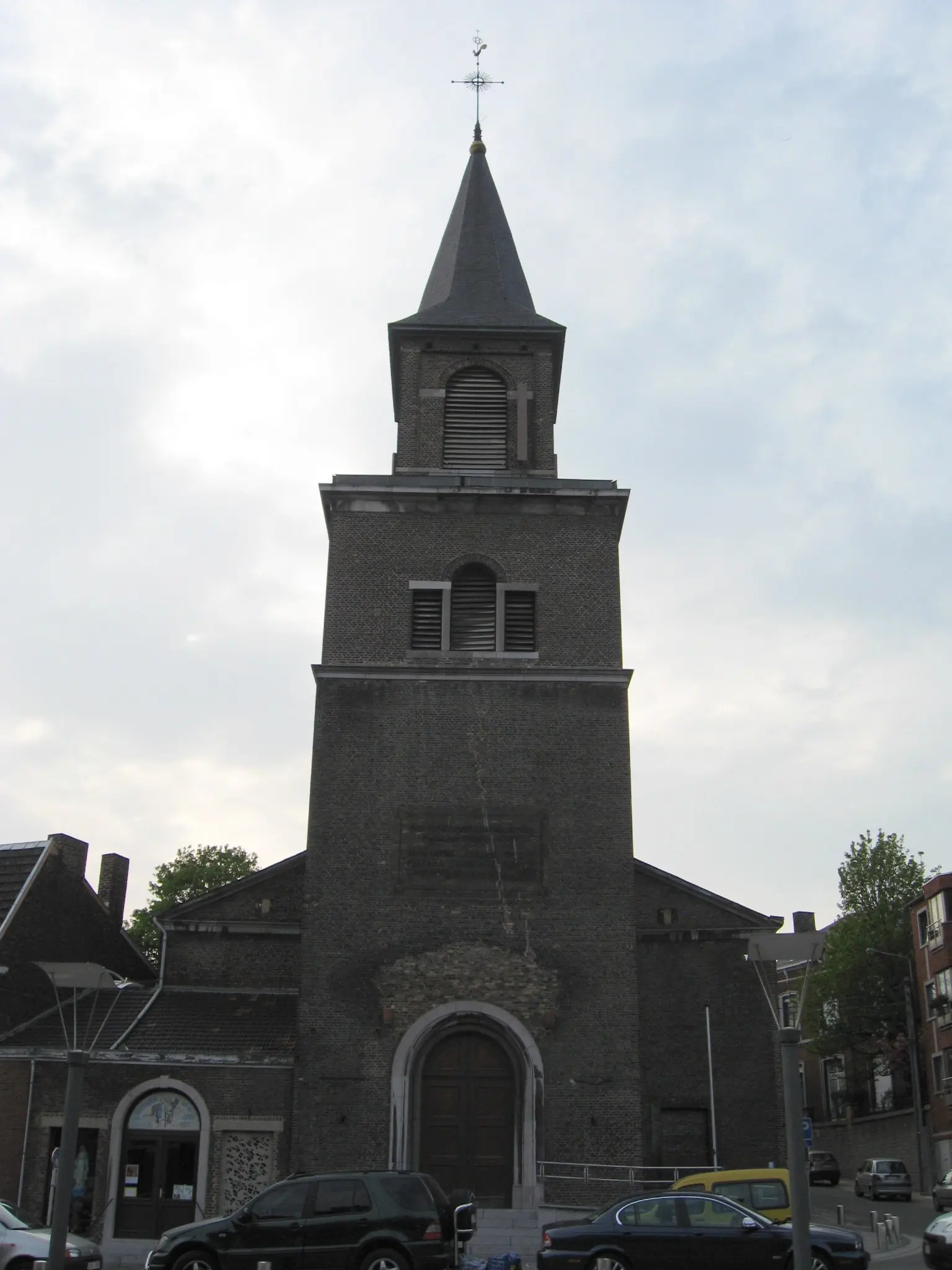
The Romanesque tower, made of reddish-brown sandstone and limestone rubble, dates from the 12th century. Closed at the base, with rare openings for shooting, it offered a defensive character. The present gate, the monumental staircase and the wrought iron gates of the cemetery were not created until 1898.
Three human stone heads, remains of Romanesque baptismal fonts from the 12th-13th centuries, were inserted…
The Romanesque tower, made of reddish-brown sandstone and limestone rubble, dates from the 12th century. Closed at the base, with rare openings for shooting, it offered a defensive character. The present gate, the monumental staircase and the wrought iron gates of the cemetery were not created until 1898.
Three human stone heads, remains of Romanesque baptismal fonts from the 12th-13th centuries, were inserted into the southern face of the tower in the 16th century. On the western side of the tower, an electric clock has replaced a mechanical clock with one hand dating from 1835 since 1966. A slate pavilion with dormer windows covers the belfry which houses two bells.
The nave and choir, rebuilt in 1831-1832, in a neoclassical style, in brick and limestone on a high rubble base, are covered with a slate roof. Twelve arched bays decorated with coloured and didactic stained glass windows provide a light conducive to meditation.
The church has a relic of Saint Lutgardis one of the mystical glories of the 13th century who lived here in the Cistercian community of Awirs. In 1211, the nuns left this church to settle in Couture St Germain in a place to which they gave the name of their original residence: Aywières! The statue of Saint Rose of Lima, of which the church also possesses a relic, is at the origin of a pilgrimage that is more than one hundred years old...
Numerous funerary crosses from the 16th, 17th, 18th and 19th centuries have been embedded in the exterior masonry.
KIKIRPA : Photo-library online
Remarkable elements
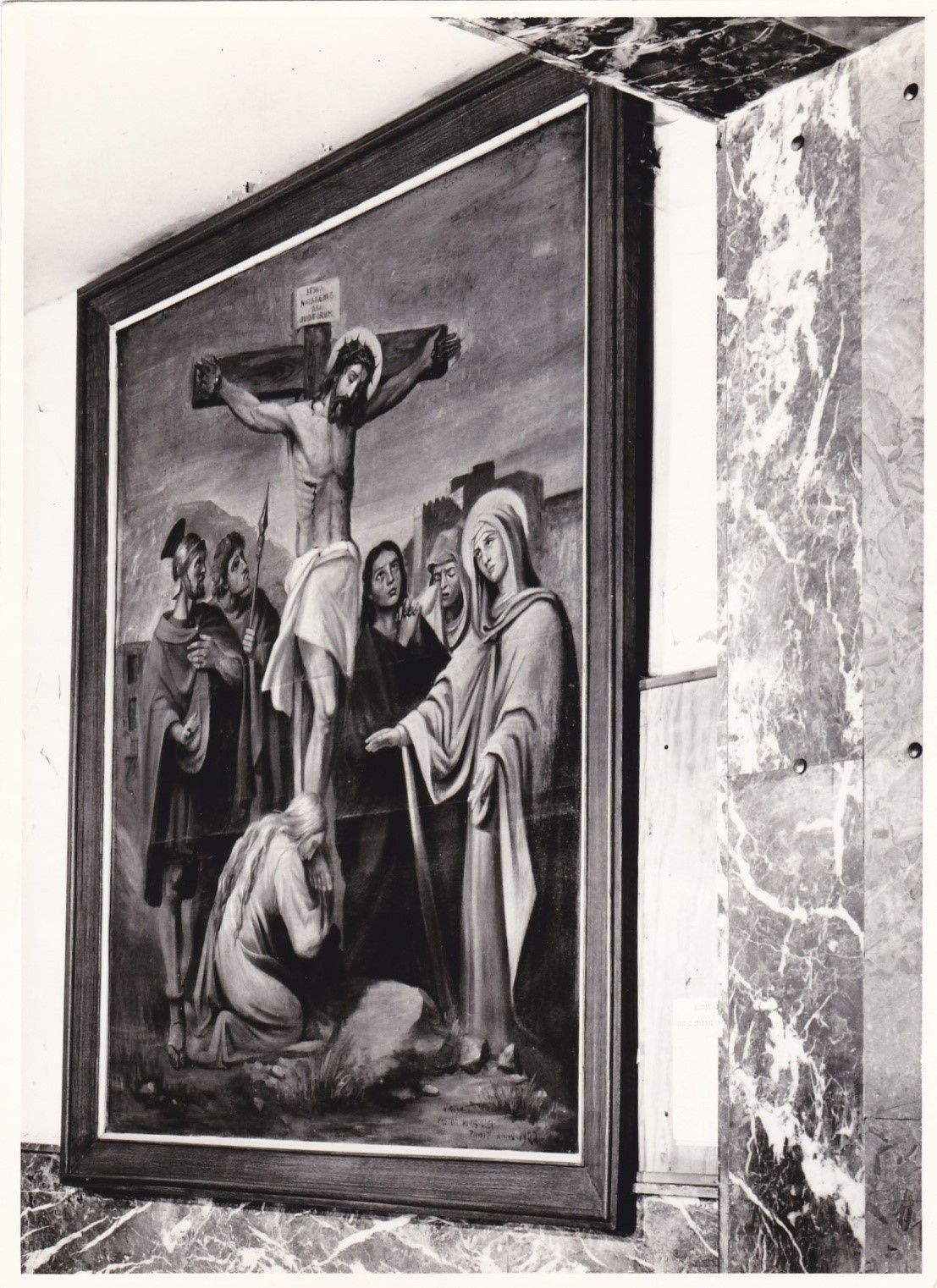
Painting “Christ at Calvary”
Framed canvas (220 x 176 cm) painted and signed in 1922 by Nestor Reymen, priest of Les Awirs.…
Framed canvas (220 x 176 cm) painted and signed in 1922 by Nestor Reymen, priest of Les Awirs. It was at this time that the young Paul Delvaux (1897-1994) stayed in the presbytery of Les Awirs where he took up painting in the company of Abbé Reymen, his father's childhood friend. He was encouraged to pursue his artistic vocation, which was soon to lead to worldwide fame.
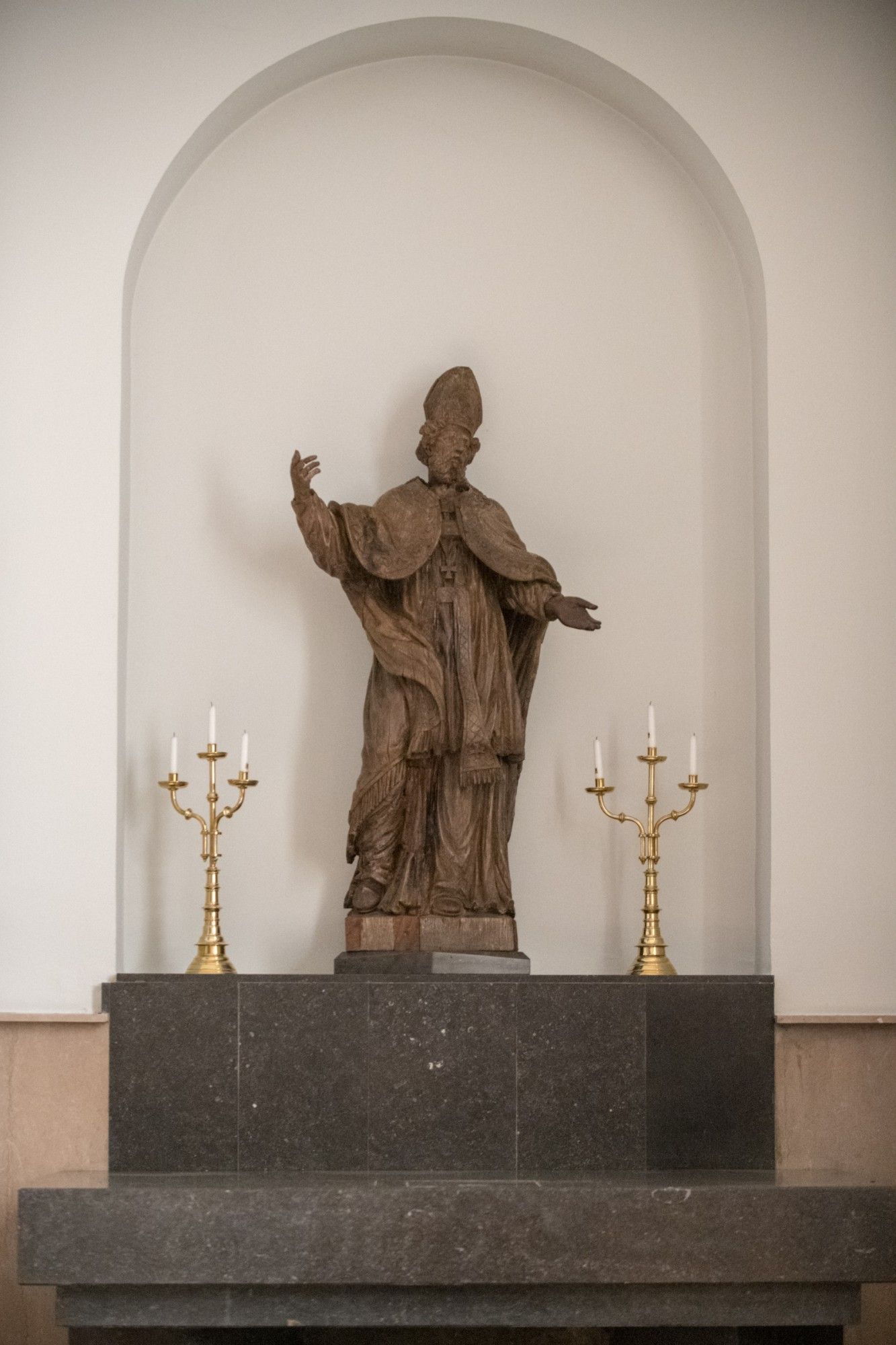
Wooden statues from the Liege school of the 18th century (side altar)
Saint Hubert of Liège (painted wood, 1741–1760), first bishop after the move from Maastricht,…
Saint Hubert of Liège (painted wood, 1741–1760), first bishop after the move from Maastricht, patron of hunters, invoked against rabies and toothache, shown with a stag bearing a cross. A stained wood bishop figure likely represents Saint Eloi, patron of metalworkers. Saint Roch of Montpellier (polychrome wood, 1741–1760) was invoked against epidemics, shown with staff, cloak, dog, shell, wound, and missing angel’s foot.
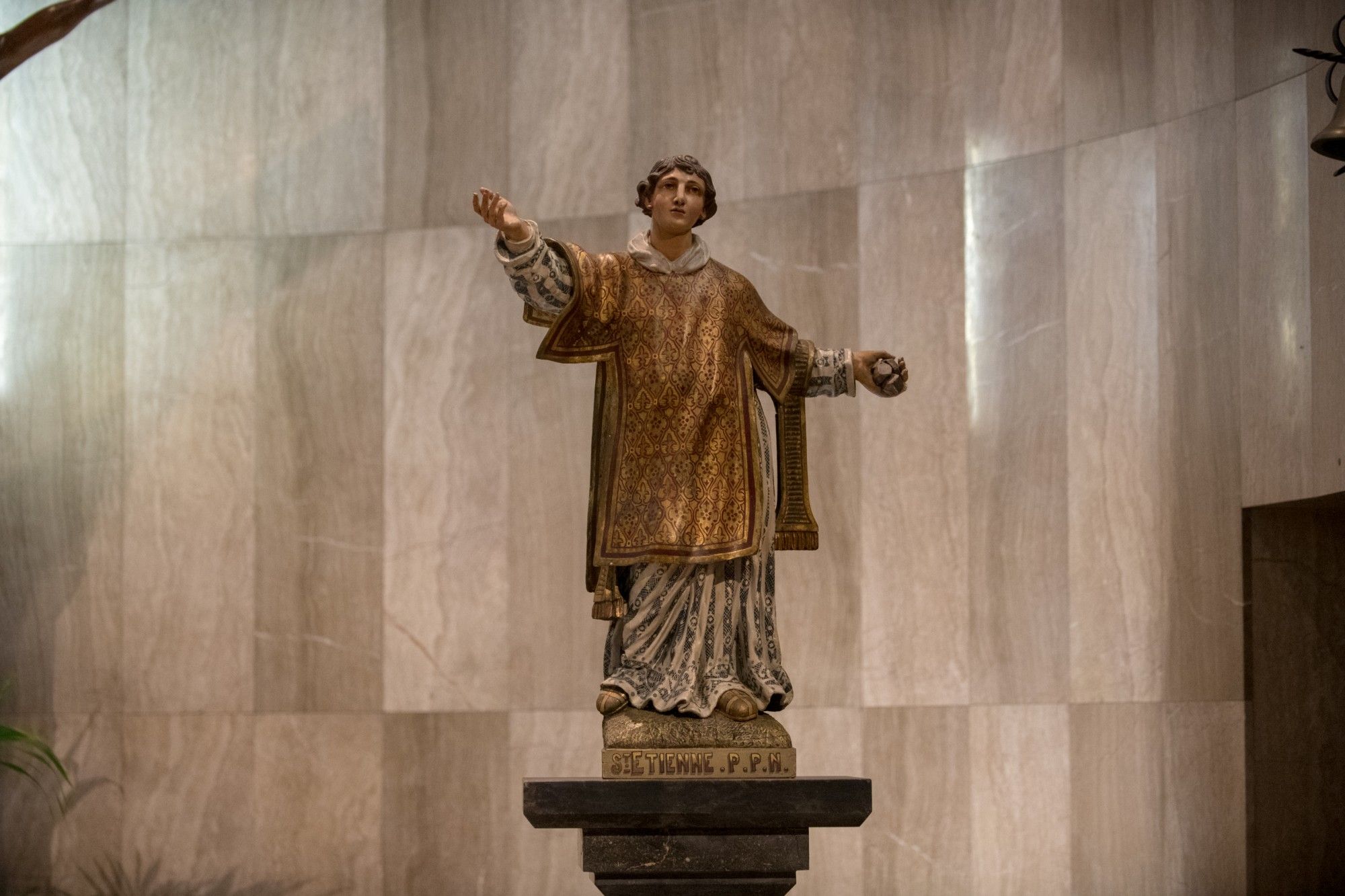
Statue of St Stephen
Carved polychrome wood (h 95 cm) from the beginning of the 19th century. Illuminated by a large…
Carved polychrome wood (h 95 cm) from the beginning of the 19th century. Illuminated by a large stained glass window showing the stoning of Stephen and the Trinity, this statue initially represented St Vincent, patron saint of the winegrowers (very present in the village in the past). It was transformed in 1910 because the statue of St Stephen (which can be seen at the back of the church) was too damaged. Attributes: deacon's vestments, 3 stones as a reminder of the stoning.
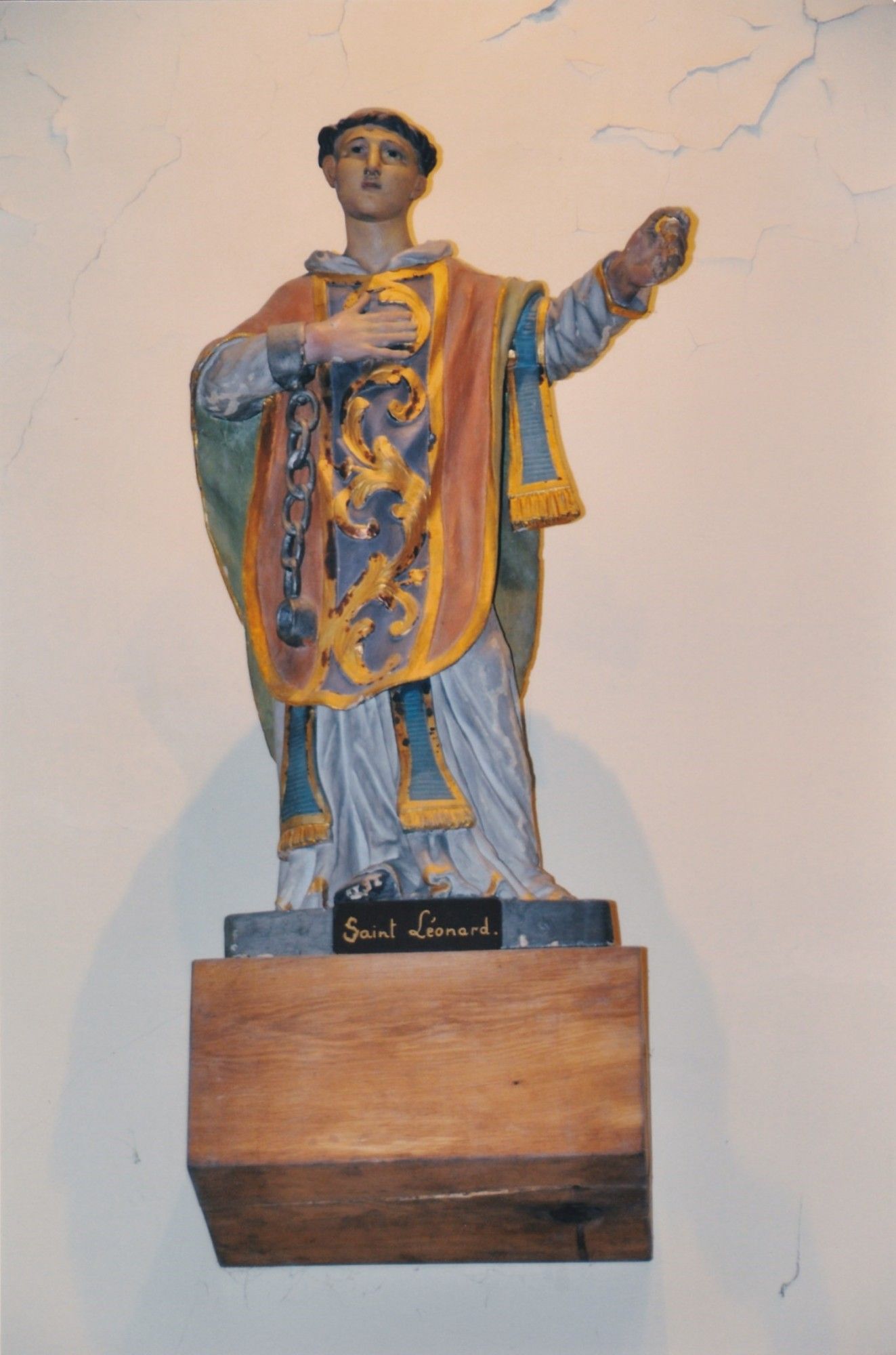
Statue of St Léonard de Noblac
Polychromed carved wood (h 87 cm), signed Jacques Vivroux, 1741-1760. Patron saint of the…
Polychromed carved wood (h 87 cm), signed Jacques Vivroux, 1741-1760. Patron saint of the coalminers (formerly present in the village in large numbers), invoked against sudden death. Attributes: chains, crook disappeared.
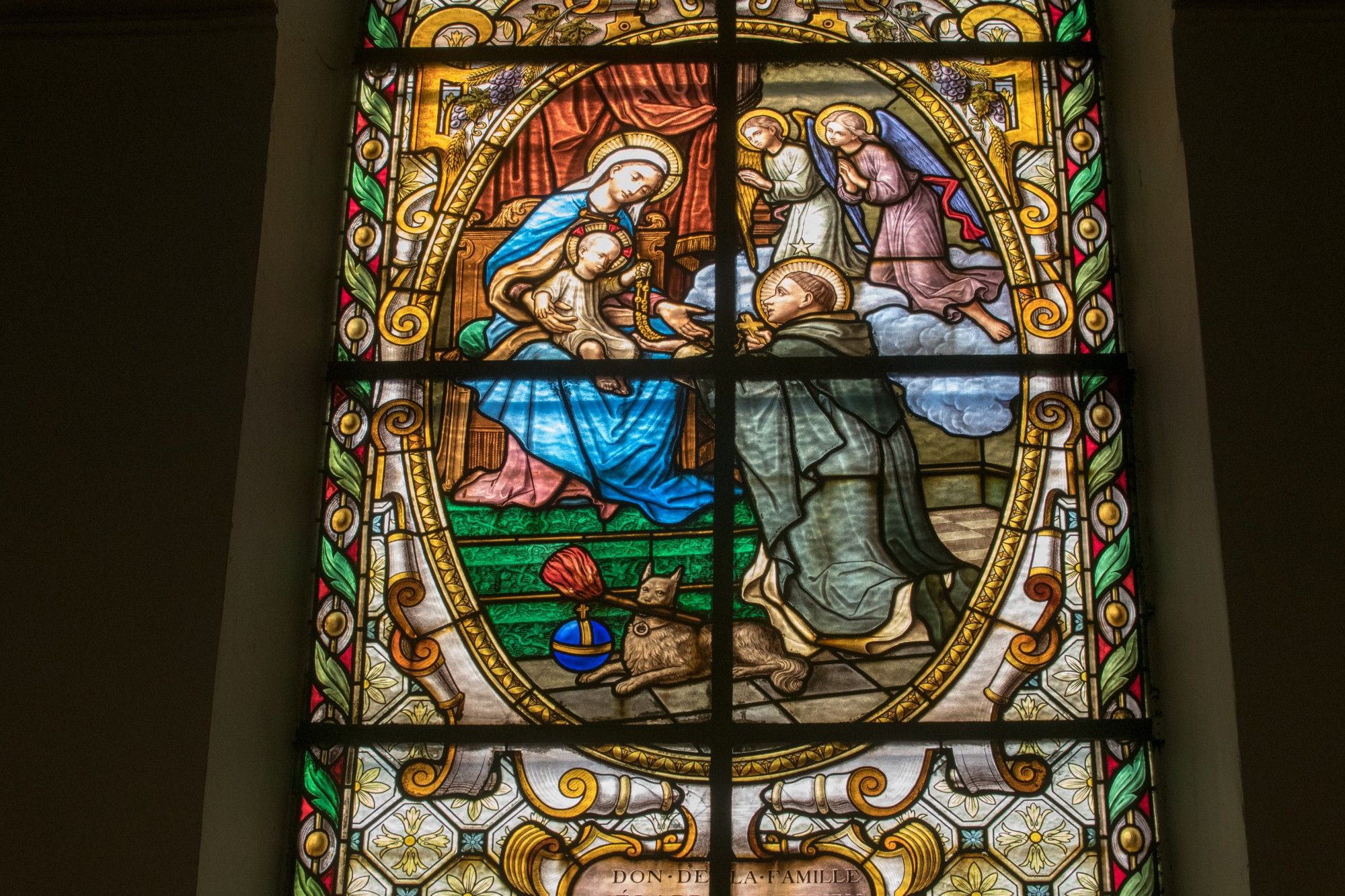
Polychrome stained glass windows
12 full-length windows:
-three in the choir (Fontana, Brussels, 1902-1904) representing the…
12 full-length windows:
-three in the choir (Fontana, Brussels, 1902-1904) representing the stoning of St. Stephen and the Trinity; the Sacred Heart appearing to St. Margaret Mary Alacoque; the Virgin and Child giving the rosary to St. Dominic
-eight in the naves (Fontana, Brussels, 1902-1904) and one in the Chapel of St Rose (Anne-Marie Desserranno, 1981) have the Beatitudes as their theme and illustrate various catechetical aspects
Coat of arms: de Clercx and de Mélotte
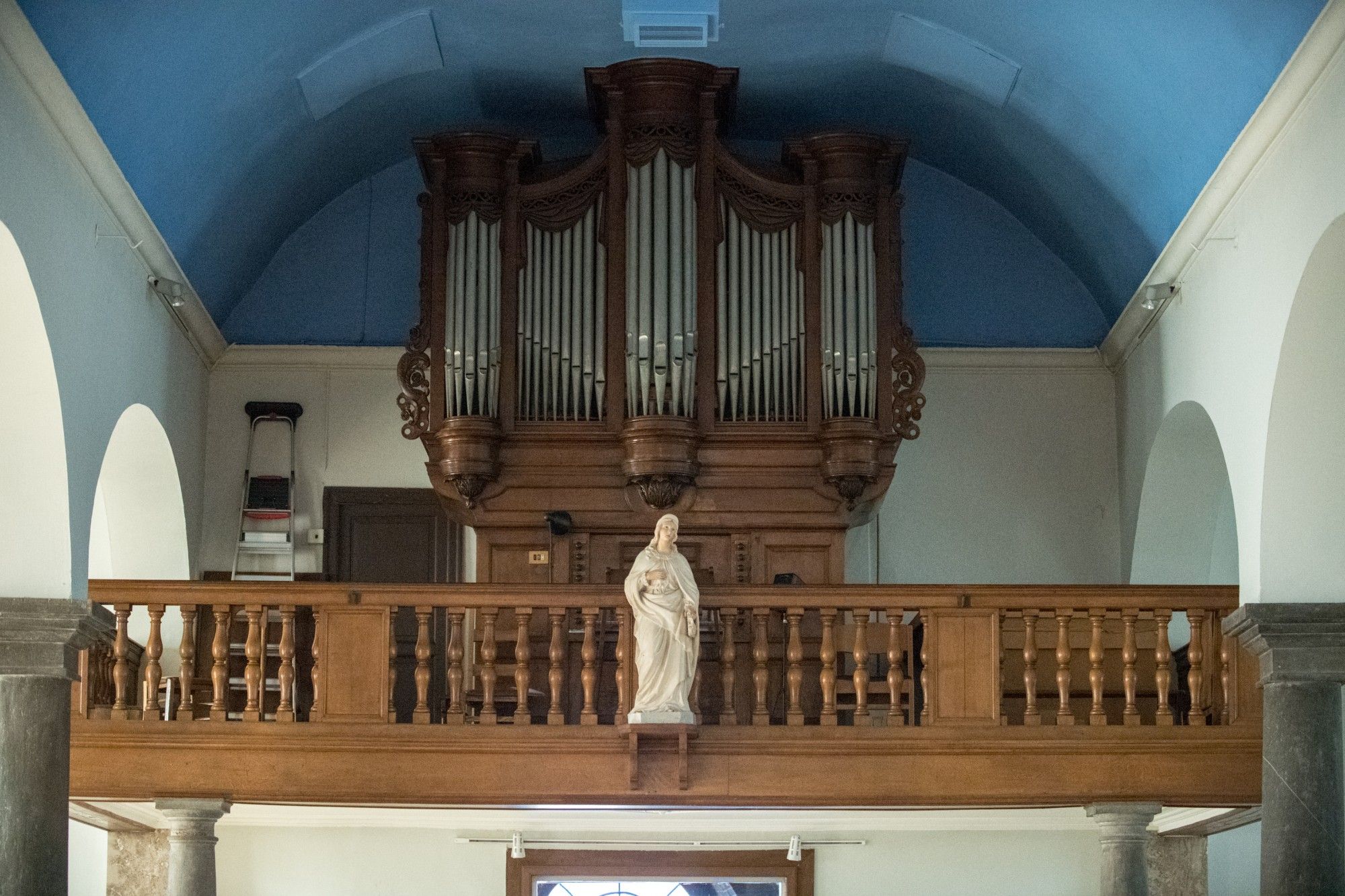
Organ case
Built in 1851 by Jean-Arnold Clerinx from Sint-Truiden.
To find out more
Hours
Closed
Religious services
EgliseInfoNearby buildings





Comments (0)