 © Pierre Haas
About this building
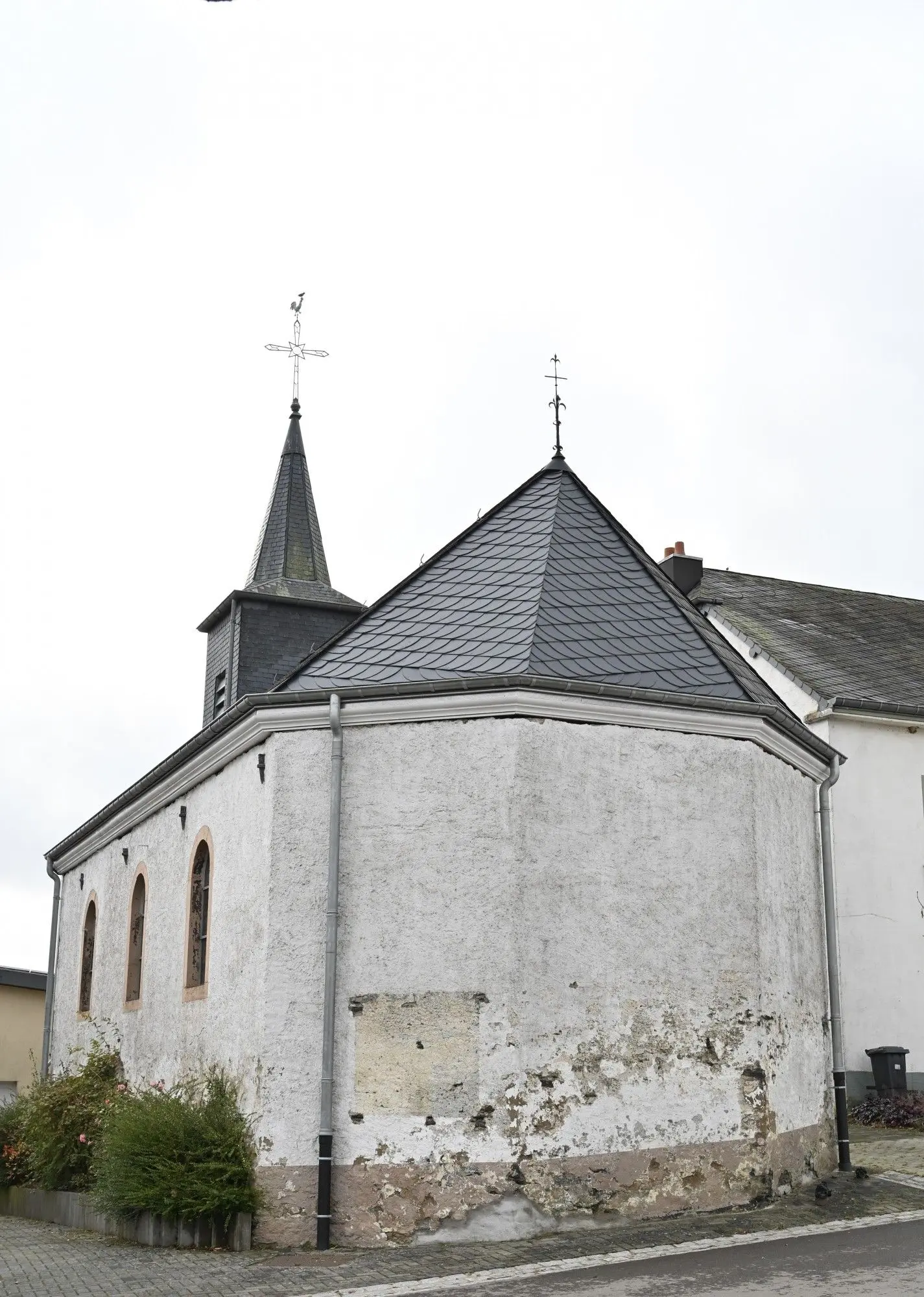
Since the arrival of the railway in Troisvierges in the 19th century, the village has grown considerably. Today, Biwisch is part of the parish of Troisvierges.
Remarkable elements
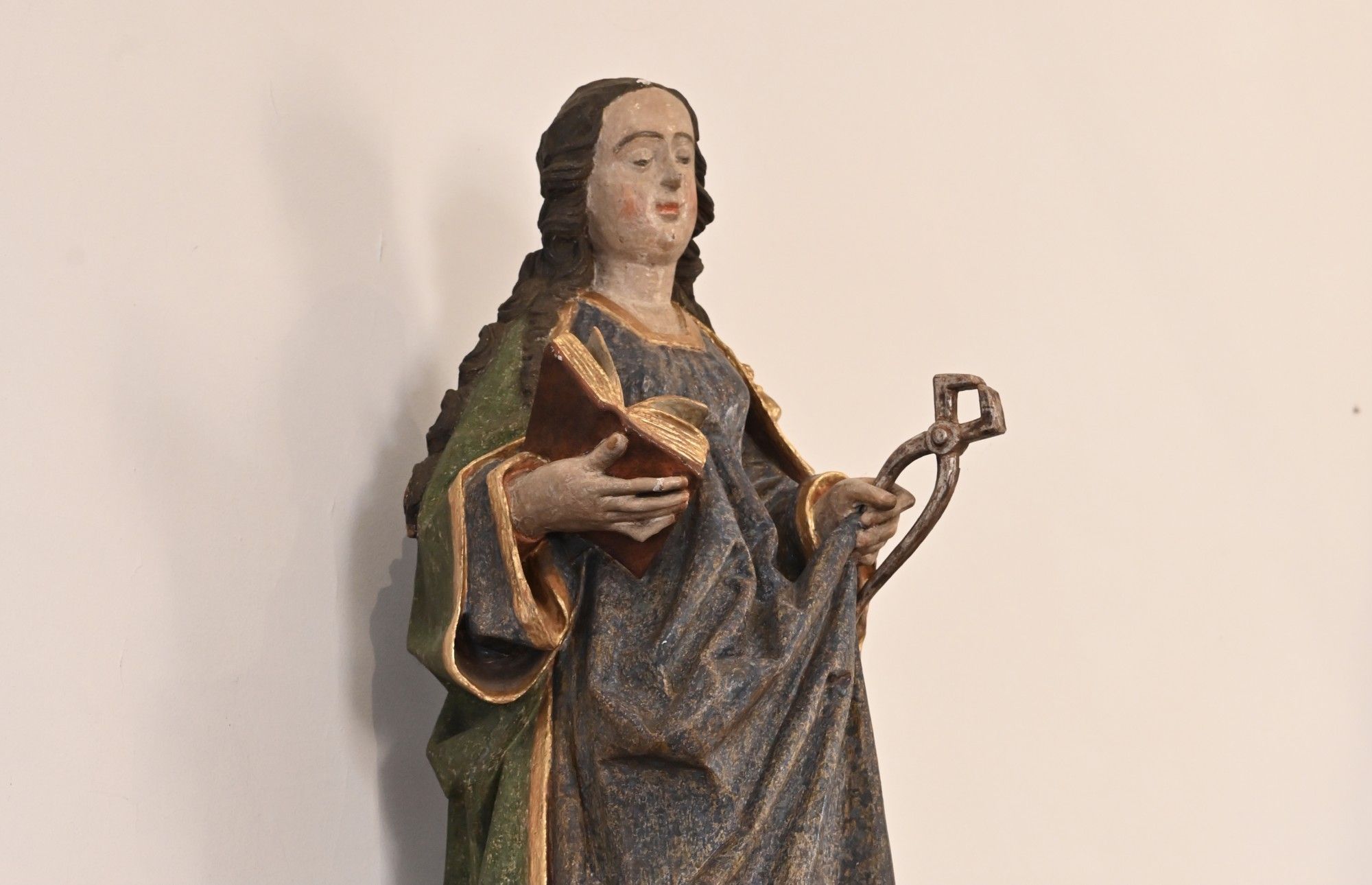
St. Agatha
St. Agatha is the patron saint of the chapel and the village. According to legend, the beautiful…
St. Agatha is the patron saint of the chapel and the village. According to legend, the beautiful virgin Agatha refused to marry a Roman governor because she was a Christian. After an agonising torture (hence the pincers with which she is depicted) she died in prison. Her feast day is on 5 February. An old peasant's proverb says: “St. Agatha, the bride of God, / makes snow and ice like to thaw”.

St. Roch
According to legend, Rochus lived in the 14th century and had the gift of miraculously curing…
According to legend, Rochus lived in the 14th century and had the gift of miraculously curing plague sufferers. His attribute is a dog carrying bread in its mouth. Legend has it that the saint was fed by a faithful dog after he himself fell ill with the plague.
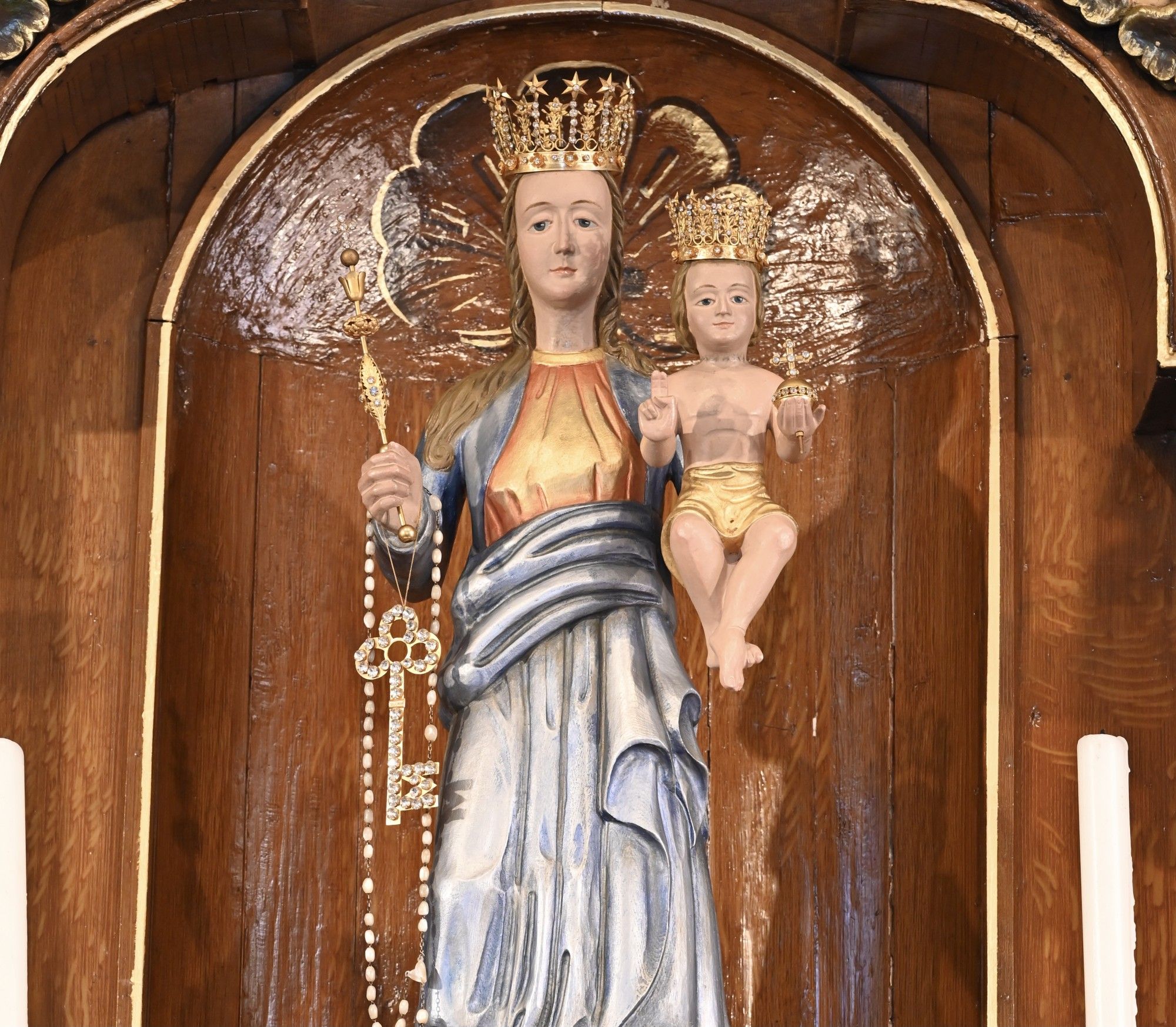
Mary, Consoler of the Afflicted
In Luxembourg, you will find a representation of the Comforter of the Afflicted in almost every…
In Luxembourg, you will find a representation of the Comforter of the Afflicted in almost every church, which is directly inspired by the image of grace that is in Luxembourg Cathedral.
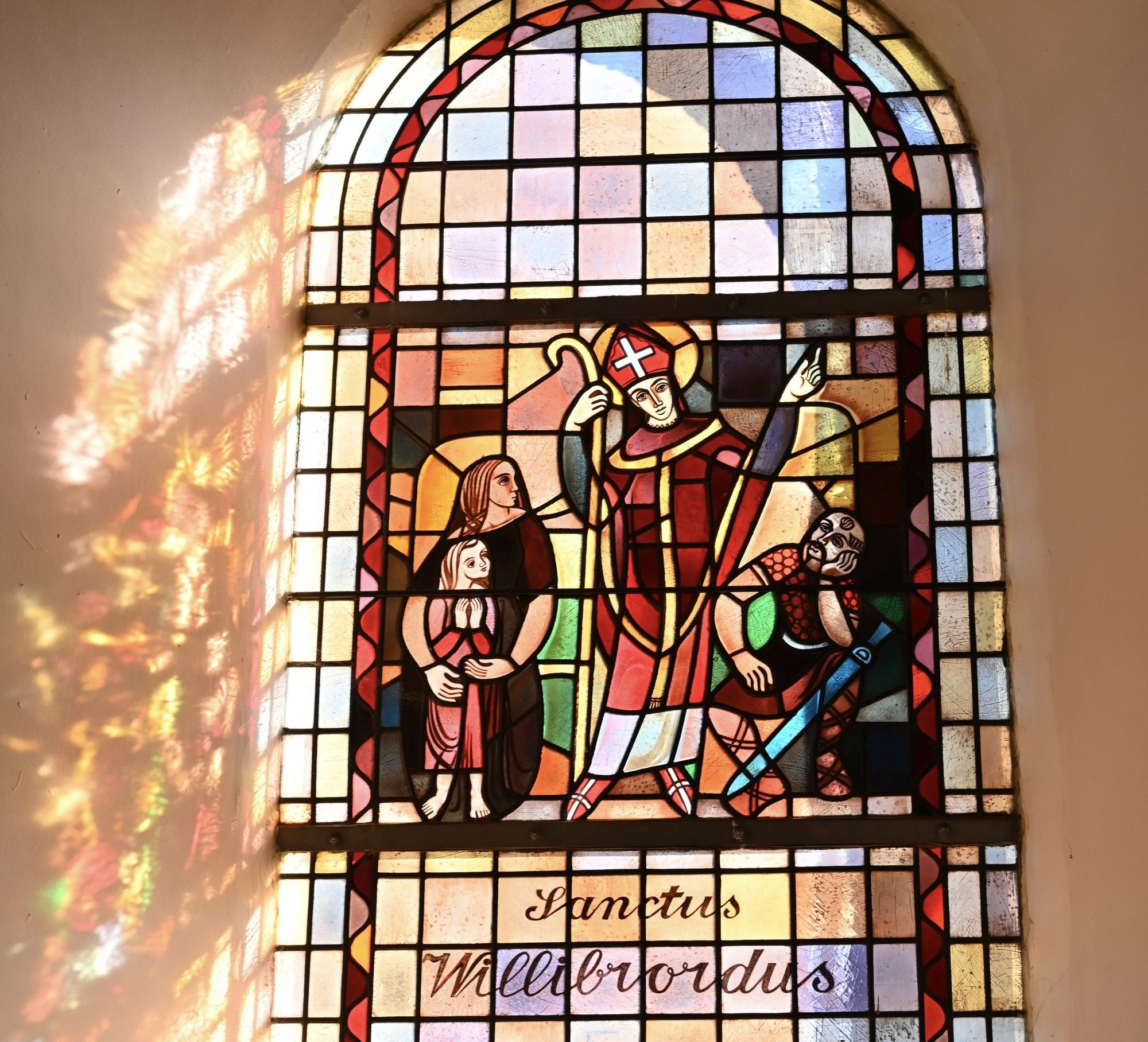
The Willibrordus Window
Willibrord came to our region from Ireland in the 8th century and spread Christianity here; he…
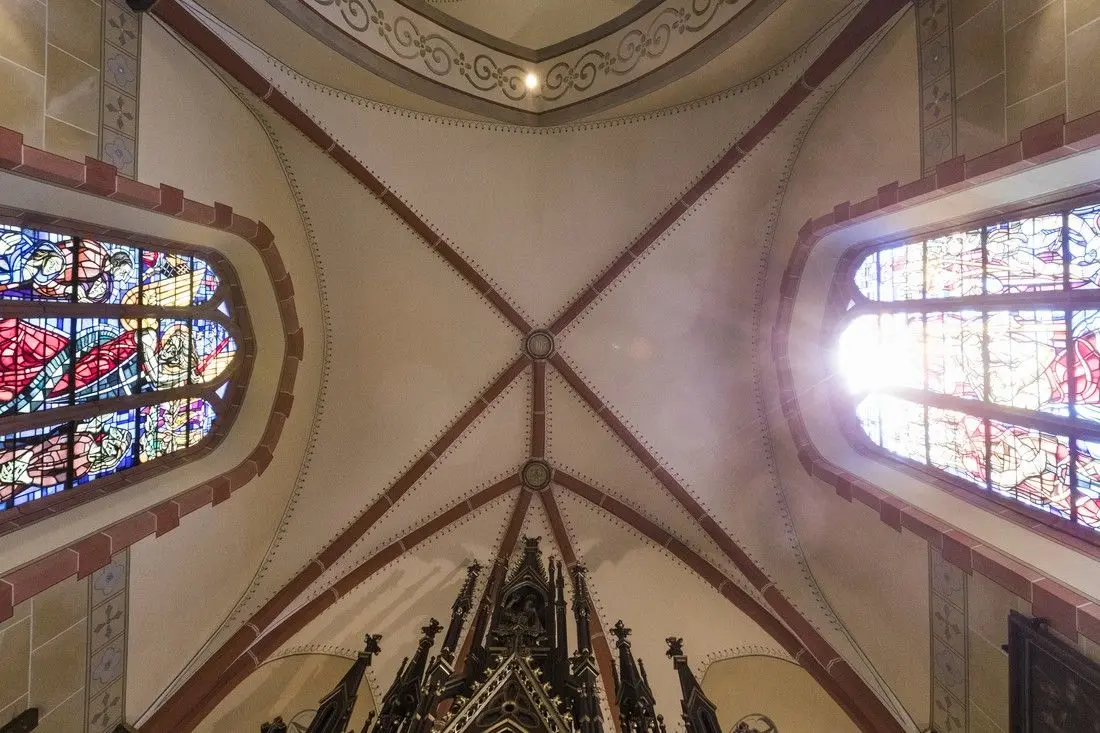
Willibrord came to our region from Ireland in the 8th century and spread Christianity here; he founded a monastery in Echternach, where he is buried and venerated to this day. In this window he is depicted as a bishop (with mitre and crosier) preaching the Gospel to the pagan population.
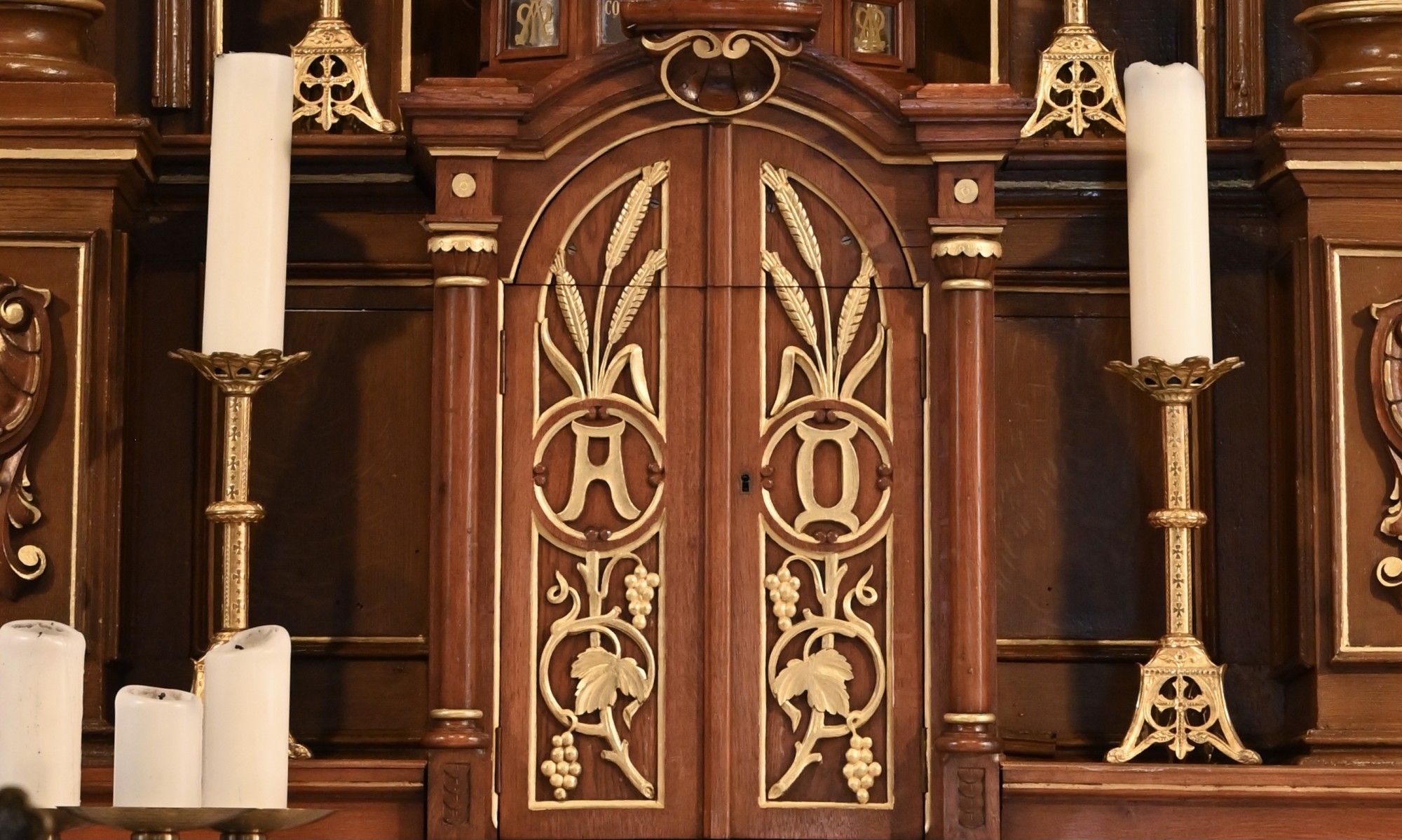
The tabernacle with alpha and omega
In the Bible, the first and last letters of the Greek alphabet stand for God and for Christ, who…
In the Bible, the first and last letters of the Greek alphabet stand for God and for Christ, who is “the first and the last, the beginning and the end” (Revelation 22:13). In Christian art, alpha and omega have become a symbol for Christ, who encompasses everything. To this day, in our linguistic usage, “the Alpha and Omega” refers to the quintessence of a thing.
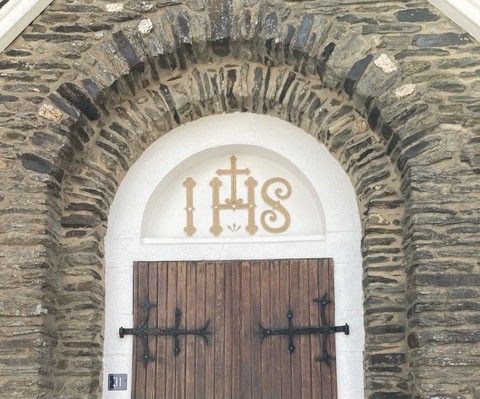
I.H.S.
The three letters above the entrance portal are found in many church buildings: they are the…
The three letters above the entrance portal are found in many church buildings: they are the abbreviation of “Jesus Hominum Salvator” and mean: “Jesus, Saviour of men”.
Hours
Closed
Nearby buildings
Tours associates


Comments (0)