
St. Andrew
Building profile
Historic/listed monument
Practical information


 © Pierre Haas
 © Pierre Haas
 © Ingrid Scholzen
 © Laure Simon
About this building
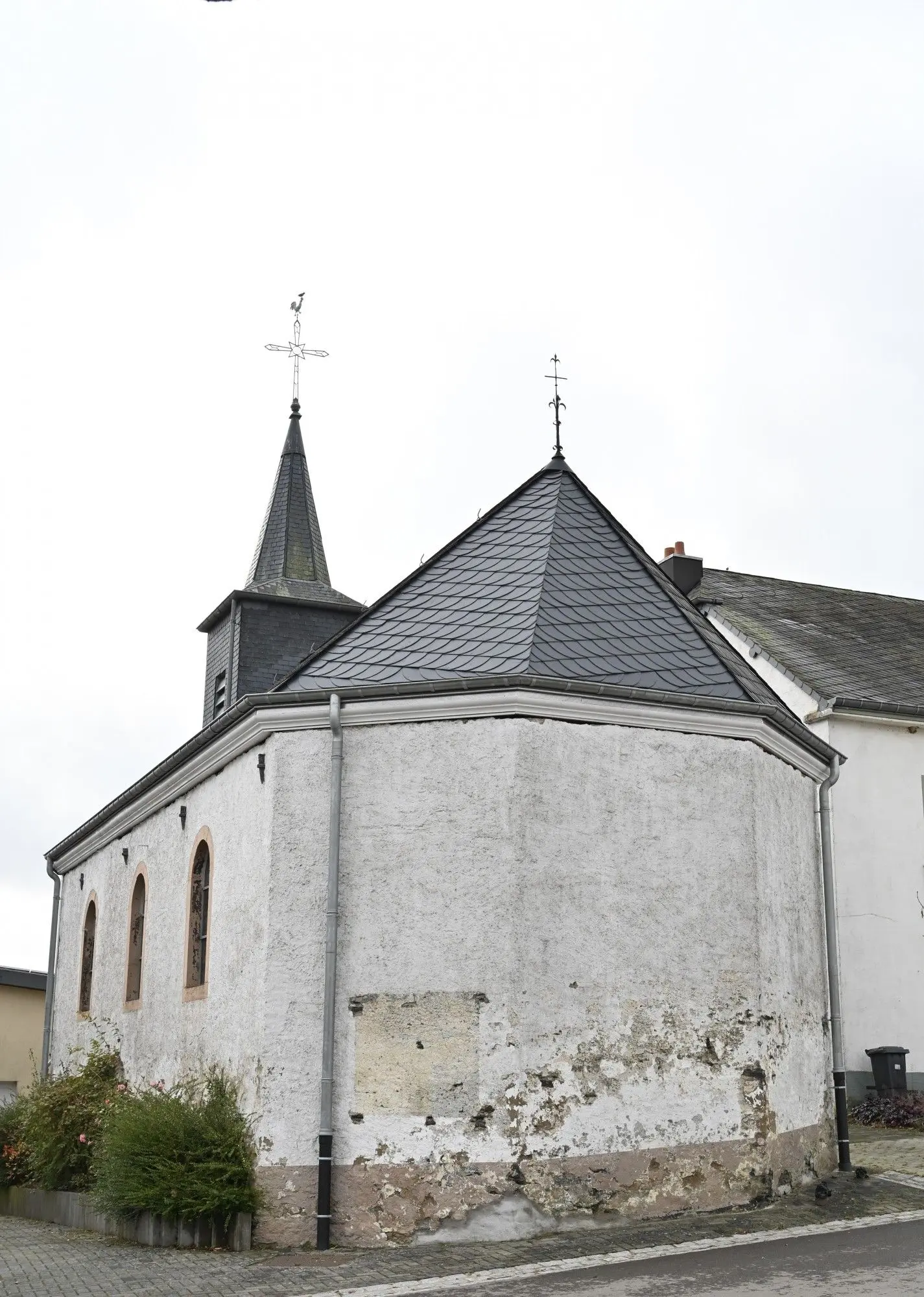
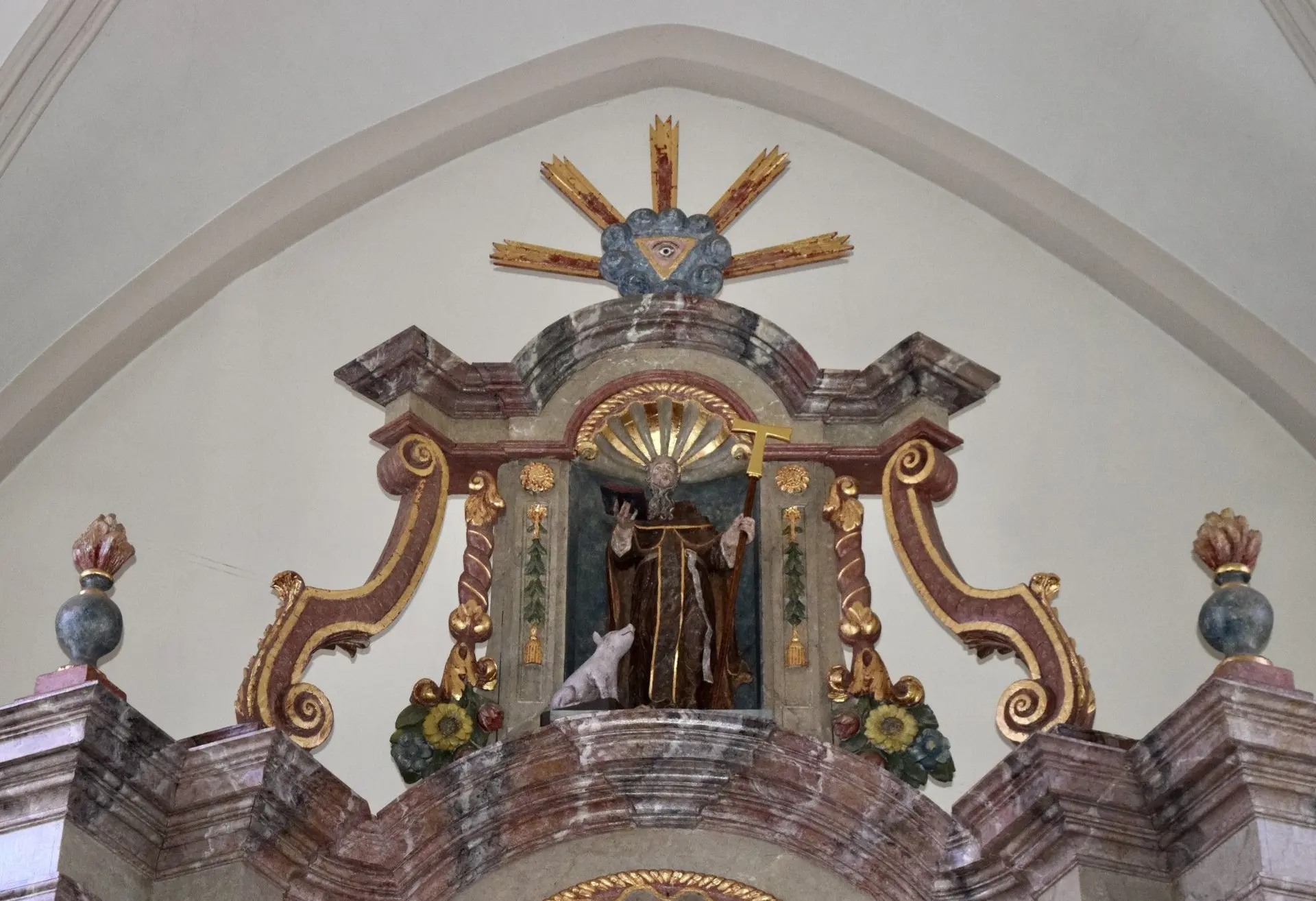
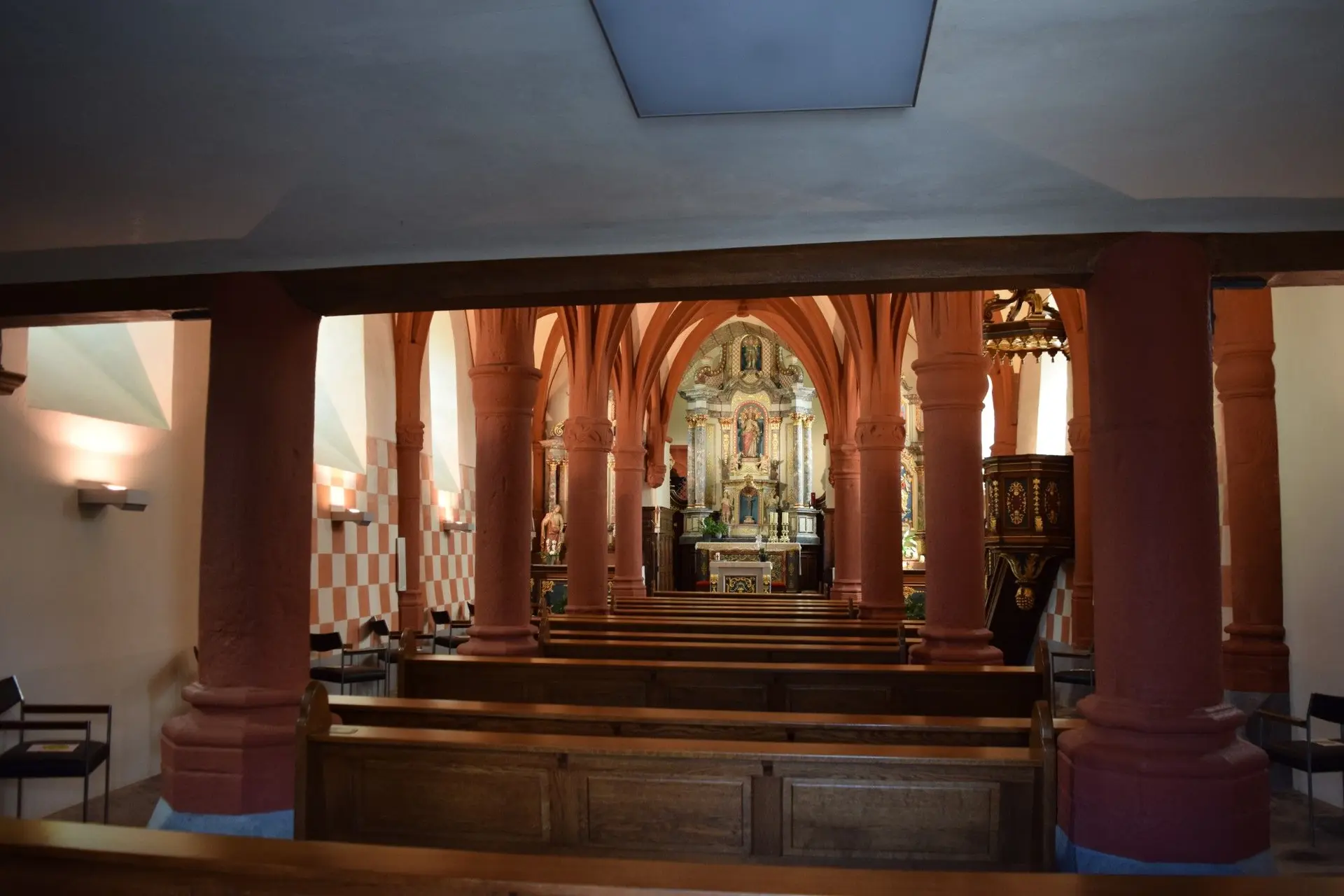
A Baroque statue in the centre of the right-hand side altar depicts St Andrew, the patron saint of this church, whose feast day on 30 November was marked in Ulflingen by a market (Änneresmaart).
Remarkable elements
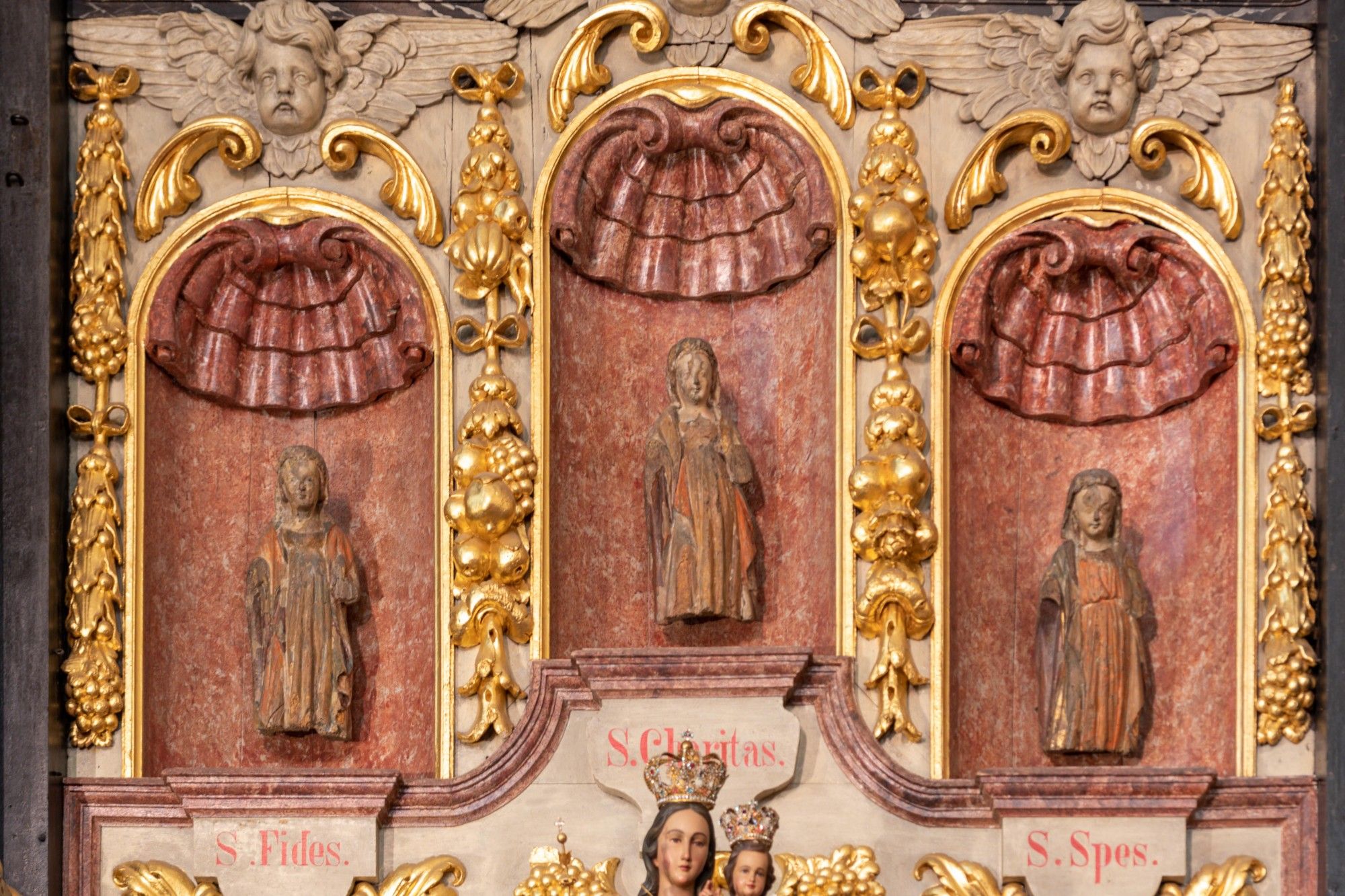
the Three Holy Virgins
The three wooden statues from the 15th century gave the village its name: Trois-vierges. In the…
The three wooden statues from the 15th century gave the village its name: Trois-vierges. In the course of the Christianisation of the Ardennes, a pagan fertility cult was probably re-figured: three mother-deities became three Christian virgins named Fides, Spes and Caritas. (Faith, Hope, Love)
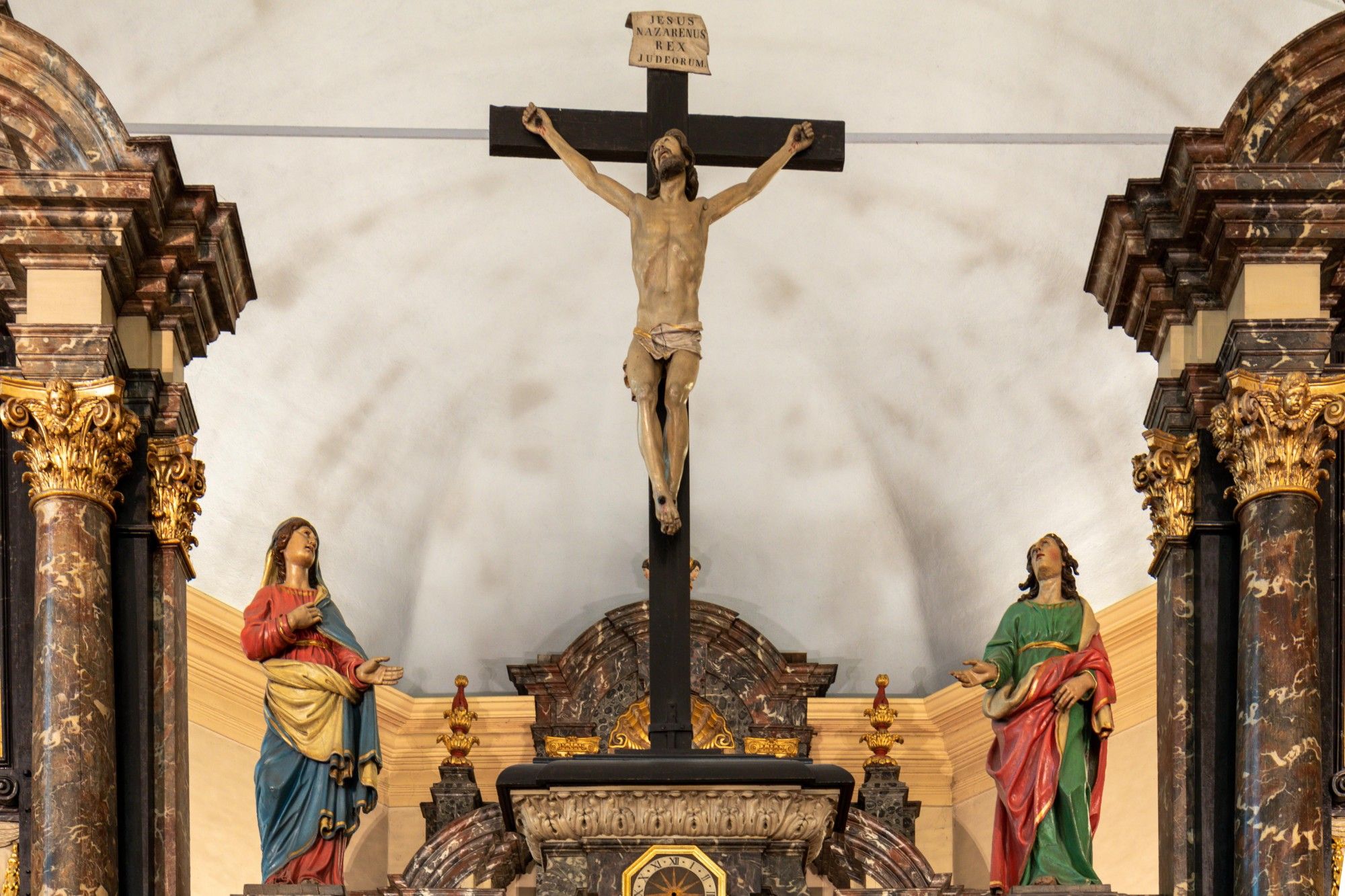
The calvary
The entrance to the choir is surmounted by monumental figures depicting Jesus' suffering on the…
The entrance to the choir is surmounted by monumental figures depicting Jesus' suffering on the cross. Beneath the cross are his mother Mary and his disciple John.
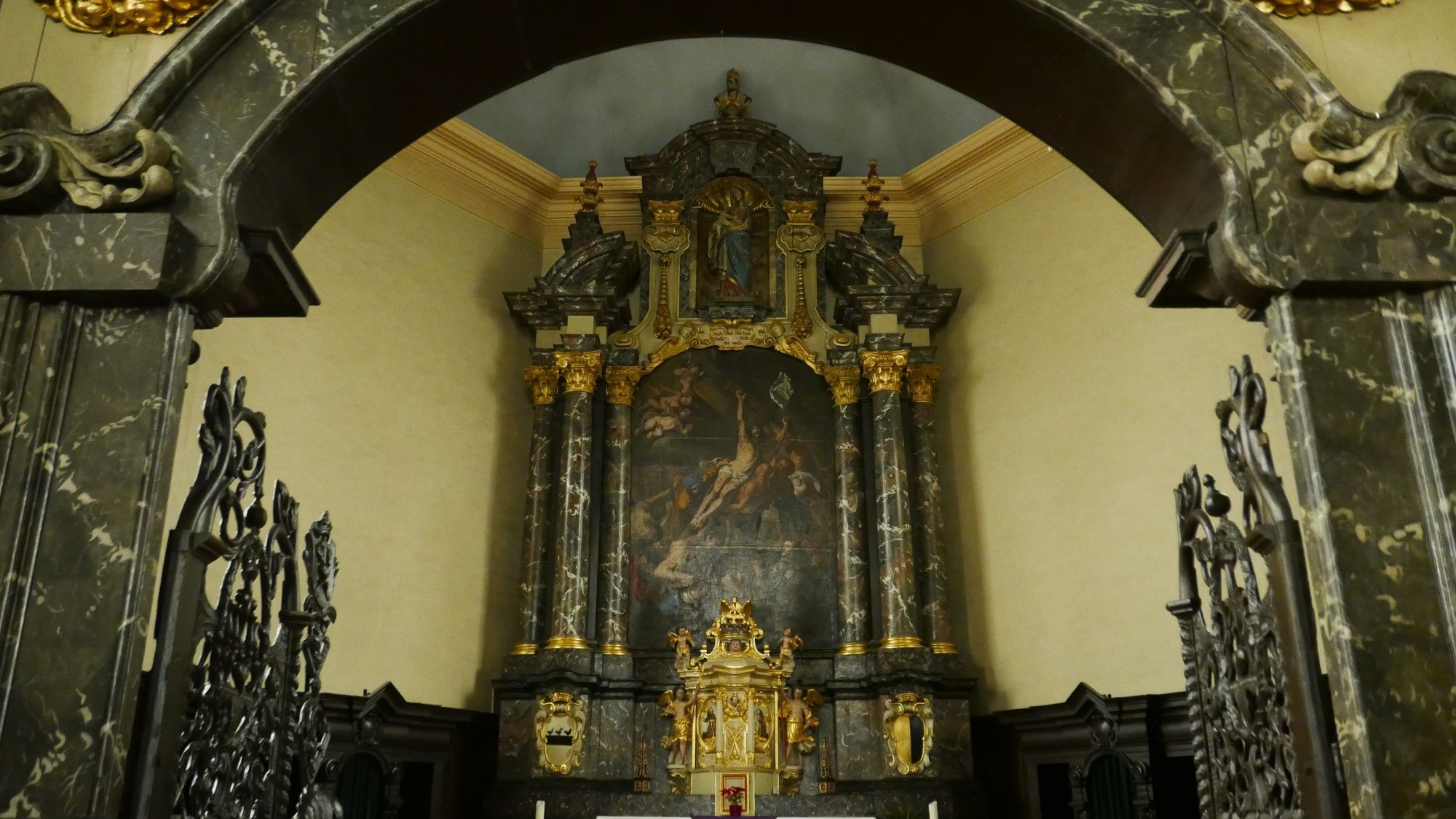
The choir room
In the choir room there used to be the tombstones of the count's family of Clerf. The choir…
In the choir room there used to be the tombstones of the count's family of Clerf. The choir stalls, which were used by the Franciscans for choir prayers, have been preserved. The room is brought to a close with the monumental high altar with revolving tabernacle.
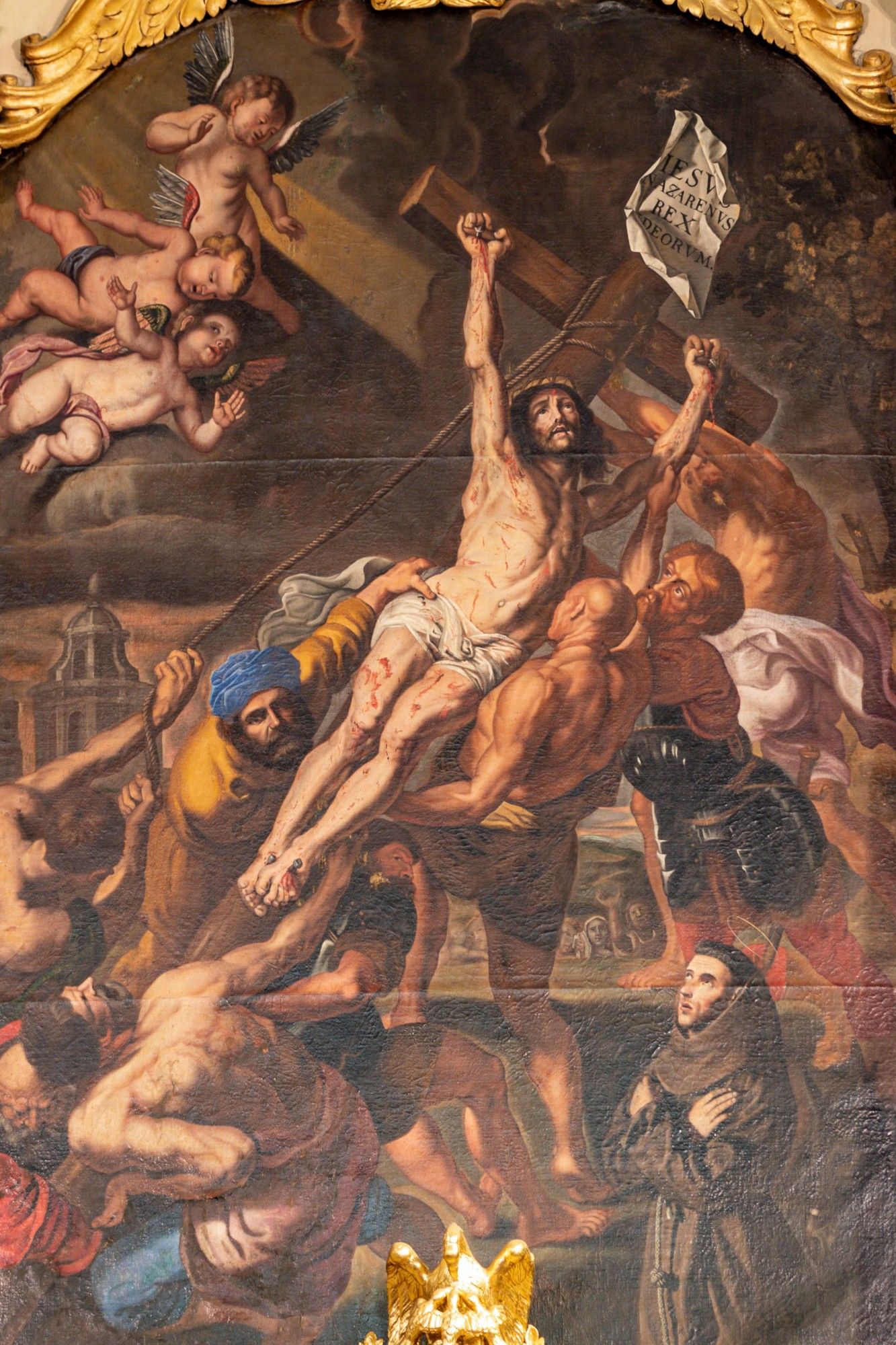
altarpiece of the high altar
The founder of the order, Francis of Assisi, also worships at the so-called Exaltation of the…
The founder of the order, Francis of Assisi, also worships at the so-called Exaltation of the Cross. The very realistic scene is intended to touch the faithful. The painting is inspired by Peter Paul Rubens and the painting of the Spanish Netherlands. It dates from the founding period of the monastery; the artist is unknown, possibly from the ranks of the Franciscans.
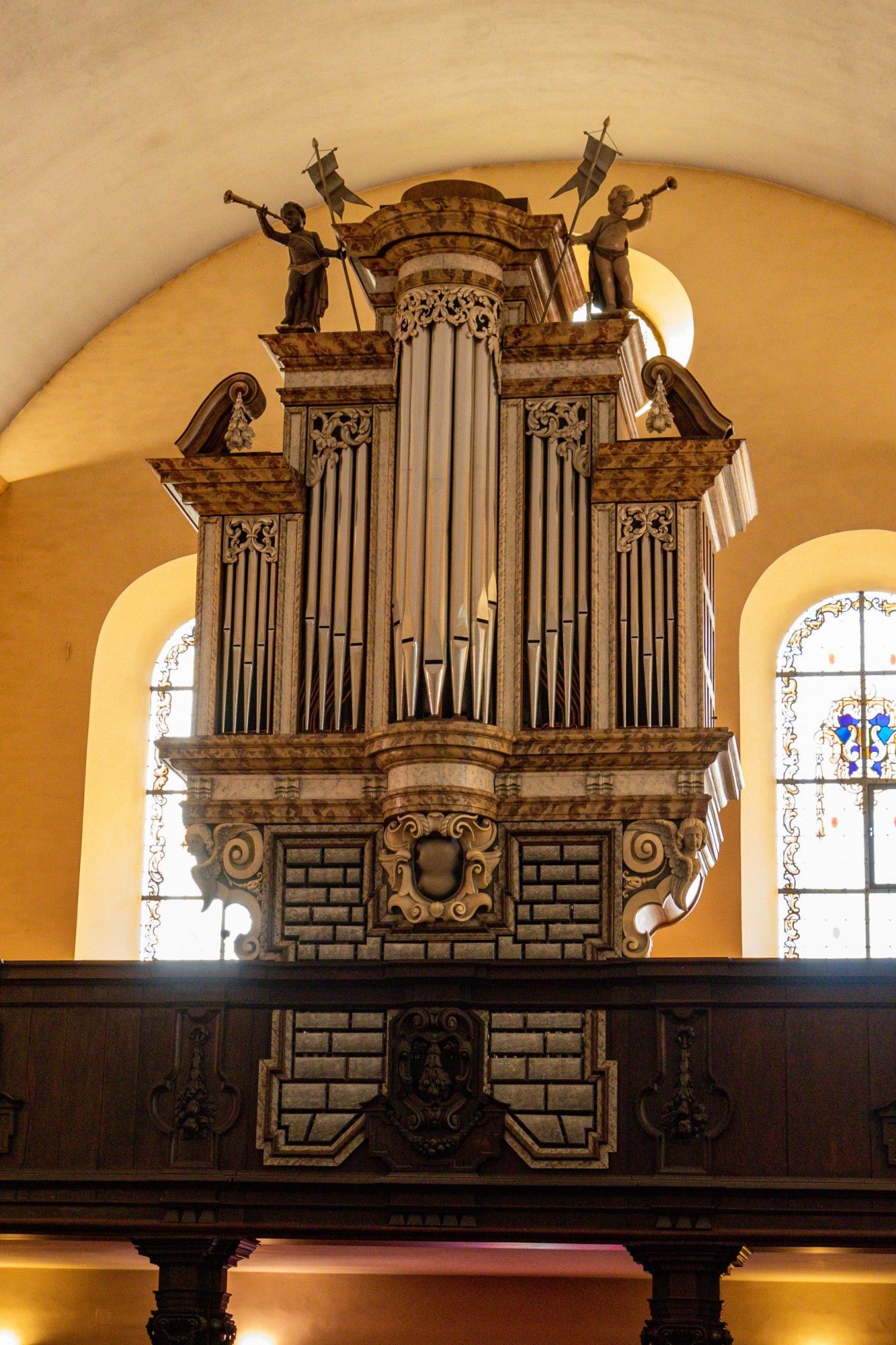
organ
The organ, restored in 1996 by G. Westenfelder, is in its core still original from the 17th…
The organ, restored in 1996 by G. Westenfelder, is in its core still original from the 17th century. It comes from the Spanish Netherlands and was restored according to historical models. It is one of the oldest organ instruments in Luxembourg.
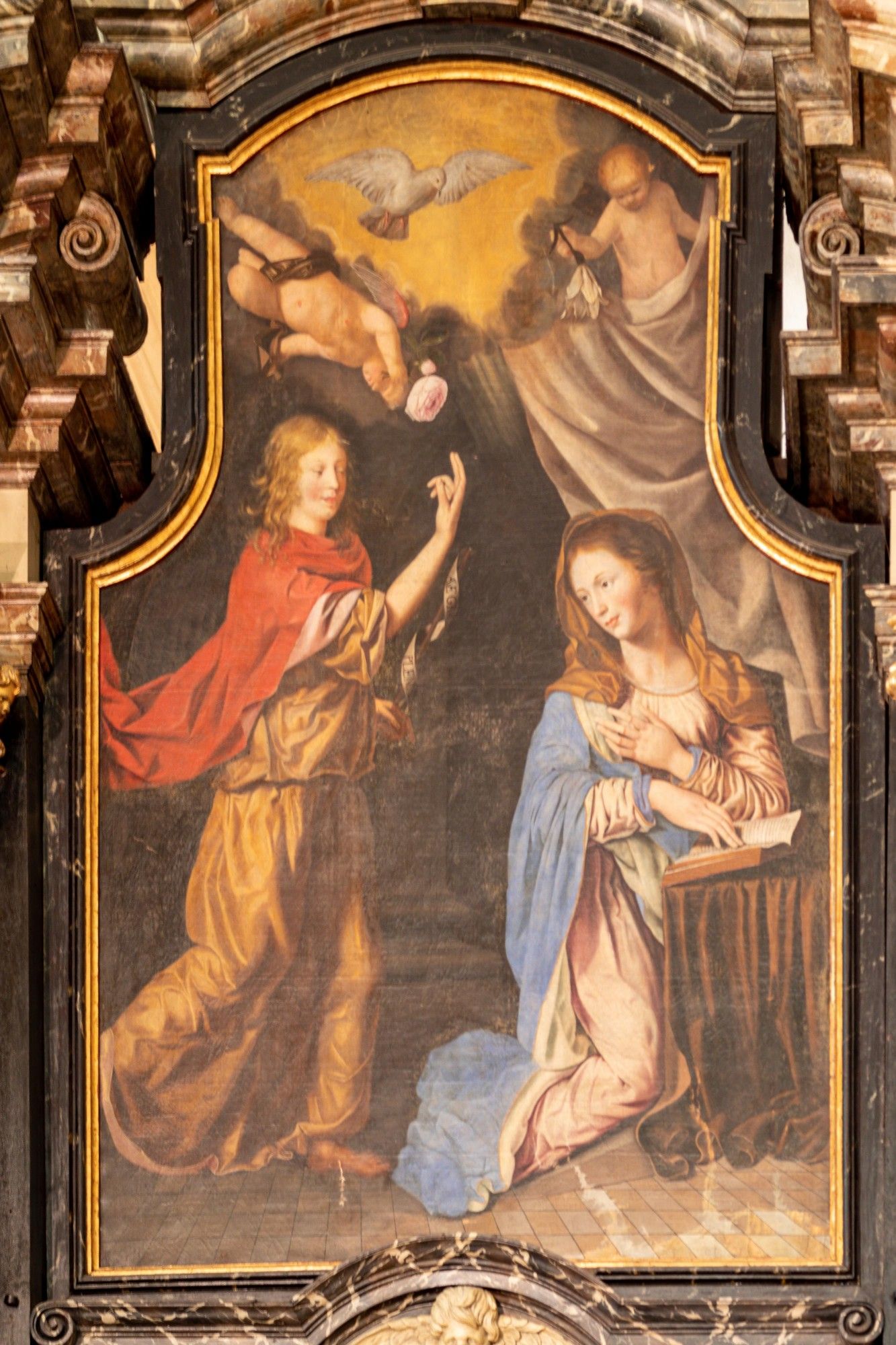
The Annunciation of the Angel to Mary
This 17th century painting shows how the messenger of God (a human being, without wings!)…
This 17th century painting shows how the messenger of God (a human being, without wings!) announces the birth of Jesus to Mary. He points to the open sky and the dove symbolising the Holy Spirit. Two angels take part in the scene; rose and lily symbolise Mary's virginity.
Labels

Hours
Closed
Nearby buildings
Tours associates


Comments (0)