Saint Bertin
Building profile
Historic/listed monument
Practical information


 © Églises Ouvertes
 © Églises Ouvertes
 © Églises Ouvertes
 © Églises Ouvertes
 © Églises Ouvertes
 © Églises Ouvertes
 © Églises Ouvertes
 © Églises Ouvertes
 © Églises Ouvertes
 © Églises Ouvertes
 © Églises Ouvertes
 © Églises Ouvertes
 © Églises Ouvertes
 © Églises Ouvertes
 © Églises Ouvertes
About this building
Poperinge is an old medieval city whose lord was the abbot of Saint Omer. Three monumental churches still bear witness to the former splendour of the city.
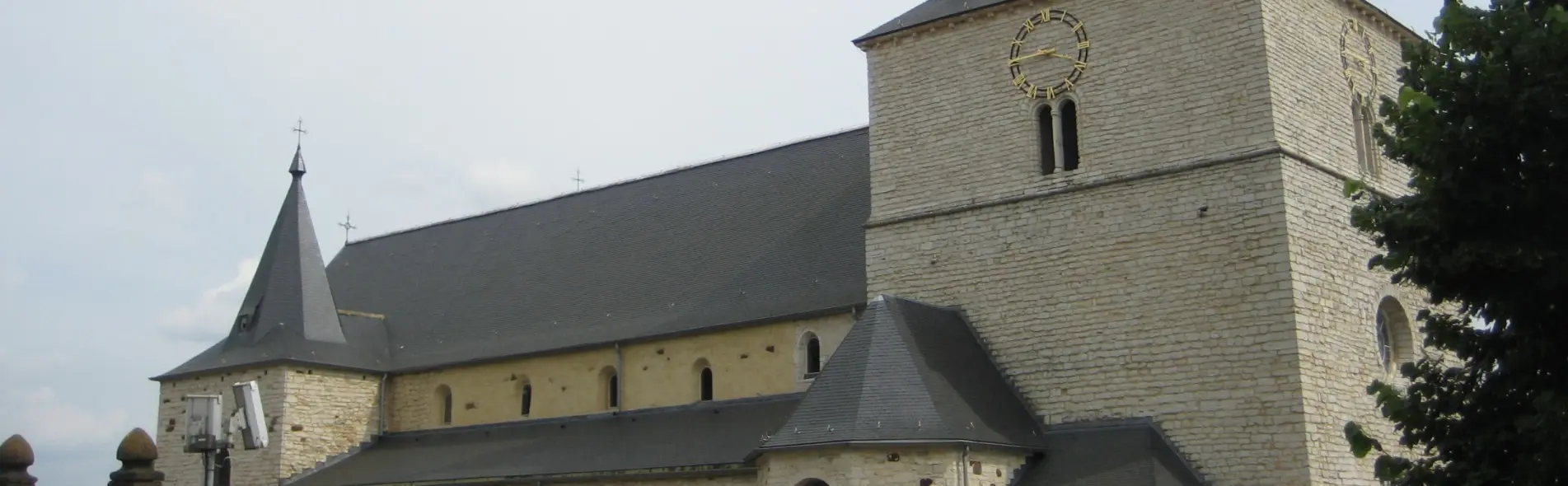
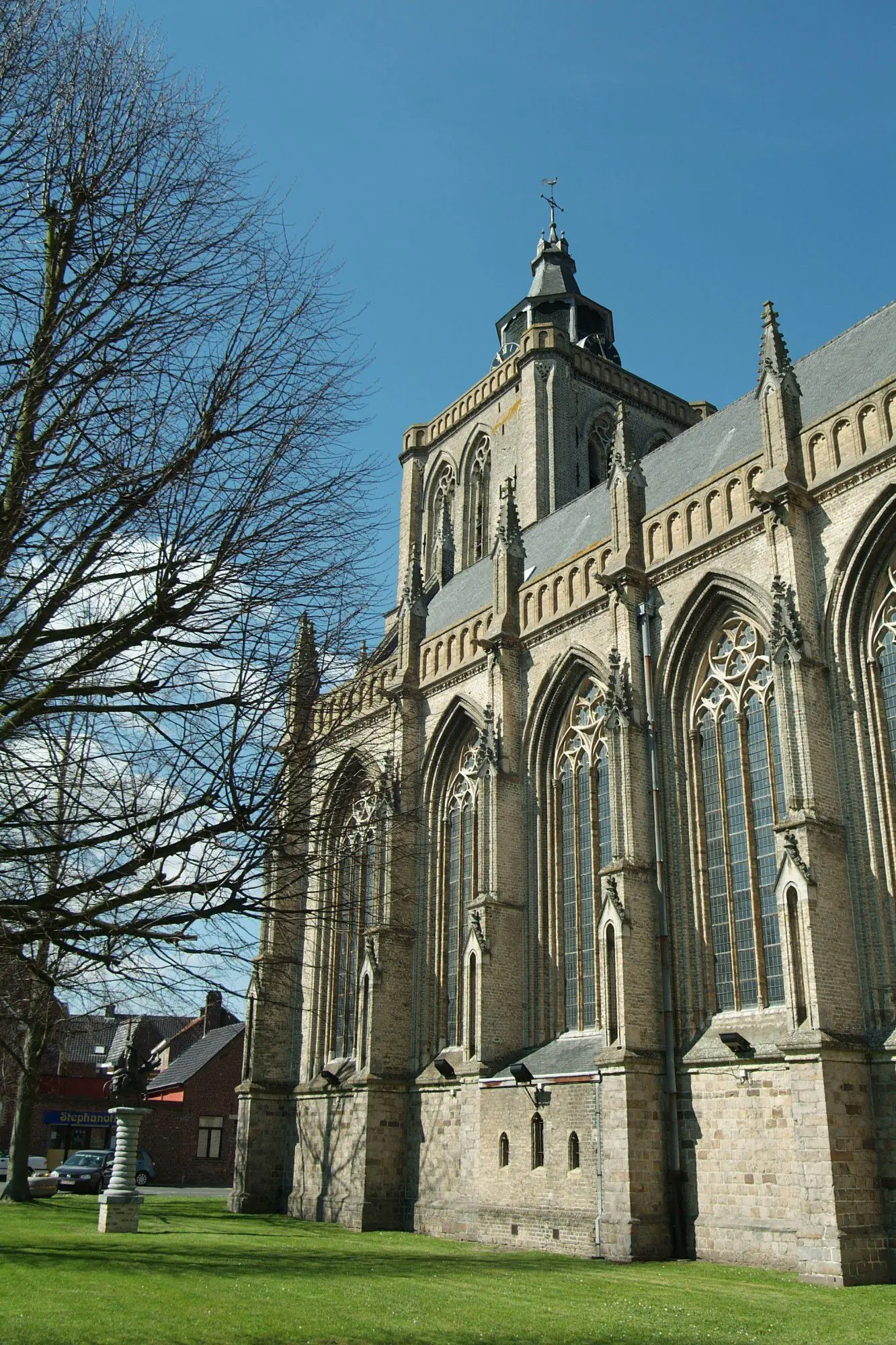
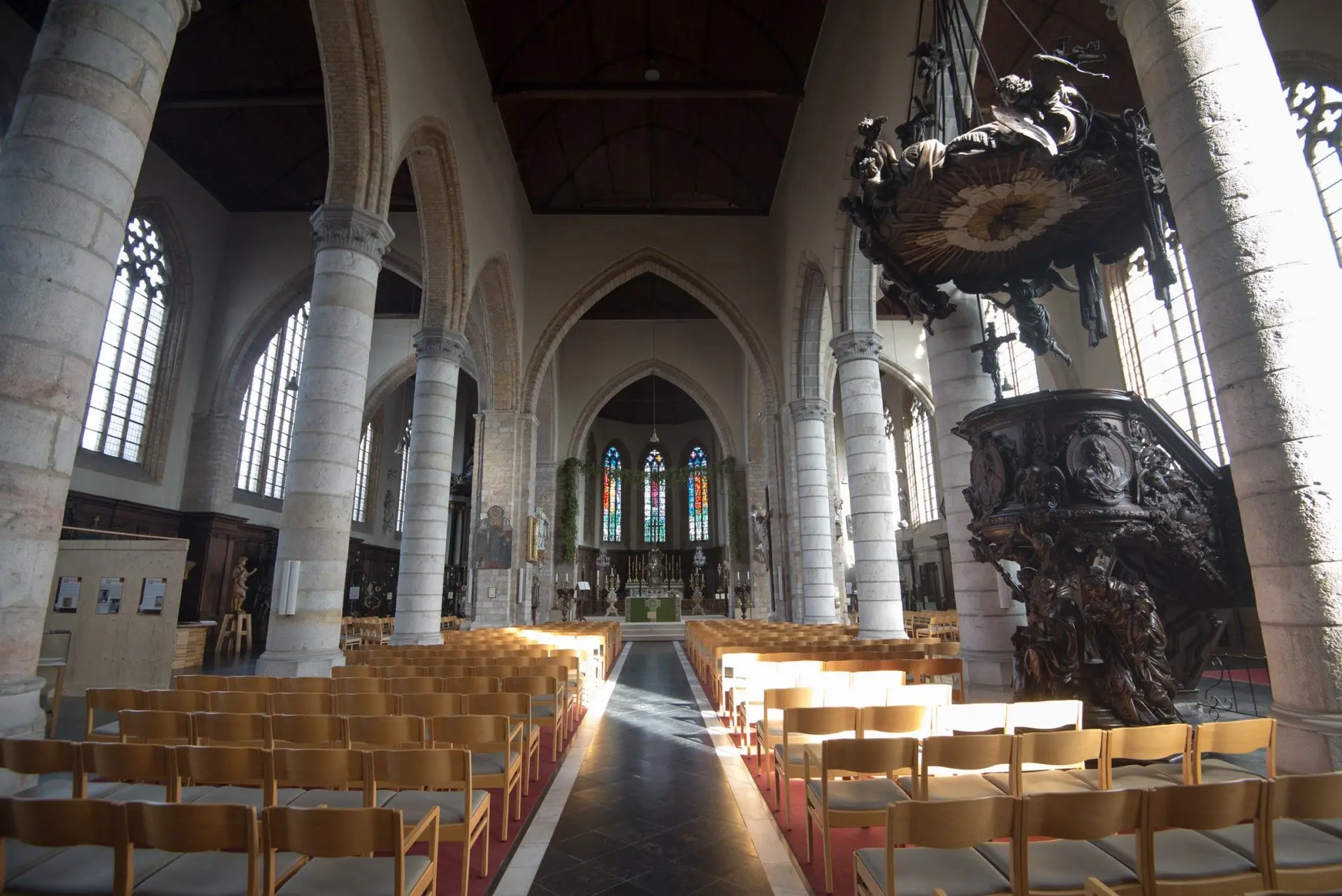
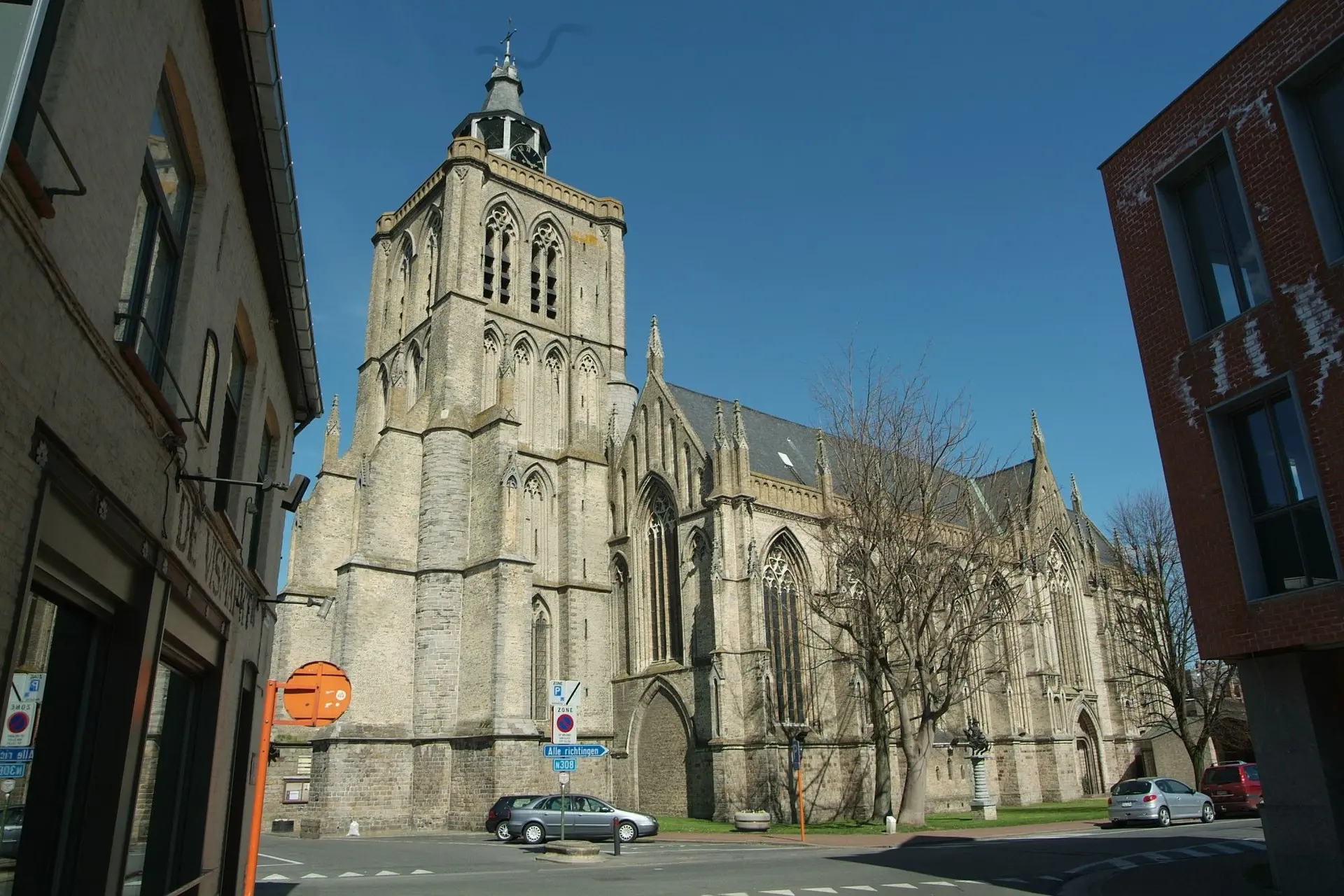
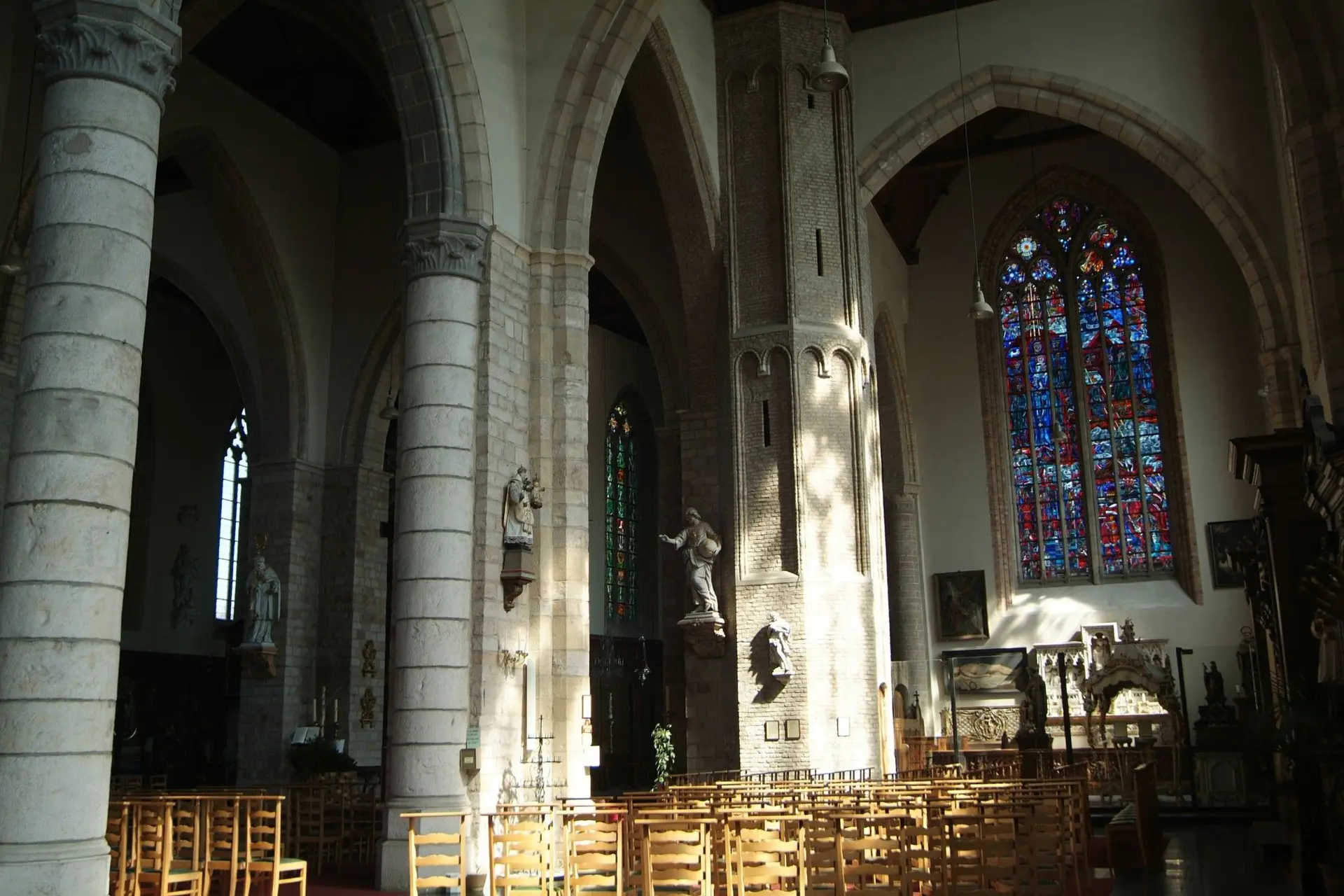
The collegial church of Saint Bertin, which is the principal church of Poperinge, is an example of a Flemish ‘hallekerke’ (construction of the church according to the plan of a covered market), with three naves that have the same height and width. It was rebuilt after the fire of 1419. It owes its name to Saint Bertin who was the abbot at Saint Omer in the 7th century.
The lower part of the old pre-Gothic…
Poperinge is an old medieval city whose lord was the abbot of Saint Omer. Three monumental churches still bear witness to the former splendour of the city.
The collegial church of Saint Bertin, which is the principal church of Poperinge, is an example of a Flemish ‘hallekerke’ (construction of the church according to the plan of a covered market), with three naves that have the same height and width. It was rebuilt after the fire of 1419. It owes its name to Saint Bertin who was the abbot at Saint Omer in the 7th century.
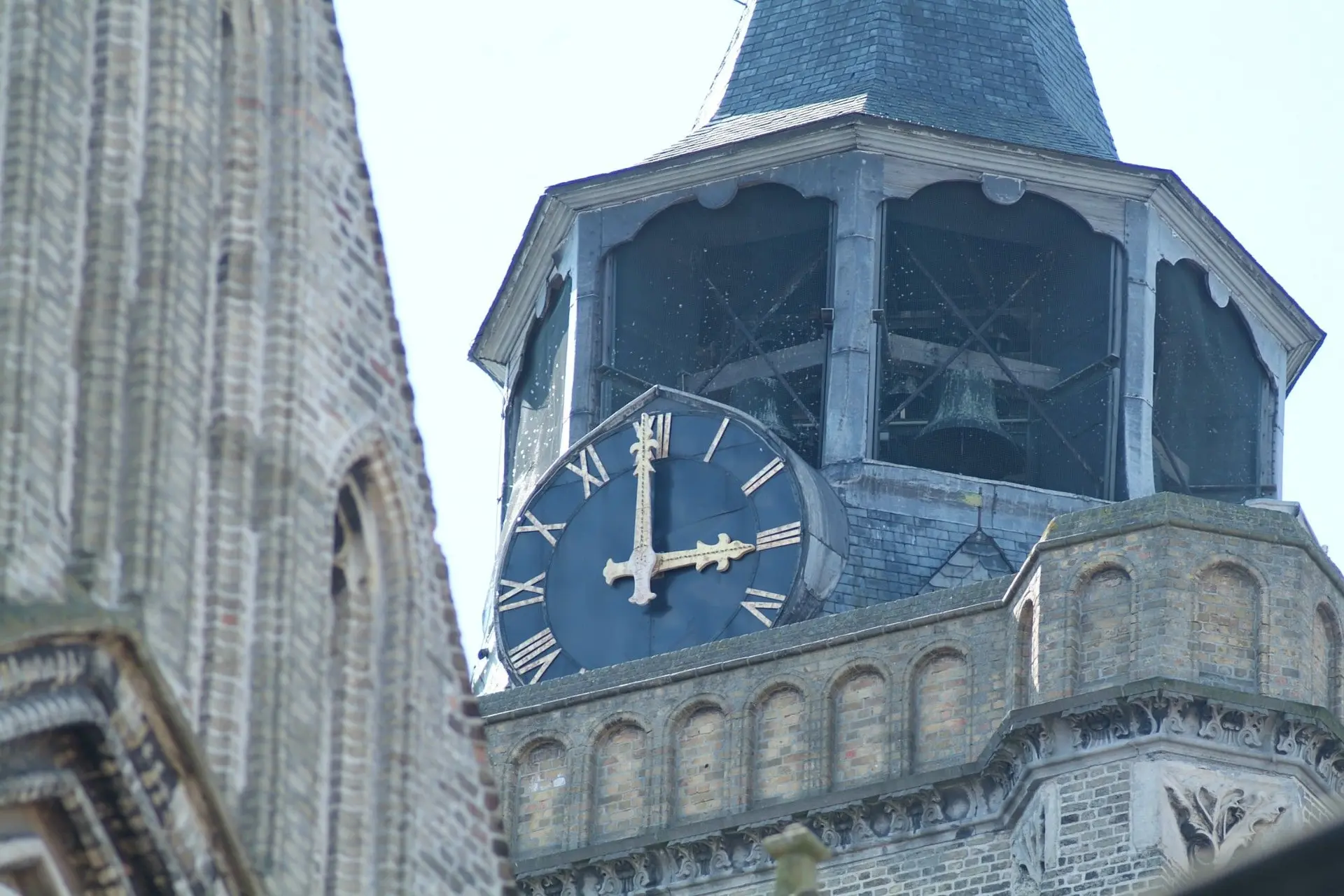
The lower part of the old pre-Gothic tower probably supported a tower similar to that of the church of Notre-Dame. The lantern tower dates from the 18th century.
When one looks at the façade, one notices that the alcoves are empty. The statues were destroyed by the ‘Beeldenstorm’ (iconoclasm). Around 1566, this popular Calvinist movement, which was against the representation and the adoration of the saints, destroyed statues and other riches in the churches in the Low Countries.
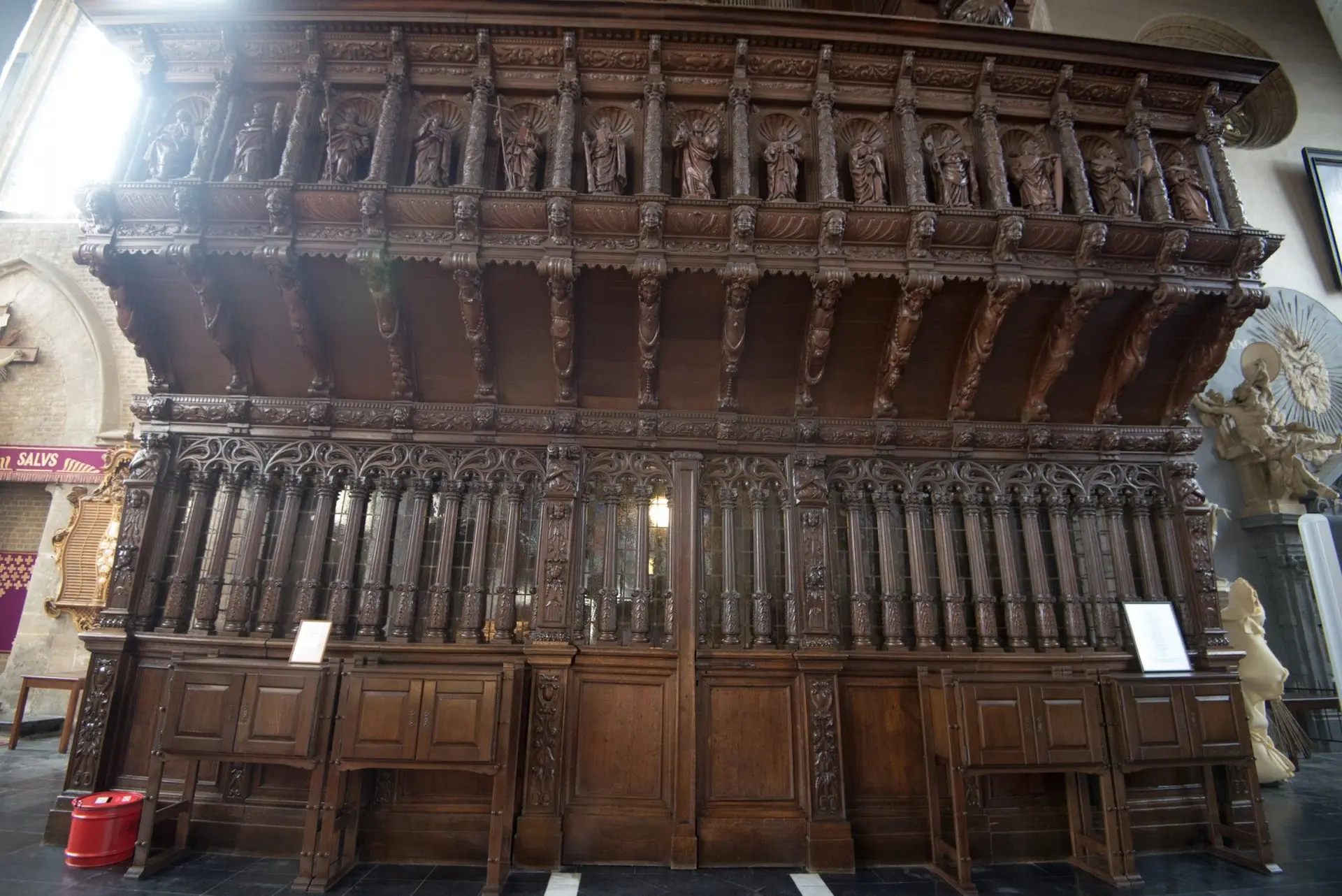
After this disastrous period, the church was embellished among others in the 17th century with a magnificent rood screen adorned with statues representing Jesus and the Apostles and in the 18th century with richly sculpted Baroque confessionals and a monumental cathedra of truth in the Baroque style borne by three saints of the order of the Preaching Friars.
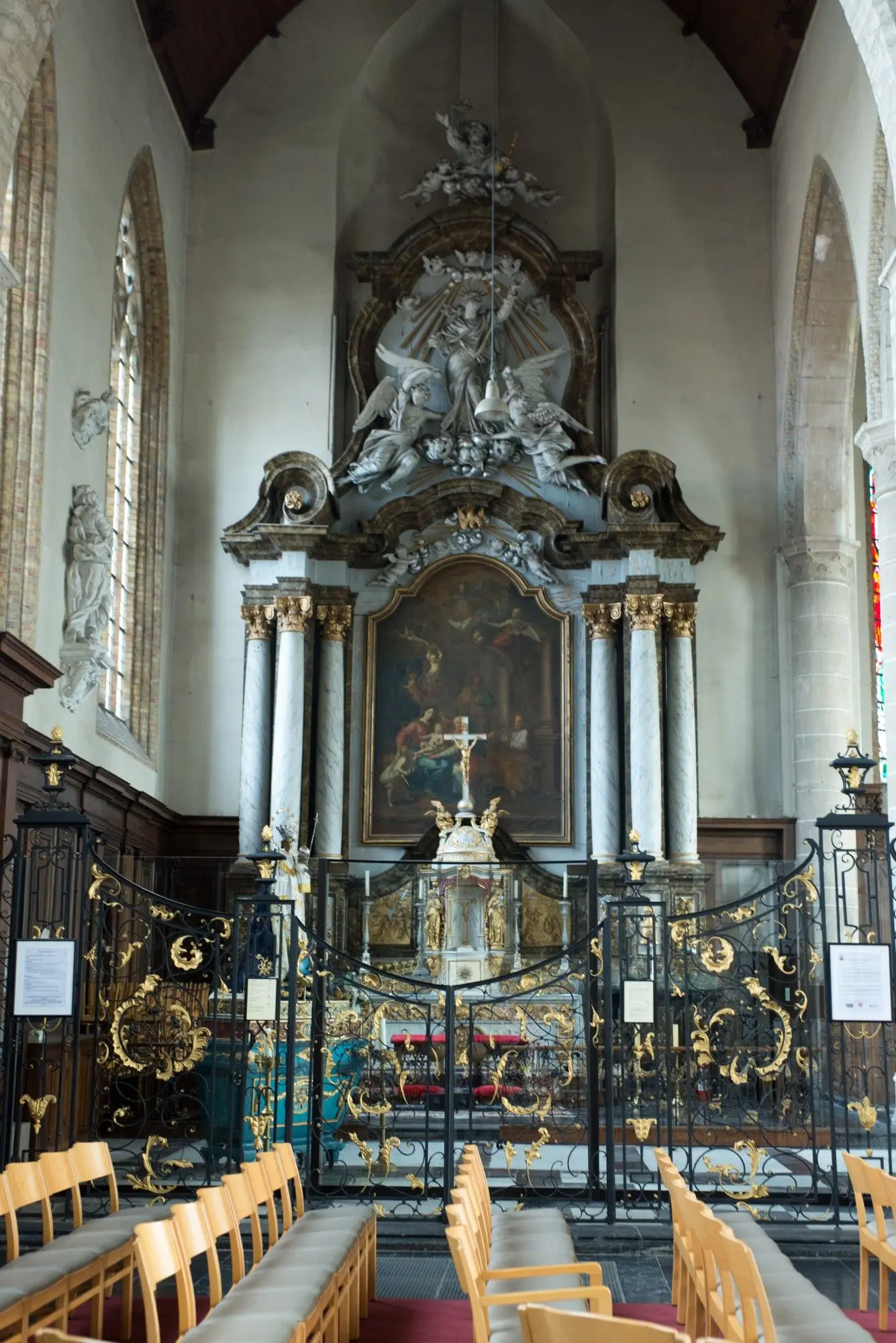
For people who want to know more about this: the altar is surmounted by a canvas by Desremaux (18th century); the tabernacle of copper and silver is the work of P. and H. Boeys (18th century).
Remarkable elements
Pulpit
The 18th-century oak Baroque pulpit is among the finest in the country. It features the four…
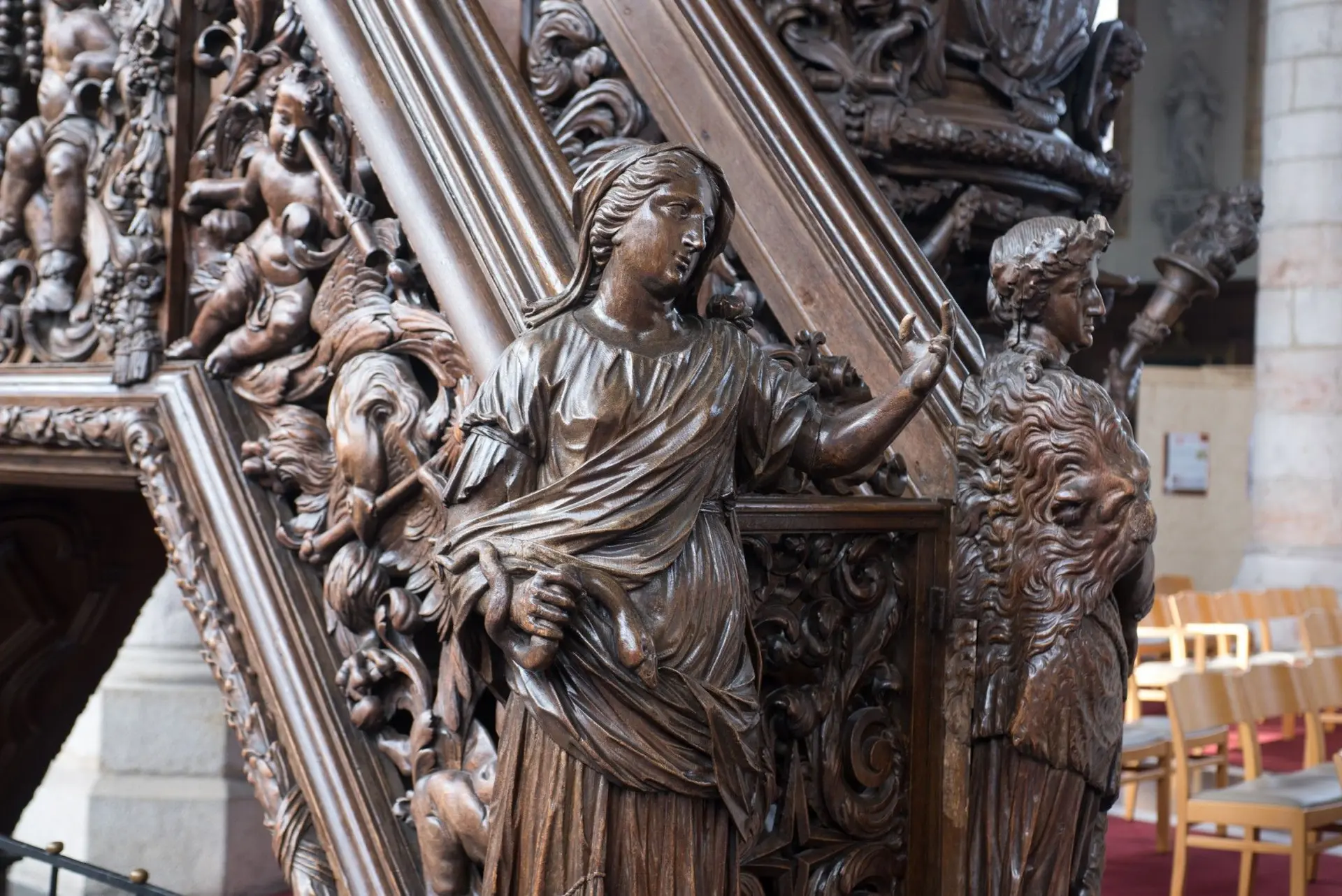
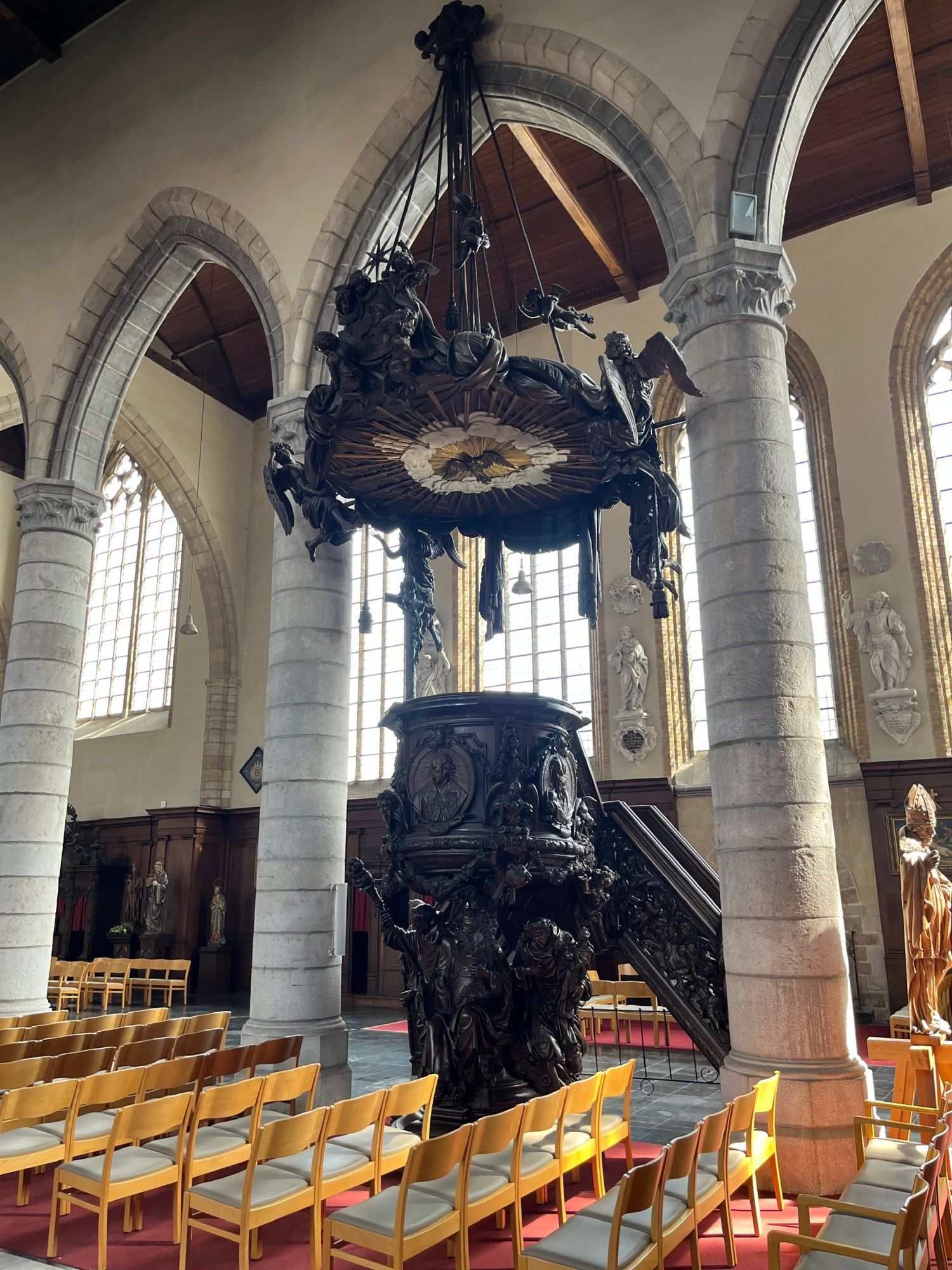
The 18th-century oak Baroque pulpit is among the finest in the country. It features the four Church Fathers: Jerome, Gregory the Great, Augustine and Ambrose. Three Dominican saints support the pulpit: Albert the Great, Thomas Aquinas and Hyacinth of Poland. The canopy is carried by angels and displays Saint Dominic with a star. It also shows the symbols of the four Evangelists: the eagle, bull, winged lion and angel.
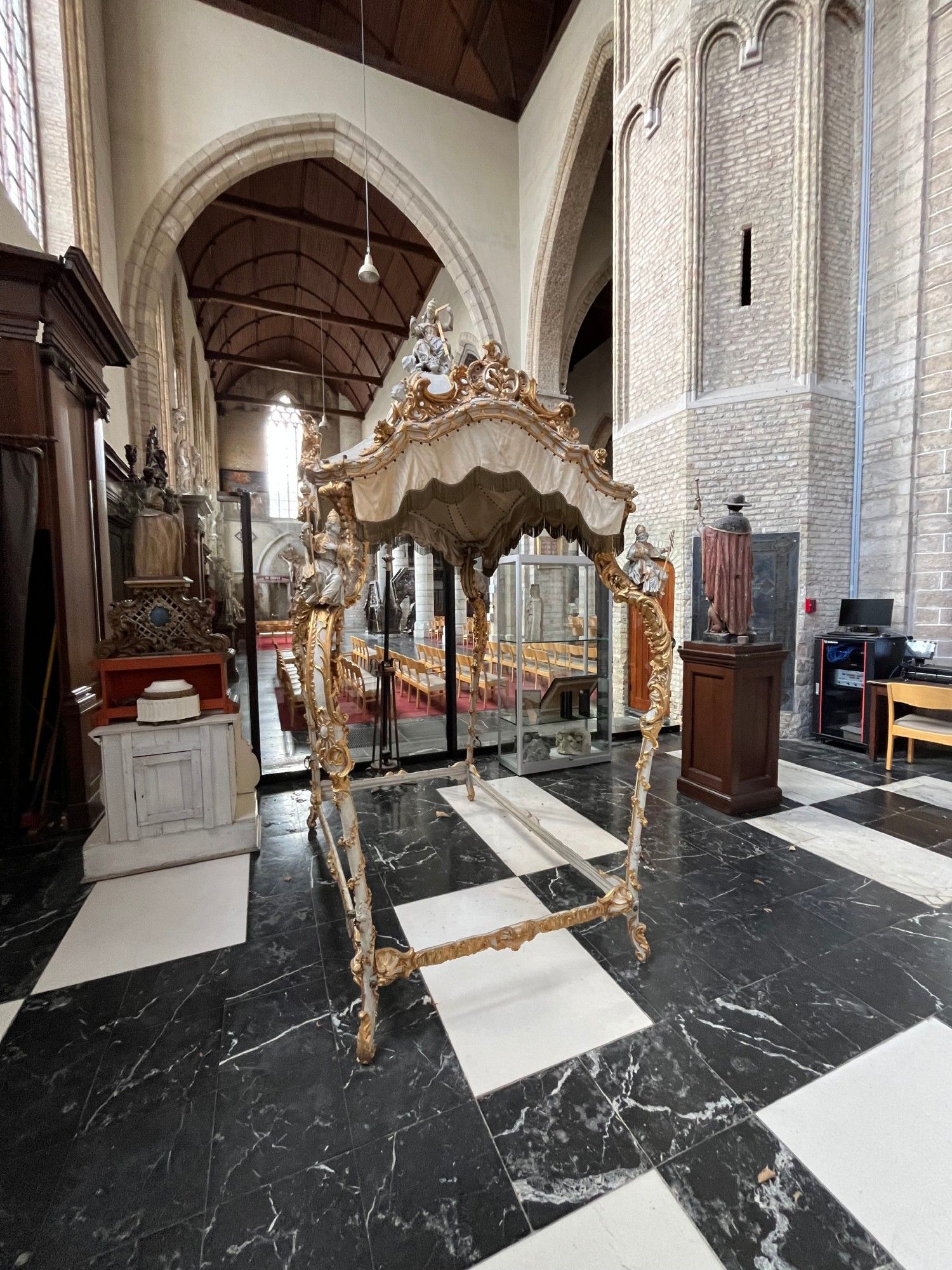
Canopy
The canopy shows a picture of a woman, symbolizing mother earth. It also carries the symbols of…
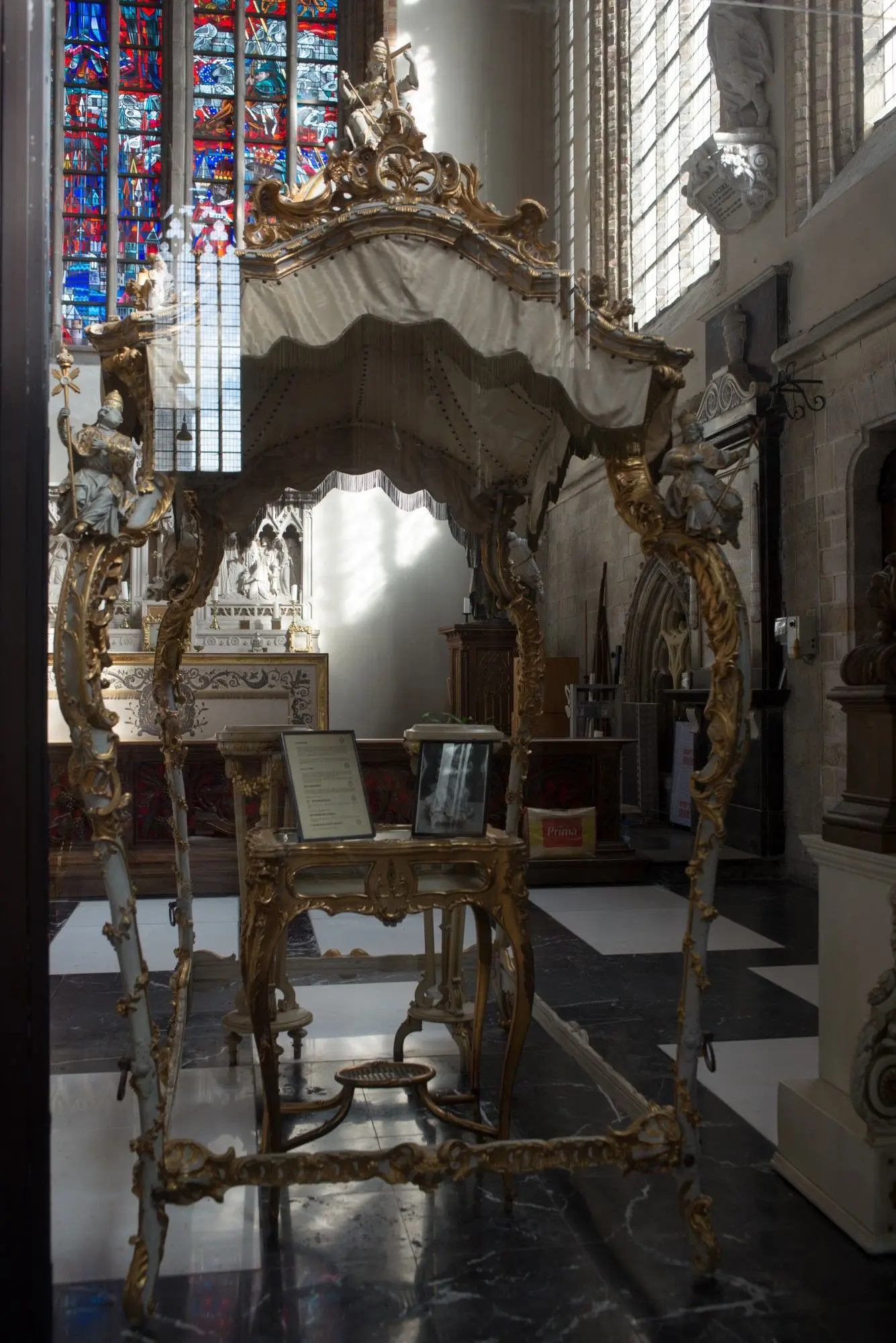
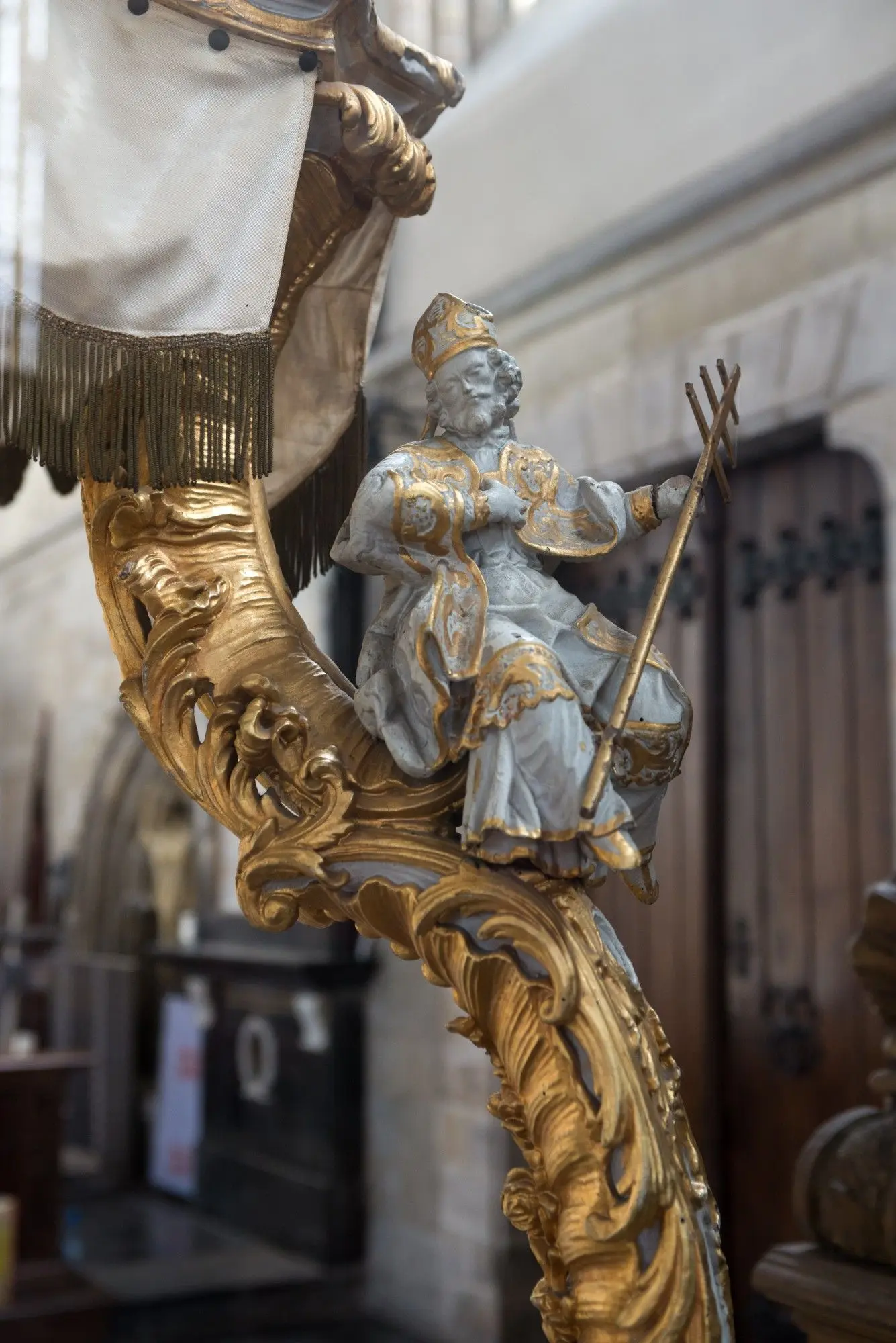
The canopy shows a picture of a woman, symbolizing mother earth. It also carries the symbols of the 4 evangelists: Matthew as a winged human being (or angel), Marc as winged lion, Luke as winged bull and John as an eagle. On the four corners stand a pope, two bishops and a monk. The rococo construction in lime tree wood dates from 1755.
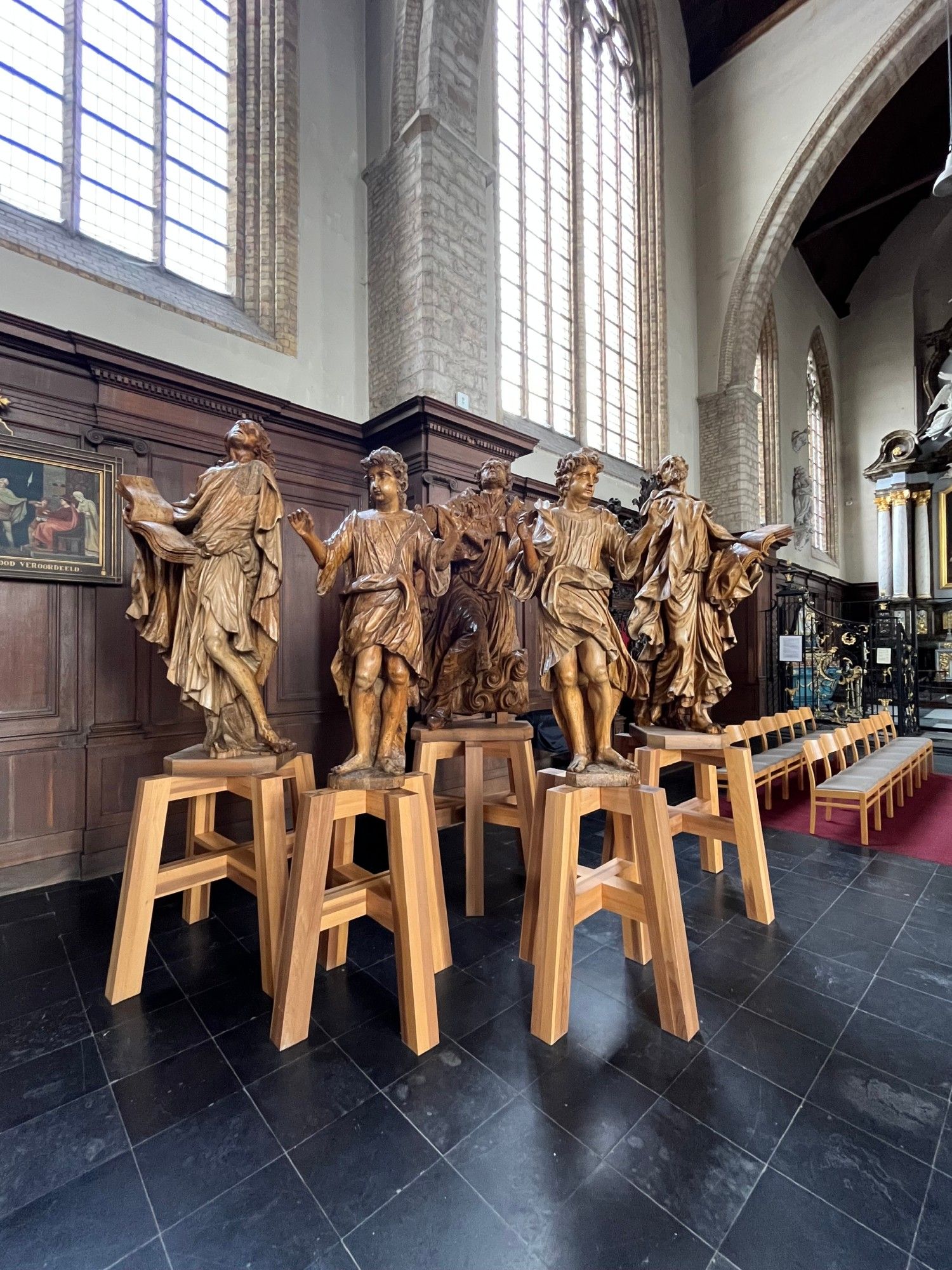
Group of sculpted figures
There are seven sculptures in the church: five grouped at the back and two beside the eastern…
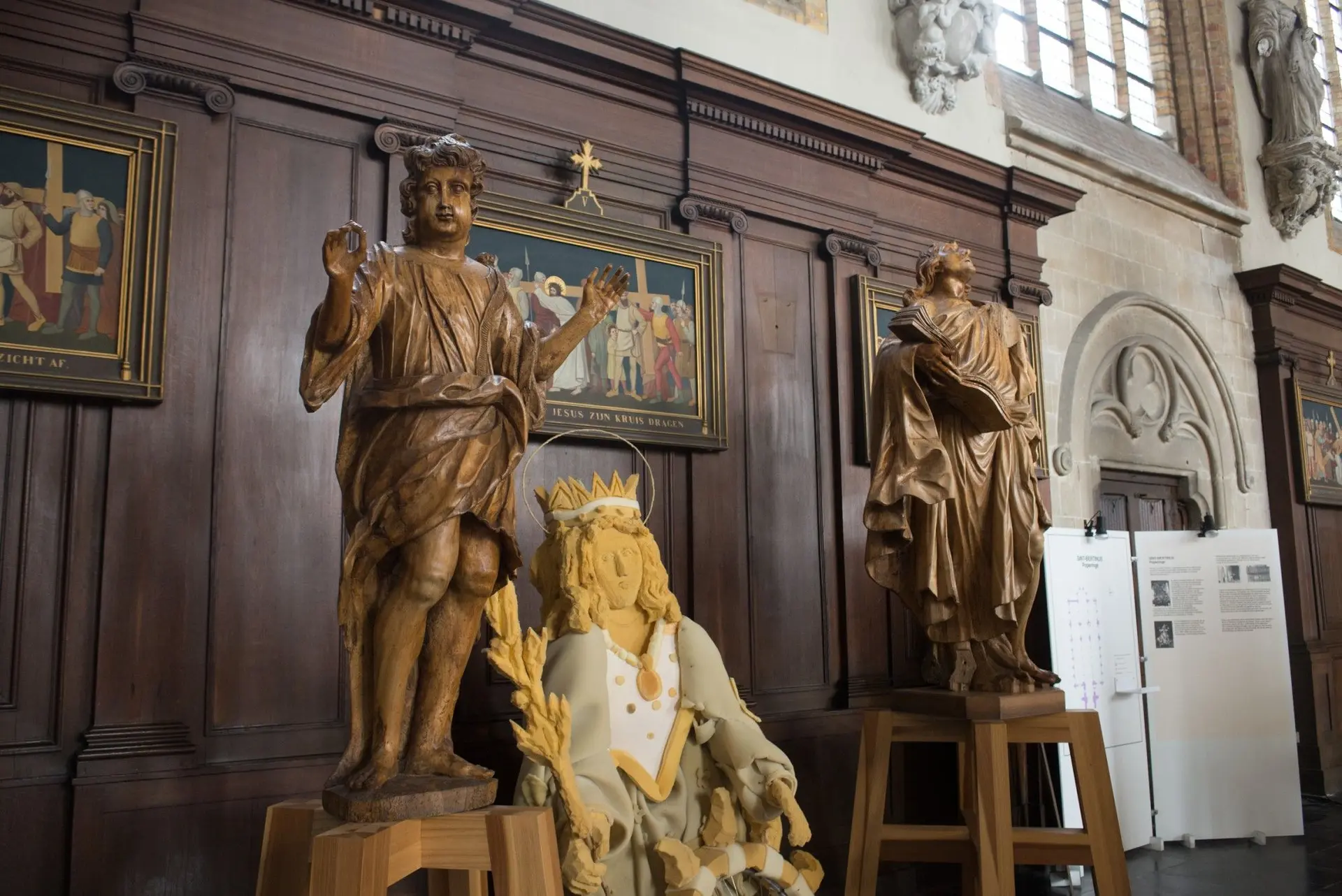
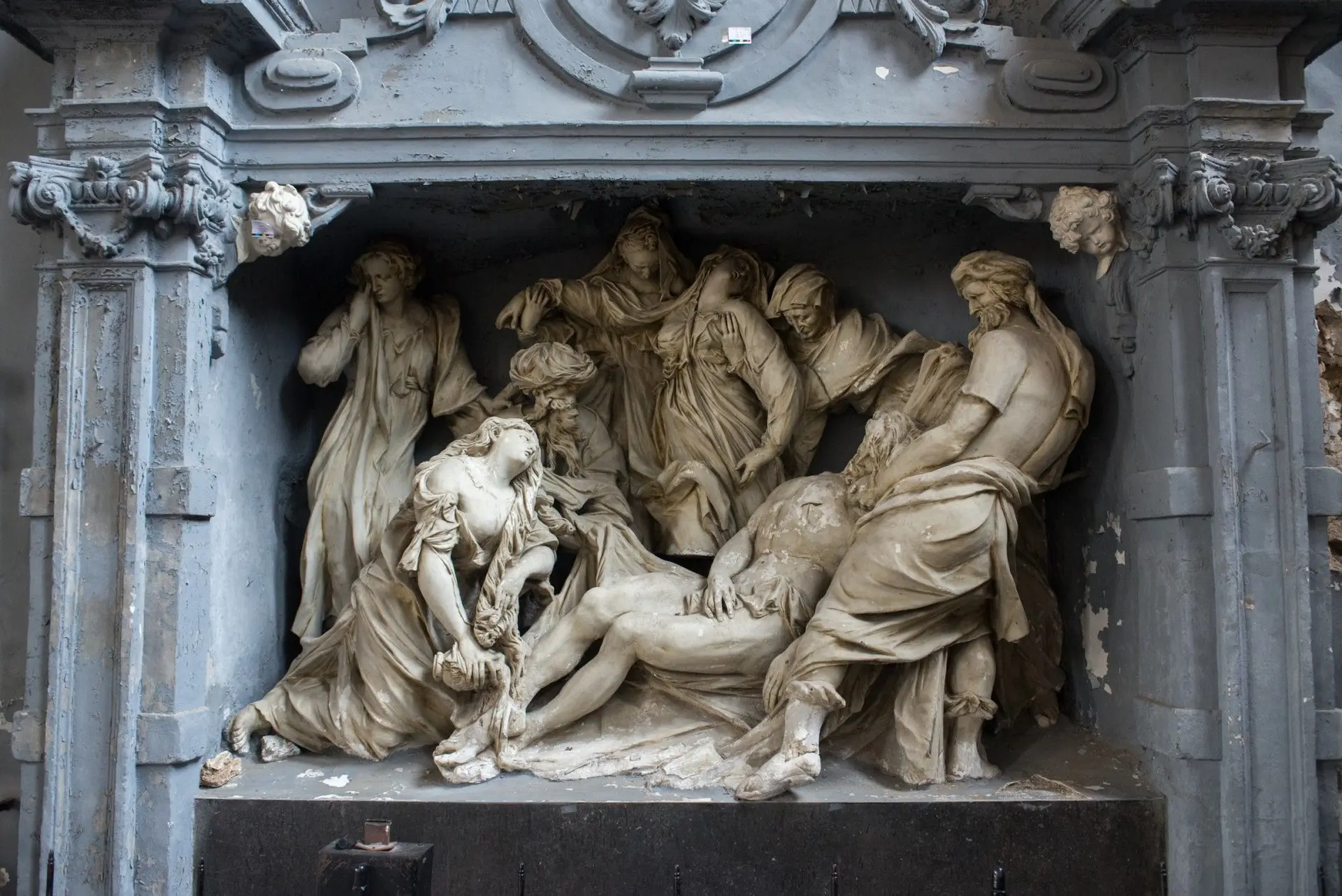
There are seven sculptures in the church: five grouped at the back and two beside the eastern pillars. Until 2015 they were believed to come from the abbey of Westvleteren. Research by engineer-architect Dries Vanhove showed that, except for the soldier and the bishop, the sculptures were already in the church and likely date from the late 17th century. The group is now displayed on a pedestal designed by Paul Nolf and crafted by Rik Dequeker and the VTI Poperinge.
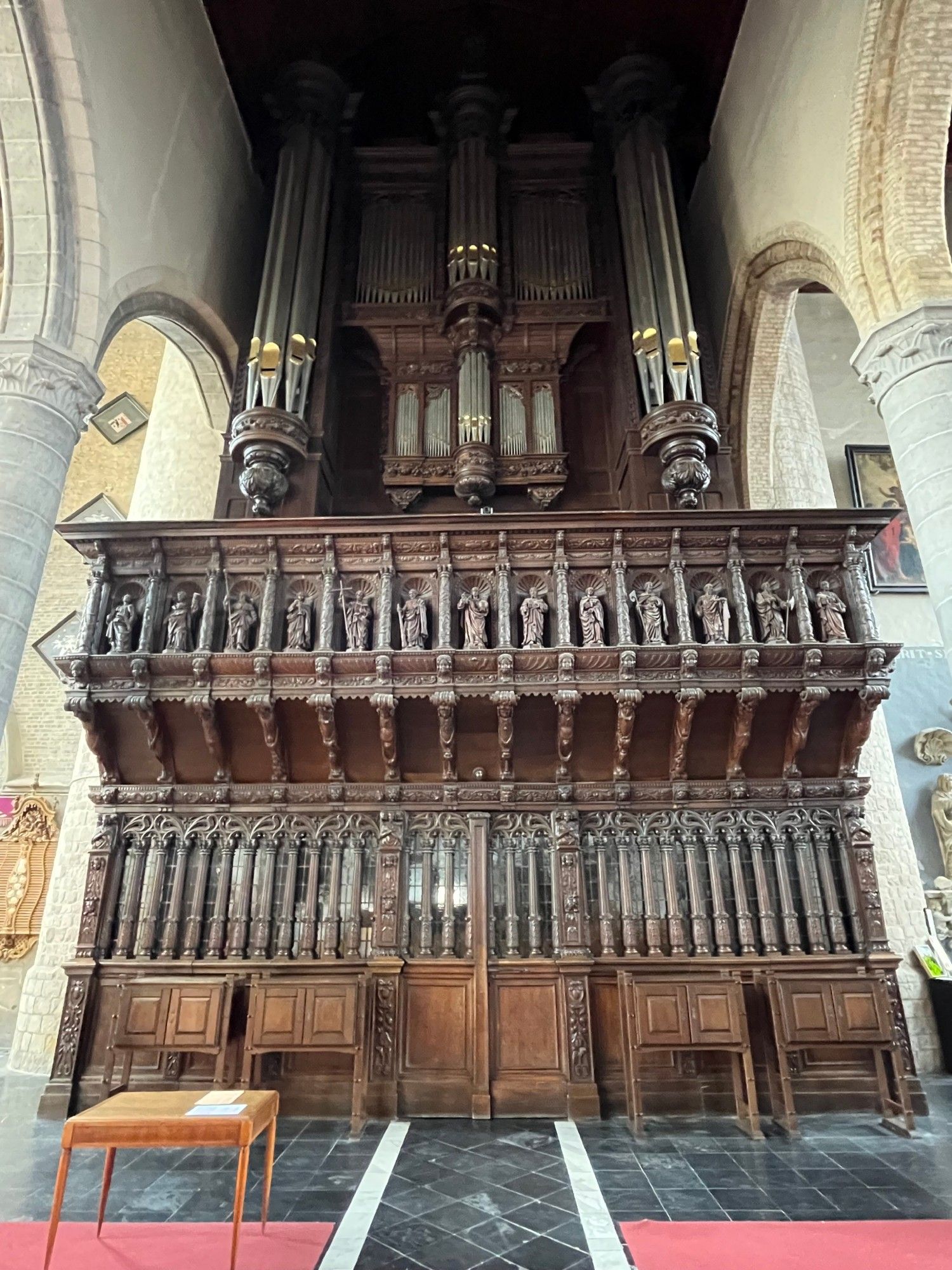
Organ
Records show that an organ existed here before 1500. In 1674, Jan Van Belle of Ypres repaired…
Records show that an organ existed here before 1500. In 1674, Jan Van Belle of Ypres repaired it, and Guillaume Van Belle continued restoration work until 1806. That year, the organ was moved from the choir loft to the west gallery. Further restorations followed in 1835 and 1903. In 1948, the Loncke firm transformed the instrument again. A complete restoration, funded by the Flemish Government, was carried out between 2008 and 2011 by Jef Braekmans and Guido Schumacher.
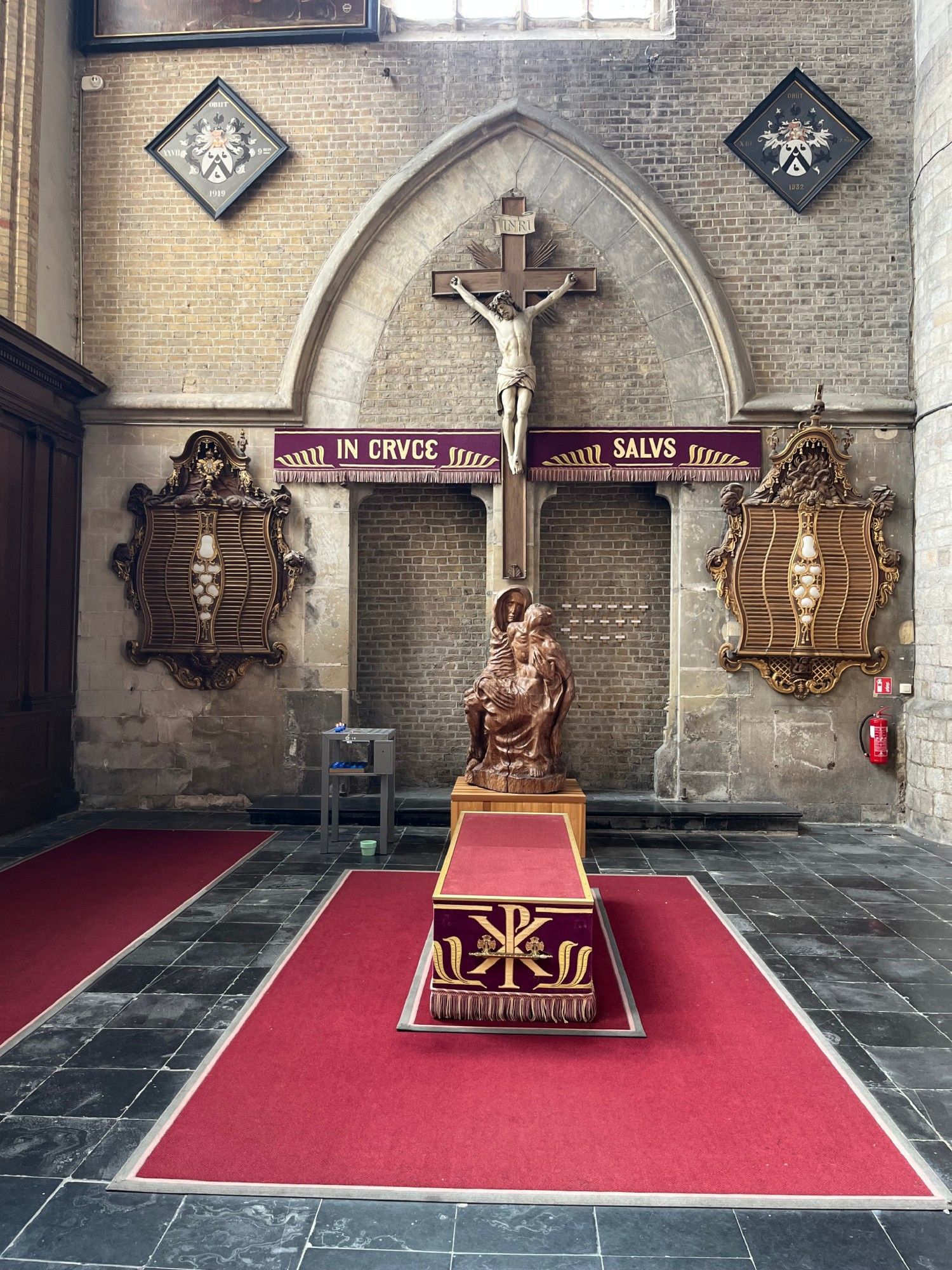
Tables of the Brotherhood
The oldest brotherhood is that of the Holy Sacrament (1478). One table depicts the purgatory,…
The oldest brotherhood is that of the Holy Sacrament (1478). One table depicts the purgatory, the other one shows the Eucharist (chalice, wafer and aureole). The wooden rococo sculptures are covered in gold leaf and date from end 1900.

Our Lady altar
The late Baroque altar of Our Lady, erected around 1720, was created by sculptor Judocus Dehaene…
The late Baroque altar of Our Lady, erected around 1720, was created by sculptor Judocus Dehaene of Ypres and carpenter Wenzel Haberlant of Poperinge. Its 18th-century altarpiece by J. Desremaux depicts the Holy Family in Nazareth with Mary, the Child Jesus, Saint Joseph, Saints Anne, Zacharias and Elizabeth, surrounded by angels. Desremaux, a Flemish painter, also created works in Krombeke, Haringe and Reningelst. His known work dates from about 1750.
Labels

Medias
To find out more
Hours
Closed
Religious services
Kerknet
Nearby buildings



Comments (0)