

Saint Quentin
Building profile
Historic/listed monument
Practical information

 © Églises Ouvertes
 © Églises Ouvertes
 © Églises Ouvertes
 © Églises Ouvertes
 © Églises Ouvertes
 © Églises Ouvertes
 © Églises Ouvertes
 © Églises Ouvertes
 © Églises Ouvertes
 © Églises Ouvertes
 © Églises Ouvertes
 © Églises Ouvertes
 © Églises Ouvertes
 © Églises Ouvertes
 © Églises Ouvertes
 © Églises Ouvertes
 © Églises Ouvertes
 © Églises Ouvertes
About this building
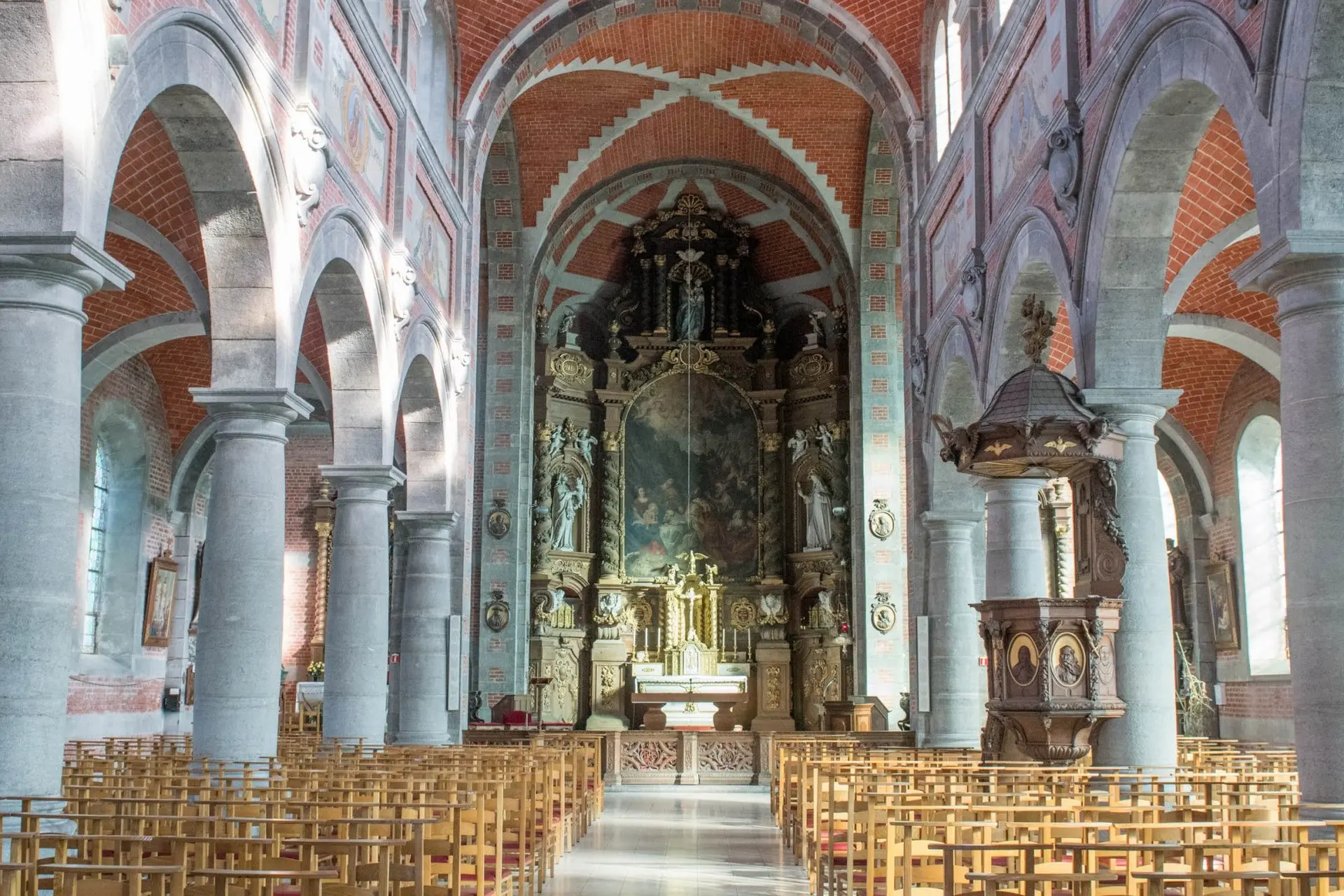
Its nave dates back to the late 12th century. Two circular chapels, one of which houses the tomb of Jacques Castaigne (1327), are housed in the corners formed by the nave and transept. The rib-vaulted transept and choir belong to the transition between Romanesque and Gothic. The central tower also dates from the 13th century. Its interior is decorated with a double triforium. The…
Its nave dates back to the late 12th century. Two circular chapels, one of which houses the tomb of Jacques Castaigne (1327), are housed in the corners formed by the nave and transept. The rib-vaulted transept and choir belong to the transition between Romanesque and Gothic. The central tower also dates from the 13th century. Its interior is decorated with a double triforium. The choir, enclosed by a 17th-century marble fence, was surrounded by an ambulatory and several chapels in 1464.
At either end of the nave are two statues forming the so-called Annunciation group: the Virgin Mary and Archangel Gabriel. The sculptures were created by Jean Delemer of Tournai. They are in white Avesnes stone, and the original polychromy is attributed to Robert Campin.
The 36-stop organs were designed by Georges Delmotte in 1986.
Source : City of Tournai
Remarkable elements

“The Annunciation Group” Treasure (1427/1428)
Made of white Avesnes stone, these statues of the Virgin Mary and the Angel Gabriel were…
Made of white Avesnes stone, these statues of the Virgin Mary and the Angel Gabriel were sculpted by Jean Delemer, with original polychromy by Robert Campin (renewed in 1858). Mutilated in 1566, their heads were replaced around 1600. Donated in 1428, they moved between churches before being restored in 2010 and installed in Saint-Quentin. They are recognized treasures of the Walloon Region and major examples of 15th-century statuary.

High altar
Baroque marble high altar (1629).

Choir screen (1656-1723)
Note the marble columns (1656/1723). Badly damaged during the war, the ensemble was restored in…
Note the marble columns (1656/1723). Badly damaged during the war, the ensemble was restored in 2006.

Jacques de Chastagne tomb (1327)
In the two-sided south-east chapel, a recumbent tomb with weeping figures in a Tournai stone…
In the two-sided south-east chapel, a recumbent tomb with weeping figures in a Tournai stone with three-lobed redents, restored. Above is a statue of Notre-Dame à la Treille.

Pasquier-Grenier funeral chapel (1469/1574)
Dating from the third quarter of the 15th century, this late Romanesque chapel was built and…
Dating from the third quarter of the 15th century, this late Romanesque chapel was built and richly decorated between 1469 and 1474 by the famous Tournai tapestry-maker Pasquier Grenier. He financed it as a funerary chapel for himself, his wife Marguerite de Lannoy, and her family. Dedicated to the seven sacraments, it was originally entirely painted with Eucharistic themes and symbols. Severely damaged by bombing in May 1940, the chapel was restored in 2013 by Mrs. Marie-Hélène Ghisdal.

Our Lady of the Vineyard (1724)
Probably made around 1685 by the Tournai silversmith Hermès Volcart, this work is composed of…
Probably made around 1685 by the Tournai silversmith Hermès Volcart, this work is composed of folded, repoussé silver leaves nailed onto two superimposed wooden blocks. Linked to the Brotherhood of Our Lady of the Vineyard, founded in 1659 and moved between several churches, the statue reflects a devotion attested in Lille since the 13th century. Its name refers to the surrounding trellis, symbol of refuge and peace. The statue is carried each year in the Grande Procession in September.
Labels

Medias
To find out more
Hours
Closed
Religious services
See the updated timetable on the website of our partner Egliseinfo
Nearby buildings



Tours associates

Comments (0)